
Save "סנהדרין פ - מקורות נלווים
"
סנהדרין פ - מקורות נלווים

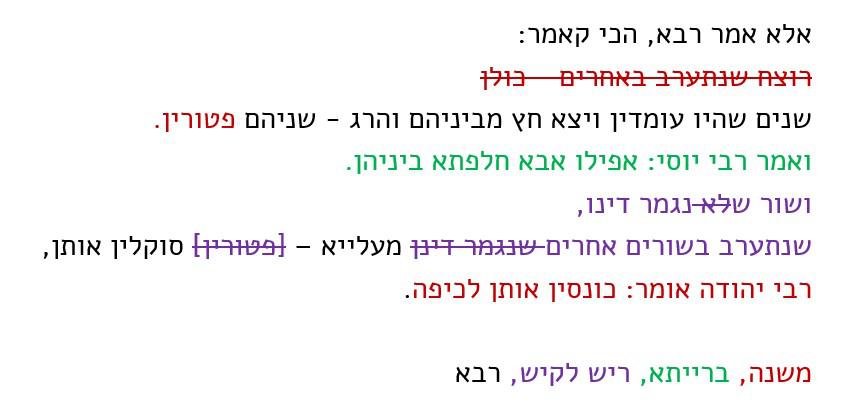
הלכה: רוֹצֵחַ שֶׁנִּתְעָרֵב בַּאֲחֵרִים כול׳.

אָמַר רִבִּי יוֹחָנָן: בְּרוֹצֵחַ שֶׁנִּתְעָרֵב בַּכְּשֵׁירִין הִוא מַתְנִיתָא.

רִבִּי שִׁמְעוֹן בֶּן לָקִישׁ אָמַר: בְּרוֹצֵחַ שֶׁלֹּא נִגְמַר דִּינוֹ שֶׁנִּתְעָרֵב בְּרוֹצֵחַ שֶׁנִּגְמַר דִּינוֹ הִוא מַתְנִיתָא.

שְׁמוּאֵל אָמַר: בְּשׁוֹר בַּשְּׁווָרִים הִוא מַתְנִיתָא.

אִם בְּשׁוֹר בַּשְּׁווָרִים הִוא מַתְנִיתָא, בְּדָא תַנִּינָן כּוֹנְסִין אוֹתָן לַכִּיפָּה?!
HALAKHAH: “If a murderer was mixed up with others,” etc. Rebbi Joḥanan said, the Mishnah deals with a murderer mixed up with innocent people48In this interpretation, R. Jehudah allows the police to arrest innocent people and keep them in prison until they have proven their innocence.. Rebbi Simeon ben Laqish said, the Mishnah deals with a murderer being tried mixed up with a murderer who already was convicted. Samuel said, the Mishnah deals with a bull mixed up with other bulls. If the Mishnah referred to a bull50A bull which has killed a human and must be stoned by the verdict of a court of 23. Humans can be identified by witnesses; cattle all look alike. mixed up with other bulls, would we state about them that “one keeps them in jail”?
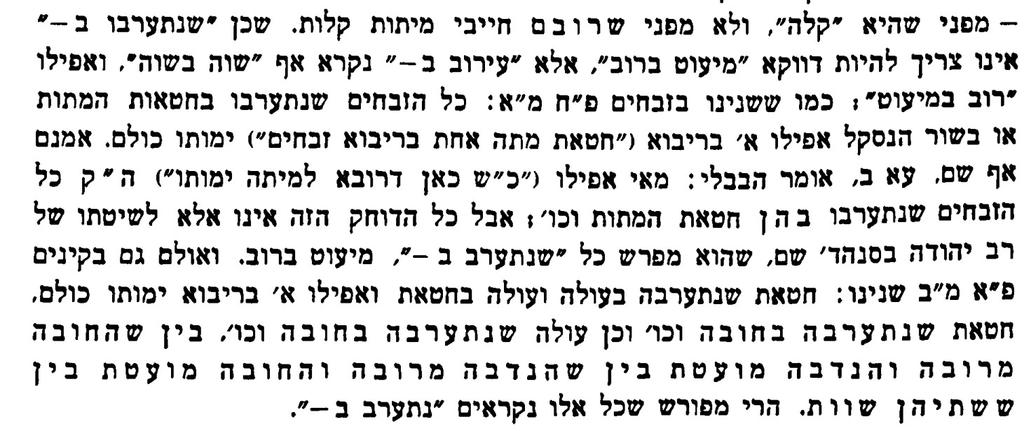
גמ' ברוצח שנתערב בכשרים היא מתני'. והלכך כולן פטורין:
גמ' שנתערב בכשרין. איירי מתני' וקמ"ל אפילו נתערבו שנים ואחד מהן חסיד שהכל יודעין שלא הרג אדם אפ"ה לא מחייבינן לאידך משום הך חזקה ובהא אפילו ר"י מודה והא דאר"י כונסין אותן לכיפה לא עלה קאי אלא חסורי מחסרא והכי קתני ושור שנגמר דינו ונתערב בשוורים אחרים (מעליון) סוקלין אותן דהא ע"כ כולן אסורים בהנאה ואין להבעלים הפסד בסקילתן הלכך סוקלין איתי כדי שיקויים מצות סקילה במחוייב בה ור"י פליג וסובר שא"צ לסוקלן שלא להטריח להב"ד אלא כונסין אותן לכיפה והם מתים ברעב:
ברוצח שנתערב בכשרין היא מתניתא רשב"ל אמר כו'. — צ"ל: ברוצח שנתערב בכשרין היא מתניתא אם בנתערב בכשרין בדא תנינן כונסין אותן לכיפה רשב"ל אמר כו' בשור בשוורים היא מתניתא ר"ש אומר חמורה שריפה כו'.

פרה שהמיתה ואחר כך ילדה, עד שלא נגמר דינה ילדה ולדותיה מותרין, משנגמר דינה ילדה וולדותיה אסורין.

נתערבו באחרין ואחרין באחרין כולן אסורין בהנאה.

מה יעשו להן? כונסין אותן לכיפה עד שעה שימותו.

ר' לעזר בי ר' שמעון אומ': כולהן נסקלין.

כָּל הָאֲסוּרִים לְגַבֵּי מִזְבֵּחַ וְכוּ׳.

אָמַר רַב: כָּל הָאֲסוּרִים לְגַבֵּי מִזְבֵּחַ וַלְדוֹתֵיהֶן מוּתָּרִים, וְתָנֵי עֲלַהּ: וְרַבִּי אֱלִיעֶזֶר אוֹסֵר.

אָמַר רַב הוּנָא בַּר חִינָּנָא, אָמַר רַב נַחְמָן: מַחְלוֹקֶת שֶׁעִיבְּרוּ וּלְבַסּוֹף נִרְבְּעוּ, דְּרַבִּי אֱלִיעֶזֶר סָבַר ״עוּבָּר יֶרֶךְ אִמּוֹ הוּא״, וְרַבָּנַן סָבְרִי ״לָאו יֶרֶךְ אִמּוֹ הוּא״, אֲבָל נִרְבְּעוּ וּלְבַסּוֹף עִיבְּרוּ — דִּבְרֵי הַכֹּל מוּתָּרִין.

רָבָא אָמַר: מַחְלוֹקֶת שֶׁנִּרְבְּעוּ וּלְבַסּוֹף עִיבְּרוּ, דְּרַבִּי אֱלִיעֶזֶר סָבַר: זֶה וָזֶה גּוֹרֵם אָסוּר, וְרַבָּנַן סָבְרִי: זֶה וָזֶה גּוֹרֵם מוּתָּר, אֲבָל עִיבְּרוּ וּלְבַסּוֹף נִרְבְּעוּ — דִּבְרֵי הַכֹּל אֲסוּרִין.

וְרָבָא לְטַעְמֵיהּ, דְּאָמַר רָבָא: וְלַד נִרְבַּעַת אָסוּר, הִיא וּוְלָדָהּ נִרְבְּעוּ, וְלַד נוֹגַחַת אָסוּר, הִיא וּוְלָדָהּ נָגְחוּ...

§ The mishna teaches: With regard to all animals whose sacrifice on the altar is prohibited, sacrifice of their offspring is permitted. Rav says: This ruling that with regard to all animals whose sacrifice on the altar is prohibited, sacrifice of their offspring is permitted, is not unanimous but is the opinion of the Rabbis. And indeed it is taught with regard to this case: And Rabbi Eliezer prohibits their offspring to be sacrificed on the altar. Rav Huna bar Ḥinnana says that Rav Naḥman says: This dispute applies in a case where the animals became pregnant and then were the objects of bestiality, thereby becoming prohibited to sacrifice on the altar. As Rabbi Eliezer holds that a fetus is considered the thigh of its mother and regarded as part of the animal, and is consequently prohibited like its mother. And the Rabbis hold that a fetus is not considered the thigh of its mother. But if the animals were the objects of bestiality and then became pregnant, everyone agrees that they are permitted. Rava says: This dispute applies in a case where the animals were the objects of bestiality and then became pregnant, as Rabbi Eliezer holds that when both this permitted factor and that prohibited factor cause a certain situation, the resulting item is prohibited. Since the mother of this offspring is prohibited, the offspring is likewise prohibited, despite the fact that its father is permitted. And the Rabbis hold that when this permitted factor and that prohibited factor cause a result, it, i.e., the offspring, is permitted like its father. But in a case where the animals became pregnant and then were the object of bestiality, everyone agrees that they are prohibited. And the Gemara adds that Rava conforms to his standard line of reasoning in this regard, as Rava said: The offspring of a female animal that was the object of bestiality when it was pregnant is prohibited to be sacrificed on the altar, as it is considered as though it, the mother, and its offspring were both the object of bestiality. Likewise, the offspring of a pregnant cow that gores and kills a person is prohibited, because it is as though it, the mother, and its offspring both gored. Some state another version of the previous discussion: Rav Huna bar Ḥinnana says that Rav Naḥman says: This dispute applies in a case where the animals were the object of bestiality when they already had the status of sacrificial animals. As Rabbi Eliezer holds that the offspring are also prohibited to be sacrificed on the altar, as their sacrifice is considered a degradation of consecrated items, and degradation of consecrated items is significant. And the Rabbis hold that the offspring may be sacrificed, as they maintain that this is not considered a degradation of consecrated items. But in a case where the animals were the object of bestiality when they were non-sacred, and were subsequently consecrated, since their status was changed by their consecration, everyone agrees that they are permitted. In contrast, Rava says that Rav Naḥman says: This dispute applies in a case where the animals were the object of bestiality when they were non-sacred, as Rabbi Eliezer holds that even the sacrifice of this offspring is considered degrading to sacrificial animals, and degradation of sacrificial animals is significant, and therefore they are prohibited. And the Rabbis hold that since their status was changed by their consecration, they are permitted. But in a case where the animals were the object of bestiality when they already had the status of sacrificial animals, everyone agrees that they are prohibited.
Leib Moscovitz, Talmudic Reasoning: From Casuistics to Conceptualization, Mohr Siebeck, 2002, pp. 331-333
...the multicle application of principles which address non-legal. metaphisical notions... for example, the principle that "multiple caustation is prohibited/permitted" (zeh we-zeh gorem ‘asur/mutar)...
The principle here is invoked in connection with a variety of cases from different legal domains, although these cases and domains might well be governed by different legal requirements. Indeed, each of the rulings discussed here could be plausibly explained by a principle of narrower (or different) scope...
Explaining all of these rulings in light of a single, metaphysical princi- ple reflects what may be termed overgeneralized abstract formalistic conceptualization. Conceptualization of this sort is found elsewhere in BT, and is apparently first attested implicitly in the teachings of fourth-generation amoraim, mainly (exclusively?) Rava, and explicitly in the anonymous stratum. Such conceptualization reflects the pinnacle of rabbinic conceptual creativity, not only because the relevant principles are abstract and wide-ranging, but because they are usually exegetically problematic, as the rulings they explain can generally be explained just as well, if not more persuasively, on the basis of narrower considerations. Nevertheless, it is precisely this apparent disdain for what seem to be the simple, straightforward explanations of these rulings, and the concomitant preference for metaphysical explanations of extraordinarily broad scope, which give this sort of conceptualization its special character, making it one of the most distinctive and unique forms of rabbinic (and Babylonian) conceptualization.

עובר ירך אמו - משמע שכן הלכה מדלא פריך הניחא למ"ד ירך אמו אלא למ"ד לאו ירך אמו מאי איכא למימר כדפריך מזה וזה גורם ומיהו יש לדחות דכולה שמעתא לא מסיק לשנות הברייתא מפשטא אלא לתרצה אליבא דרבא דאמר ולד הנוגחת אסור היא וולדה נגחו דטעמא משום דעובר ירך אמו הוא וכדמוכח בתמורה (דף ל:)

...מיהו יש לדקדק מזה דמותיב התם תיובתא דר' יוחנן תיובתא ואע"ג דקאמר בתר הכי לימא אם שיירו משויר תנאי היא מ"מ הרי איתותב אלמא אין הלכה כן וכן דרך הש"ס כשאין הדברים עיקר אומר תיובתא אע"פ שיכול למצוא תנאי דפליגי...

ושאר חייבי מיתות ב"ד אין ממיתין אותם אלא על פי עדים והתראה עד שיודיעוהו שחייב מיתה בב"ד.

ר' יוסי ברבי יהודה אומר: עד שיודיעוהו באיזה מיתה הוא מת.

תַּנֵּי. רִבִּי יוּדָה בֵירִבִּי אִלָּעִאי אוֹמֵר: "וְכִֽי־יָזִ֥ד אִ֛ישׁ עַל־רֵעֵ֖הוּ לְהוֹרְגוֹ בְעָרְמָ֑ה" - שֶׁיַּעֲרִימוּהוּ בְּאֵי זֶה מִיתָה מֵת.

הָֽיְתָה מִיתָתוֹ בַחֲמוּרָה וְהִתְרוּ בוֹ בַּקַּלָּה, יְכִיל מֵימַר, אִילּוּ הֲוָה יְדַע שֶׁמִּיתָתוֹ בַחֲמוּרָה לָא הֲוָה עֲבַד הָדָא מִילְּתָא.

הָיָה מִיתָתוֹ בַקַּלָּהֹ וְהִתְרוּהוּ בוֹ בַּחֲמוּרָה, עַל דַּעְתֵּיהּ דְּרִבִּי יוּדָן בֵירִבִּי אִלָּעִאי שֶׁיַּעֲרִימוּהוּ בְּאֵי זֶה מִיתָה מֵת.
It was stated: Rebbi Simeon ben Ioḥai said, by the mouth of two witnesses shall the dead die. Does he die when dead? But to tell him by which kind of death he will be executed. It was stated: Rebbi Jehudah ben Rebbi Illai said, and if a man intentionally kill his neighbor knowingly; they shall inform him by which kind of death he will be executed. If his death should have been a severe one but they warned him about an easy one. He could say that had he known that his death was to be severe, he would not have committed that crime. If his death should have been an easy one but they warned him about a severe one; in the opinion of Rebbi Jehudah ben Rebbi Illai they have to inform him by which kind of death he will be executed.
י"נ אפשטיין, מבוא לנוסח המשנה, כרך א, עמ' 325.