


(ד) בְּהֵמָה גַסָּה נִקְנֵית בִּמְסִירָה, וְהַדַּקָּה בְּהַגְבָּהָה, דִּבְרֵי רַבִּי מֵאִיר וְרַבִּי אֱלִיעֶזֶר. וַחֲכָמִים אוֹמְרִים, בְּהֵמָה דַקָּה נִקְנֵית בִּמְשִׁיכָה:
(ה) נְכָסִים שֶׁיֵּשׁ לָהֶם אַחֲרָיוּת נִקְנִין בְּכֶסֶף וּבִשְׁטָר וּבַחֲזָקָה. וְשֶׁאֵין לָהֶם אַחֲרָיוּת, אֵין נִקְנִין אֶלָּא בִמְשִׁיכָה.
(1) A woman is acquired by, i.e., becomes betrothed to, a man to be his wife in three ways, and she acquires herself, i.e., she terminates her marriage, in two ways. The mishna elaborates: She is acquired through money, through a document, and through sexual intercourse. With regard to a betrothal through money, there is a dispute between tanna’im: Beit Shammai say that she can be acquired with one dinar or with anything that is worth one dinar. And Beit Hillel say: She can be acquired with one peruta, a small copper coin, or with anything that is worth one peruta. The mishna further clarifies: And how much is the value of one peruta, by the fixed value of silver? The mishna explains that it is one-eighth of the Italian issar, which is a small silver coin. And a woman acquires herself through a bill of divorce or through the death of the husband. A woman whose husband, who had a brother, died childless [yevama], can be acquired by the deceased husband’s brother, the yavam, only through intercourse. And she acquires herself, i.e., she is released from her levirate bond, through ḥalitza or through the death of the yavam.
(2) A Hebrew slave can be acquired by his master through money or through a document, and he can acquire himself, i.e., he is emancipated, through years, i.e., when he completes his six years of labor, or through the advent of the Jubilee Year, or through the deduction of money. The slave can redeem himself during the six years by paying for his remaining years of slavery. A Hebrew maidservant has one mode of emancipation more than him, as she acquires herself through signs indicating puberty. A slave who is pierced after serving six years is acquired as a slave for a longer period through piercing his ear with an awl, and he acquires himself through the advent of the Jubilee Year or through the death of the master.
(3) A Canaanite slave is acquired by means of money, by means of a document, or by means of the master taking possession of him. And he can acquire himself, i.e., his freedom, by means of money given by others, i.e., other people can give money to his master, and by means of a bill of manumission if he accepts it by himself. This is the statement of Rabbi Meir. And the Rabbis say: The slave can be freed by means of money given by himself, and by means of a bill of manumission if it is accepted by others, provided that the money he gives belongs to others, not to him. This is because the slave cannot possess property, as anything owned by a slave is considered his master’s.
(4) A large domesticated animal is acquired by passing, when its current owner transfers it to a buyer by giving him the reins or the bit. And a small domesticated animal is acquired by lifting. This is the statement of Rabbi Meir and Rabbi Eliezer. And the Rabbis say: A small domesticated animal can be acquired by pulling also, and there is no need to lift it.
(5) Property that serves as a guarantee, i.e., land or other items that are fixed in the earth, can be acquired by means of giving money, by means of giving a document, or by means of taking possession of it. Property that does not serve as a guarantee, i.e., movable property, can be acquired only by pulling. Property that does not serve as a guarantee can be acquired along with property that serves as a guarantee by means of giving money, by means of giving a document, or by means of taking possession of them. The movable property is transferred to the buyer’s possession when it is purchased together with the land, by means of an act of acquisition performed on the land. Generally, one is not obligated to take an oath concerning the denial of a claim with regard to land. The mishna continues: And in a legal dispute involving both land and movable property, if the defendant makes a partial admission of the claim with regard to the movable property, thereby rendering himself obligated to take an oath denying any responsibility for the remaining property, the movable property binds the property that serves as a guarantee, i.e., the land, so that he is forced to take an oath concerning the land as well, despite the fact that one is generally not obligated to take an oath for a claim involving land.
(6) The mishna discusses a transaction involving the barter of two items. With regard to all items used as monetary value for another item, i.e., instead of a buyer paying money to the seller, they exchange items of value with each other, once one party in the transaction acquires the item he is receiving, this party is obligated with regard to the item being exchanged for it. Therefore, if it is destroyed or lost, he incurs the loss. How so? If one exchanges an ox for a cow, or a donkey for an ox, once this party acquires the animal that he is receiving, this party is obligated with regard to the item being exchanged for it. The authority of the Temple treasury effects acquisition by means of money to the seller. And the authority, i.e., the mode of acquisition, of a commoner [hedyot] is by possession. Furthermore, one’s declaration to the Most High, i.e., when one consecrates an item through speech, is equivalent to transferring an item to a common person, and the item is acquired by the Temple treasury through his mere speech.
(7) With regard to all mitzvot of a son with regard to his father, men are obligated to perform them and women are exempt. And with regard to all mitzvot of a father with regard to his son, both men and women are obligated to perform them. The mishna notes an additional difference between the obligations of men and women in the performance of mitzvot: With regard to all positive, time-bound mitzvot, i.e., those which must be performed at specific times, men are obligated to perform them and women are exempt. And with regard to all positive mitzvot that are not time bound, both men and women are obligated to perform them. And with regard to all prohibitions, whether they are time-bound or whether they are not time-bound, both men and women are obligated to observe them, except for the prohibitions of: Do not round the corners of your head, and: Do not destroy the corners of your beard, which are derived from the verse: “You shall not round the corners of your head and you shall not destroy the corners of your beard” (Leviticus 19:27), and a prohibition that concerns only priests: Do not contract ritual impurity from a corpse (see Leviticus 21:1). These mitzvot apply only to men, not women, despite the fact that they are prohibitions.
(8) With regard to the placing of hands on the head of an offering, and the waving of certain offerings, and the bringing near of meal-offerings to the corner of the altar, and the removal of a handful from meal-offerings, and the burning of sacrificial parts on the altar, and the pinching of bird-offerings, and the collecting of blood of offerings in a vessel, and the sprinkling of blood, these apply to men and not to women. All these mitzvot apply specifically to men and not to women, except for the meal-offering of a sota, and the meal-offering of a nazirite woman, which these women wave.
(9) Any mitzva that is dependent on the land [aretz] applies only in Eretz Yisrael, and any mitzva that is not dependent on the land applies both in Eretz Yisrael and outside of Eretz Yisrael. This is apart from the mitzvot of orla and diverse kinds, which apply even outside of Eretz Yisrael. Rabbi Eliezer says: This is the halakha even with regard to the prohibition to eat from the new crop before the omer offering has been brought on the sixteenth of Nisan.
(10) Anyone who performs one mitzva has goodness bestowed upon him, his life is lengthened, and he inherits the land, i.e., life in the World-to-Come. And anyone who does not perform one mitzva does not have goodness bestowed upon him, his life is not lengthened, and he does not inherit the land of the World-to-Come. Anyone who is engaged in the study of Bible, and in the study of Mishna, and in the desired mode of behavior, i.e., he performs labor and generally acts in an appropriate manner, will not be quick to sin, as it is stated: “And a threefold cord is not quickly broken” (Ecclesiastes 4:12). One who is involved in all three of these activities will not sin easily. And anyone who does not engage in the study of Bible, nor the study of Mishna, nor the desired mode of behavior, is not part of society, i.e., he is not considered a civilized person at all.
(ז) ספינה נקנית במשיכה. ר' נתן אומ' ספינה ואותיות נקנות במשיכה ובשטר. אי זה הוא משיכה, בין שמשך, בין שהנהיג, בין שקרא לה ובאת אחריו, הרי זו משיכה.
רִבִּי יוּדָן ברח לנוי אָתָא עוֹבְדָא קוֹמֵי רִבִּי יוֹסֵי. שְׁכִיב מְרַע שֶׁאָמַר. יִינָֽתֵנוּ אוֹתִיּוֹתָיו לִפְלוֹנִי. אָמַר לֵיהּ. אֵין שְׁכִיב מְרַע מְזַכֶּה אֶלָּא בִדְבָרִים שֶׁהֵן נִקְנִין אוֹ בִשְׁטָר אוֹ בִמְשִׁיכָה. וְאֵילּוּ נִקְנִין בִּמְשִׁיכָה וּבִשְׁטָר. כְּהָדָא דְתַנֵּי. סְפִינָה נִקְנֵית בִּמְשִׁיכָה. דִּבְרֵי הַכֹּל. רִבִּי נָתָן אוֹמֵר. סְפִינָה וְאוֹתִיּוֹת נִקְנִין בִּמְשִׁיכָה וּבִשְׁטָר. כָּתַב וְלֹא מָשַׁךְ מָשַׁךְ וְלֹא כָתַב לֹא עָשָׂה כְלוּם עַד שֶׁיִּכְתּוֹב וְיִמְשׁוֹךְ.
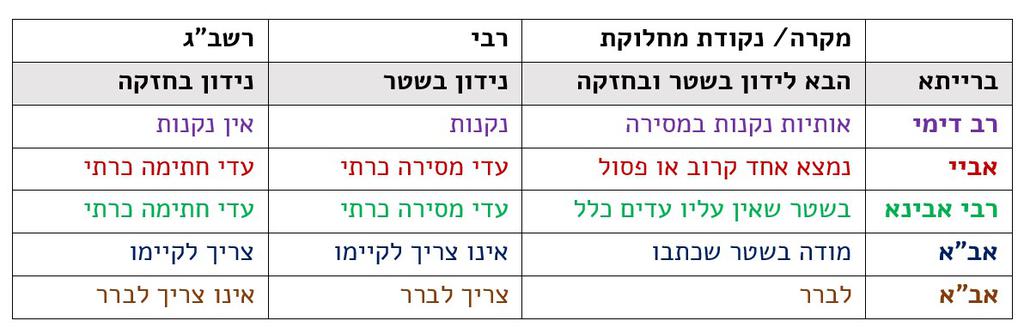
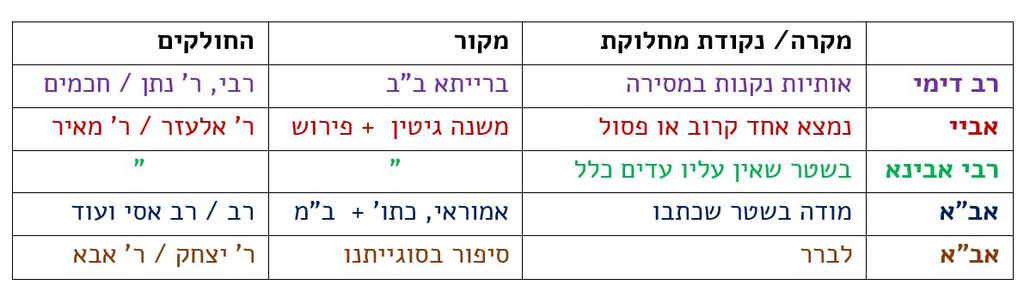
נידון בשטר דברי רבי (קסט ע"ב) - בכה"י המבורג, אסקוריאל ווטיקן: נידון בשטר ולא בחזקה דברי רבי.
א"ל אביי אם כן - כך בדפוסים ובכה"י המבורג, פריז ווטיקן; כ"י אסקוריאל: מתקף לה אביי אי הכי; מינכן: א"ל א"כ; פירנצה: {חסר}.
א"ל ותפלוג - כך בדפוסים ובכ"י מינכן; יתר כה"י: ותפלוג.
אמר ליה הכי קאמינא לך מתניתא לא מיתרצא אלא כדמתרצא מר - בדפוסים בלבד.
[אמר ליה] והא אמר רב גידל אמר רב - "אמר ליה" בדפוס וילנה בלבד.
הא [ברייתא] דתניא - "ברייתא" בדפוסים מאוחרים בלבד.