


Disclaimer: this is not an exhaustive description of every single Jewish group that has ever lived in Africa. Rather, this is a very quick and broad summary of major and interesting African Jewish populations.
Did you know that there have been many Jewish populations in various parts of Africa? Let's start with a little geography.
Jews originated in Canaan (also known as the Levant or the Mashrikh)- around Israel, Syria, Iraq, Jordan, and Lebanon. Though there is not much proof that we were ever enslaved in Egypt, as the Torah says, there is definitely proof of Jewish populations in Africa even before the Roman expulsion of 70 CE and the era of Jewish diaspora!
There was a major Jewish population in Egypt from the 6th century BCE and in modern-day Libya from the 3rd century BCE. Following the Roman exile, these populations increased and spread westward and southward. There were Jews in modern-day Tunisia and Morocco from the 2nd century CE. Jews in modern-day Ethiopia/Eritrea even had a kingdom in the 4th century CE! Most likely, these populations arrived via the Sinai peninsula into Egypt- though a minority opinion among scholars postulates that the Ethiopian Jews could have come from Yemen.
Since exile, Jews spread out across North Africa: Libya, Algeria, Morocco, Tunisia, Sudan, and Egypt. However, the Jewish populations in these countries is quite small now, due to antisemitic discriminatory laws and violent expulsions.

While there is certainly a longer history of North African Jews, the sub-Saharan portion of the continent is not completely Jew-less. There are also relatively newer Jewish populations in Sudan/South Sudan, Uganda, Kenya, Ghana, Ivory Coast, Zimbabwe, Nigeria, and South Africa.
South Africa's Jewish population mostly comprises of Ashkenazi refugees from Lithuania; in the cases of the rest of sub-Saharan Africa, their Jewish communities primarily underwent group conversions. These groups, previously Christian or Messianic "Jews," decided to start keeping kosher and other parts of halacha, and underwent official conversions. Some of their members have since made aliyah to Israel. There is actually an active Breslov (Chasidic) community in Ivory Coast- you can follow their rabbi's TikTok account here.
Egypt:

Pictured: Israeli Jews of Egyptian heritage.
Jews have an extremely long history with Egypt. One of the most famous and influential rabbis of all time, R' Moses Maimonides (AKA the Rambam, c. 1100s), lived most of his life in the Jewish community around Cairo, after his family fled from Spain due to antisemitism.
Both Rabbinic and Karaite Jews lived in Egypt, and many Sephardic Jews went to Egypt after the Spanish expulsion of 1492 and after the fall of the Ottoman Empire. Even some Ashkenazi Jews fled to Cairo in the late 1800s due to pogroms. In 1948, the Jewish population in Egypt was around 80,000.
Most Egyptian Jews fled to Israel in the 1940s-50s, due to increasing antisemitic violence and the confiscation of their homes and citizenship. The Jewish community in Egypt is now comprised of only 3 women in Cairo.
If you'd like to read/listen to/view art by Egyptian Jewish artists, try listening to Georges Moustaki, Hovi Star, and Victoria Hanna, reading Yitzhak Goren, Ada Aharoni, Ronit Matalon, and Edmond Jabès, and checking out art by Gideon Gechtman.
Libya:

Predominately Sephardic, the Libyan Jewish community dates back to the 3rd century BCE, when Libya was under Greek rule. Some records state that nearly 500,000 Jews were living in Libya in the 2nd century CE. After Muslim conquest in the 8th century, Jews were considered dhimmis. By 1931, the number dwindled to about 21,000. During WWII, Libya's Jewish population was subjected to antisemitic laws by the Fascist Italian regime and deportations by both the Italian and German armies. After the war, antisemitic violence caused most Jews to flee to Israel, Italy, or the US.
There are 0 Jews left in Libya. In 2011, a Libyan Jew named David Gerbi (seen above) snuck into Libya to attempt to repair the synagogue in Tripoli, but was nearly lynched and had to flee the country again.
If you'd like to read/listen to/view art by Libyan Jewish artists, try listening to Herbert Pagani, Roni Duani, and Netta, reading Moises Naim, and checking out a film by Robert Haggiag.
Algeria:
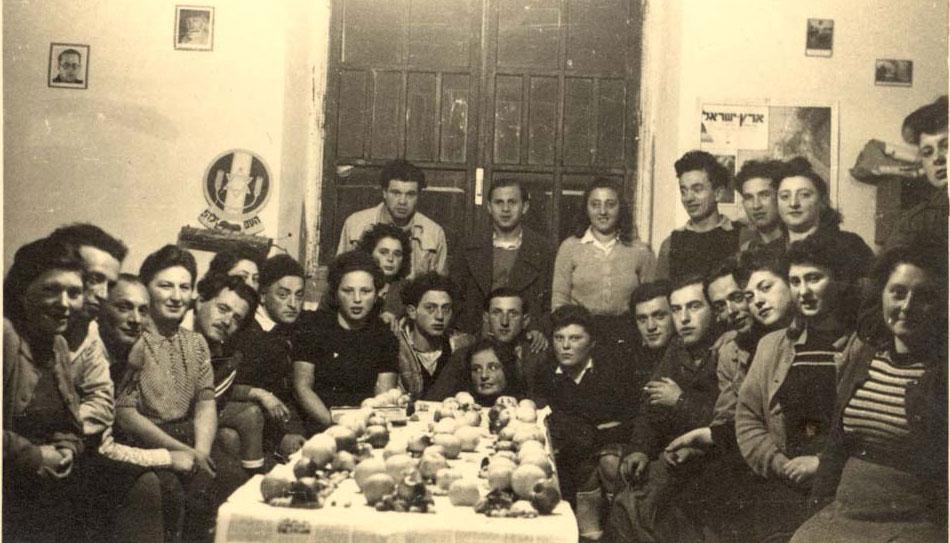
Pictured: Algerian Jews. Date unknown, but thought to be 1930s-40s.
Jews are thought to have first arrived in Algeria in the 2nd century CE, due to revolts against Greek and Roman rule. After Muslim conquest in the 8th century, Jews were considered dhimmis. Many Jews fled to Algeria during the Spanish expulsion, the fall of the Ottoman Empire, and other antisemitic incidents around North Africa.
French colonial rule dissolved their dhimmi status and gave them French citizenship. When Algeria declared independence in 1962, most Algerian Jews fled to France and some to Israel. In 1948, there were 140,000 Jews in Algeria. In 2017, there were an estimated 50 left, mostly in Algiers.
If you'd like to read/listen to/view art by Algerian Jewish artists, try listening to Françoise Atlan and Avraham Tal, reading Elissa Rhaïs and Hélène Cixous, and watch "The Rabbi's Cat" (2011 French film about an Algerian-French rabbi).
Tunisia:
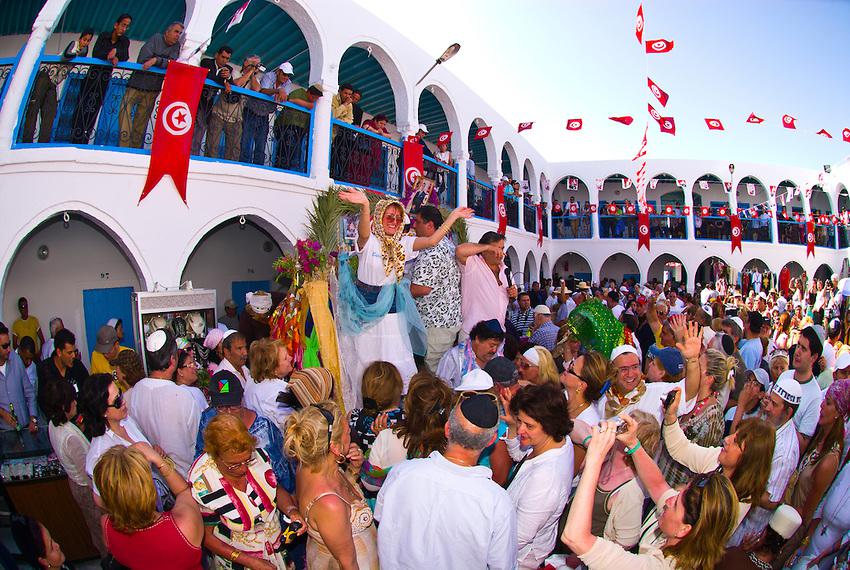
Pictured: Jewish community in Djerba.
Tunis was an important rabbinical center for Sephardic Jews, particularly after the Spanish Expulsion of 1492. Under Muslim rule, Tunisian Jews experienced periods of relative freedom and other periods of legal discrimination and dhimmi status. Germany occupied Tunisia during WWII, horribly mistreating the then-89,000 Tunisian Jews there. Due to increasingly hostile conditions in the 1960s, most fled to Israel or France. There are now an estimated 1,500 Jews left in Tunisia, mostly in the towns of Djerba and Zarzis.
If you'd like to read/listen to/view art by Tunisian Jewish artists, try listening to Kobi Oz and Leila Sfez, reading Nine Moati and Serge Bramly, and checking out art by Ofer Lellouche and Jacob Chemla.
Morocco:

Pictured: Israeli Jewish family of Moroccan heritage.
You may know that Moroccan Jews celebrate a special holiday called Mimouna, which celebrates the end of Passover.
In the 19th and 20th centuries, some Moroccan Jews went to the Amazonian basin (Brazil and Peru) and intermarried with the non-Jews there. During WWII, anti-Jewish laws were put into effect and at least 2,100 Moroccan Jews were interned in work camps.
If you'd like to listen to/view art by Moroccan Jewish artists, try listening to Gad Elbaz, Ninet, and Zehava Ben, reading Haim Shiran and Shelomo Elbaz, and check out art by Michal Cole.
Ethiopia/Eritrea:
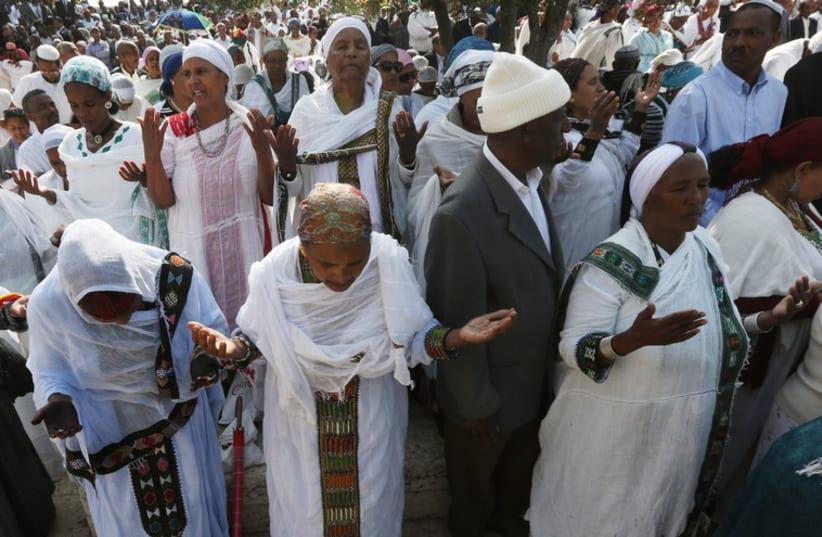
Pictured: Israeli Jews of Beta Israel origin.
Jews from Ethiopia/Eritrea, called the Beta Israel, have a long and fascinating history. According to Beta Israel national legends, they had a kingdom in the 4th century around Gondar. However, Axumite Christianization ultimately toppled that kingdom and made life fairly unpleasant for Beta Israel Jews. It is likely that the Beta Israel were initially proselytized by or intermarried with Egyptian or Yemenite Jews, based on their genetic makeup. In fact, most Beta Israel Torahs and religious texts are written in Ge'ez or Agaw languages rather than Hebrew! Beta Israel Jews also have unique holidays, like Sigd in the late autumn month of Cheshvan.
Unlike the Jews of Sefarad and Ashkenaz, who corresponded and even intermarried with each other, Beta Israel Jews were fairly isolated from the rest of the Jewish population and believed they were the last Jews on earth. It was only in the 1800s that the mainstream Jewish community became aware of the existence of the Beta Israel, and the legitimacy of their Jewish status was contested heavily by Ashkenazi and Sephardi/Mizrachi rabbis.
Since the 1970-90's, many Beta Israel have left for Israel on foot and by American and Israeli airlifts (you can look up Operation Moses, Operation Joshua, and Operation Solomon). Now, there are about 12,000 Beta Israel Jews in Ethiopia, as of 2021, and over 160,000 in Israel (about 2% of the Israeli Jewish population).
If you'd like to read/listen to/view art by Beta Israel Jewish artists, try listening to Ester Rada and Abate Barihun, reading Abraham Adgeh, and checking out art by Julie Mehretu. American comedian/actress Tiffany Haddish also has Ethiopian Jewish heritage, though she was not aware of this ancestry until adulthood and did an Ashkenazi conversion.
Sudan/South Sudan:

Pictured: The last 3 Jews left South Sudan in 2019 and were reunited with their family in Israel.
In 1885, there were a recorded 8 Sephardic Jewish families who were all forcibly converted to Islam. In 1898, when the British took control of Sudan, 6 of these families reverted back to Judaism, and more Jews from all over the Middle East and North Africa came to Sudan (primarily to Khartoum, where the only synagogue and first rabbi were established). Between 1930-50, there were an estimated 1,000 Jews in Sudan.
After the establishment of Israel in 1948, antisemitism increased in Sudan. Between the 50s-70s, most Jews fled to Israel or Switzerland, though some went to the US and UK. Since then, the Jewish cemetery has been desecrated and made into a dumping ground for used car parts, and the only synagogue in Sudan was demolished to build a bank in its place.
Kenya:

Pictured: Jews in rural Kenya.
The Jewish presence in Kenya is deeply connected to the Uganda Program, a proposed plan to create a Jewish autonomous zone in parts of Uganda and Kenya. Between 1899 and 1913, 20 families moved to Kenya, mostly to Nairobi. They established a synagogue and a Jewish cemetery. Nearly all of those Jews moved away, particularly to Israel, after Israel was founded in 1948. Only a few remain in Nairobi.
A small group of Kikuyu-speaking Messianic "Jews" in the Kenyan highlands decided to mass-convert to Judaism after meeting with Nairobi Jews and learning that they were not actually practicing Judaism. With help from the Nairobi Jews and Ugandan Abayudaya, about 60 Kenyans traveled to Uganda to formally convert and undergo circumcisions.
Check out this video of a Shacharit service in Kenya. You can also meet a Kenyan rabbi, R' Samson Nderitu Njogu, at Congregation Beth Sholom in SF!
Uganda:
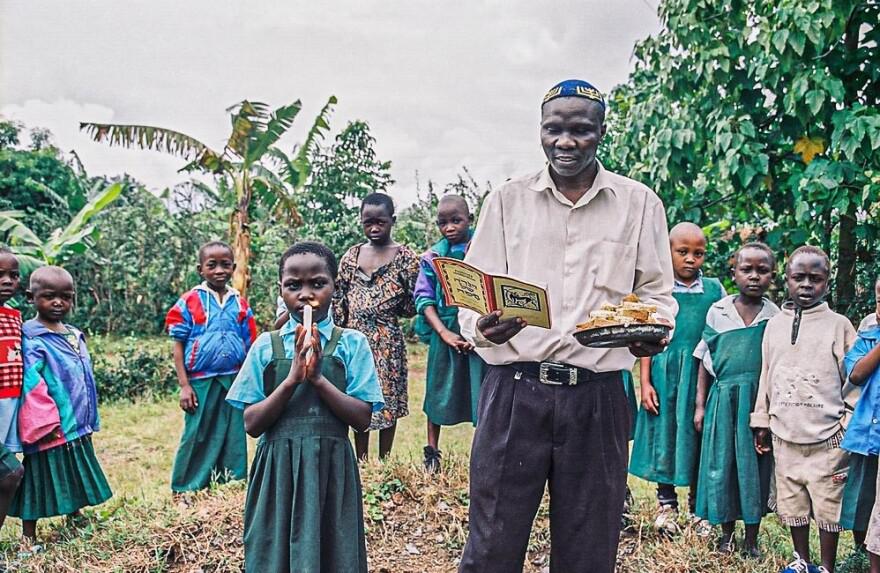
Pictured: Abayudaya Jews in Uganda.
The Jewish community of Uganda, called Abayudaya ("people of Judah"), began in the late 1800s, when a Christian Muganda military leader, Semei Kakungulu, declared himself to be Jewish as an act of resistance against the British. He and his followers became a separatist movement. In 1920, an Ashkenazi Jew named Yosef visited the group and taught them more about Jewish holidays, Shabbat, and kosher. In 1962, a visiting Israeli met the Abayudaya community (about 3,000 members) and opened up communications between them and the broader Jewish world.
However, under Idi Amin in the 1970s, the Jewish community was persecuted and forcibly converted to Christianity and Islam. Only about 300 continued to secretly practice Judaism. Since the 1980s, the community has undergone a revival, with many reverting back to Judaism and formally converting with the help of the Conservative movement. They now have 5 synagogues (including Stern Synagogue, the largest synagogue in sub-Saharan Africa), 2 medical centers, 3 Jewish schools, and a yeshiva.
Here's a video of Ugandan Jews singing prayers on their first trip to Israel. You can also meet the first female Ugandan rabbi, R' Shoshana Nambi, at Congregation Beth Am in Los Altos!
Zimbabwe:
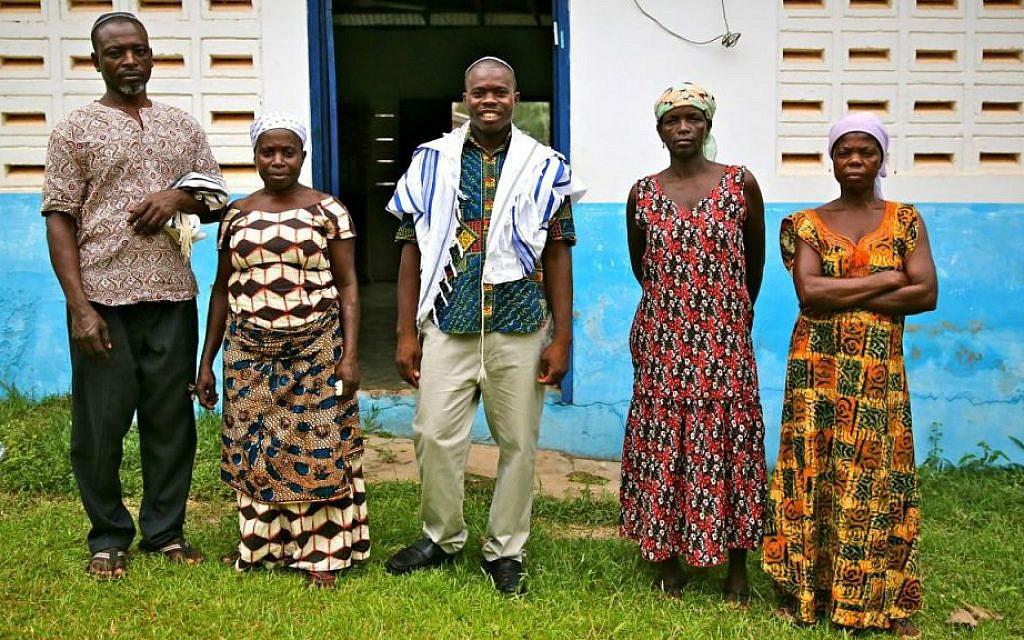
Pictured: Lemba Jews in Zimbabwe.
In the late 1800s, about 300 Ashkenazi Jews from Lithuania, Ukraine, Belarus, Poland, and Russia moved to Zimbabwe (then called Rhodesia) and established 3 synagogues. In the 1930s and 1960s, Sephardic Jews fled from Rhodes and Belgian Congo and established a Sephardic synagogue in Zimbabwe. In the 1930s and 40s, many German Jews fled to Zimbabwe, while many Jews from South Africa and the UK came to Zimbabwe after WWII ended. In 1961, the Jewish population was 7,060.
However, due to the Rhodesian Bush War, most Jews left Zimbabwe for South Africa or Israel. By 1987, the Jewish population was only 1,200, and the last rabbis of the community left in the 1990s. In 2002, when the Jewish community was struggling with poverty and food insecurity, the mayor of Ashkelon (in Israel) offered to help individuals to make aliyah and move to Ashkelon.
In 2003, the synagogue in Bulawayo burned down, and the community could not raise funds to restore it. The Bulawayo community now meets in a rented space. The Jews in Harare attend an Ashkenazi and a Sephardi synagogue there, with some alternating between the two. Today, the majority of the remaining 200 Jews are over 65, with the last bar mitzvah of the community taking place in 2016.
There are also members of the (predominantly Christian and Muslim) Lemba tribe who have reverted to Jewish practices and some parts of halacha, though many still attend Christian church services. Though the Lemba tribe may have some genetic ties to the Jewish community, the mainstream Jewish community does recognize them as Jewish unless they were to convert and stop practicing Christianity. Only a few Lemba people have converted to Judaism.
Nigeria:

Pictured: Igbo Jews in Nigeria.
The Jews of Nigeria are split into two groups: members of the predominantly-Christian Igbo tribe who have mass-converted to Judaism, and the Cross River community, which practices ancient rituals that are similar to Judaism (though their Jewish status is not recognized by mainstream Judaism).
There are about 4,000 Igbo Jews, and they have a Chabad shliach as their chief rabbi, as well as about 26 synagogues. They are supported by orgs like Kulanu and Black Jewish communities in the US. The Cross River community has synagogues in Abuja, Port Harcourt, and Lagos.
Nigerian Jews made headlines in 2021 when they prepared 250,000 Ramadan meals for their Muslim neighbors. Check out this video of Igbo Jews singing a (familiar?) Ashkenazi melody for a Yom Kippur piyyut.
Ivory Coast:

Pictured: The Breslov community in Ivory Coast.
The Jewish community of the Ivory Coast is only about 50 years old, and is comprised of about 40-50 people. Most are converts, except for a few non-Ivorian residents. In 2018, a Chabad with a Breslov minhag was established in Abidjan. The community intends to build a synagogue in Abidjan soon.
Ghana:

Some 200 members of the Sefwi tribe in Ghana, who call themselves the House of Israel, maintain an oral tradition that they have been Jewish for 200 years. In 1976, their leader encouraged the group to revert to mainstream Judaism.
The community has not been able to raise funds for a Jewish school, so their children attend a Christian school. They have a small, one-room synagogue with a mini Torah scroll. Their community is now supported by orgs like Kulanu and Bechol Lashon.
South Africa:
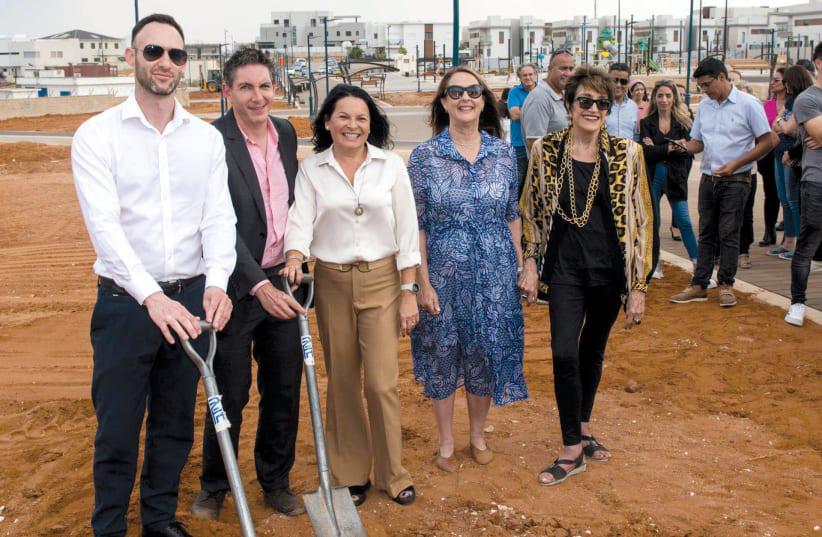
Pictured: Israeli Jews of South African/Lithuanian heritage.
The South African gold rush of the late 1800s brought many European Jews - in 1914, their population was around 40,000. South Africa took in many Lithuanian Jewish refugees in the years leading up to the Holocaust, but passed laws limiting the number of European Jewish refugees allowed entry during the Holocaust. During WWII, many Afrikaners sympathized with the Nazi movement and the National Party (who engineered apartheid) even attempted to block Jewish immigration altogether.
After WWII, many Jews left South Africa for Israel and for Rhodes. During the apartheid period, a significant number of anti-apartheid whites were Jewish. However, now, there is a significant trend of anti-Israel and antisemitic sentiment among South Africans. Since the end of apartheid, many Jews have also immigrated to Australia. About 52-70,000 Jews remain in South Africa, with about 20,000 in Israel and 15,000 in Australia.
If you'd like to read/listen to/view art by South African Jewish artists, try listening to Troye Sivan and Afrique, reading Lionel Abrahams, Shira Nayman, and Sarah Millin, and checking out art by Moses Kottler.