


(ו) וּבְנֵ֣י יִשְׂרָאֵ֗ל נָ֥סְע֛וּ מִבְּאֵרֹ֥ת בְּנֵי־יַעֲקָ֖ן מוֹסֵרָ֑ה שָׁ֣ם מֵ֤ת אַהֲרֹן֙ וַיִּקָּבֵ֣ר שָׁ֔ם וַיְכַהֵ֛ן אֶלְעָזָ֥ר בְּנ֖וֹ תַּחְתָּֽיו׃ (ז) מִשָּׁ֥ם נָסְע֖וּ הַגֻּדְגֹּ֑דָה וּמִן־הַגֻּדְגֹּ֣דָה יׇטְבָ֔תָה אֶ֖רֶץ נַ֥חֲלֵי מָֽיִם׃
(6) From Beeroth-bene-jaakan the Israelites travelled to Moserah. Aaron died there and was buried there; and his son Eleazar became priest in his stead. (7) From there they marched to Gudgod, and from Gudgod to Jotbath, a region of running brooks.
Passuk 6 relates the two locations in their itinerary in their travels back to Egypt, and passuk 7 details the locations they passed on their route back "on track."
However, the exact locations of the "return stops", in passuk 7, are unclear.
If we learn that "Gudgod" is shorthand for "Chor HaGudgod" and "Yatvasa" is the city "Yatvasa", it would be somewhat absurd. By going to Chur HaGudgod, they aren't making progress towards Hor HaHor / Tzalmona, the next leg of the journey.
But the issue is compounded if you learn that Yatvas is the city of Yatvas, because then you would need to explain why they would go further towards Egypt in getting back on track!
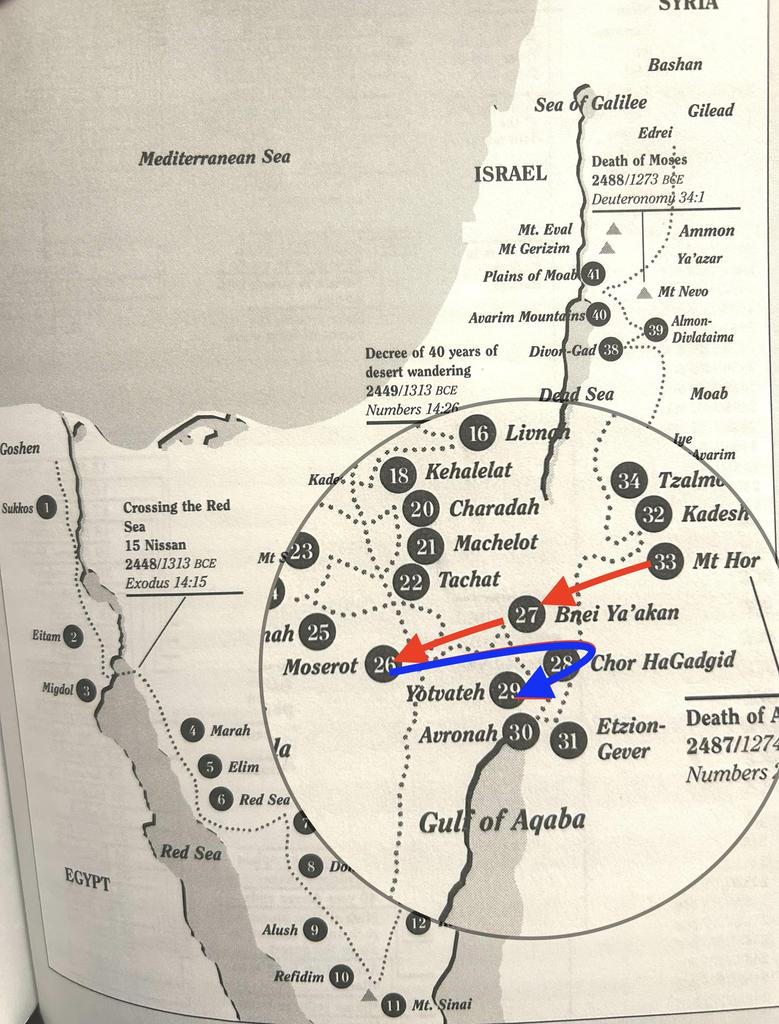
(I showed on the map below what the route would look like according to this "simple" explanation. The mutiny-route is in red and the return route is in blue, credit to map by Bible Basics by Jerome Hahn)
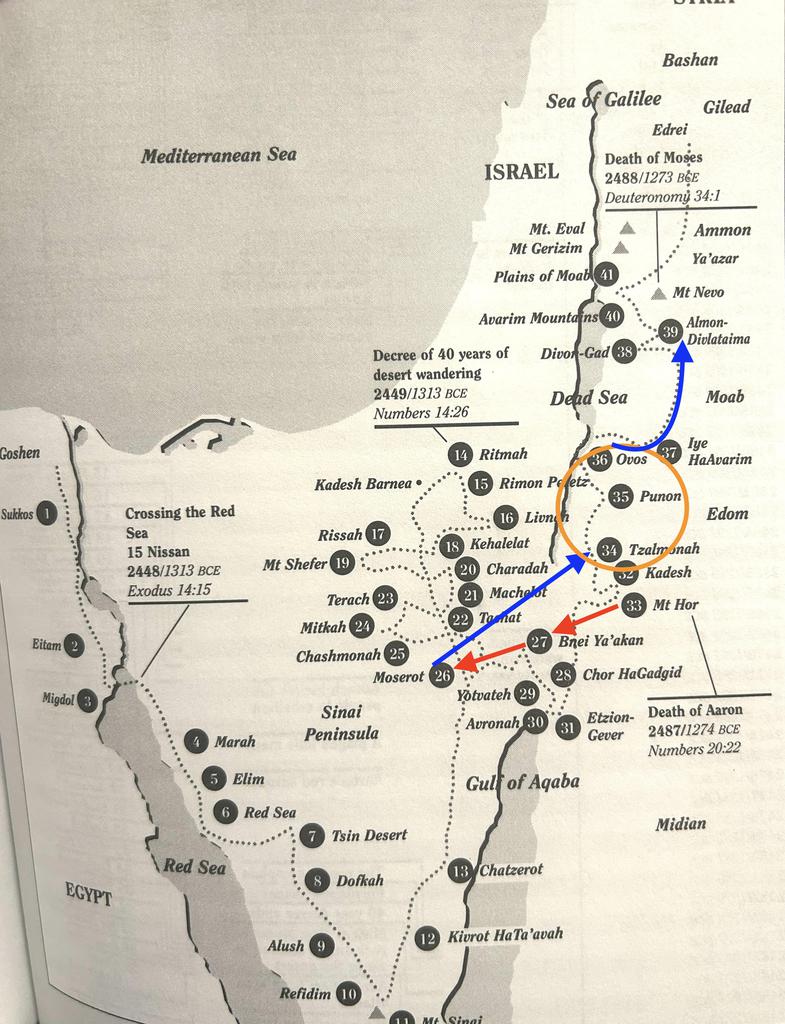
(א) משם נסעו הגדגדה. איננו חור הגדגד רק הוא שם כלל צלמונה גם פונון ואובות: (ב) ויטבתה הוא המקום הנקרא באר כי כן כתוב ומשם בארה וזה טעם ארץ נחלי מים כי במשענותם כרו הנדיבים ויצאו המים...
(1) FROM THENCE THEY JOURNEYED UNTO GUDGOD. The latter is not to be identified with Hor-haggidgad (Num. 33:32).37To which Israel journeyed from Bene-jaakkan. On the contrary, it is a general term for Zalmonah and also for Punon and Oboth (Num. 33:43,44).38Numbers tells us that Israel journeyed from Mount Hor to Zalmonah, Punon and Oboth (Num. 33:43,44). (2) [TO JOTBAH.] Jotbah is the place that is also called Beer,39Hebrew, be’er (well). It is not to be identified with Jotbah in Num. 33:33 to which Israel journeyed from Hor-haggidgad. for Scripture reads, And from thence to Beer (Num. 21:16). This is what a land of brooks of water (v. 7) refers to, for the nobles of the people dug it with their staves and water came forth (Num. 21:18)...
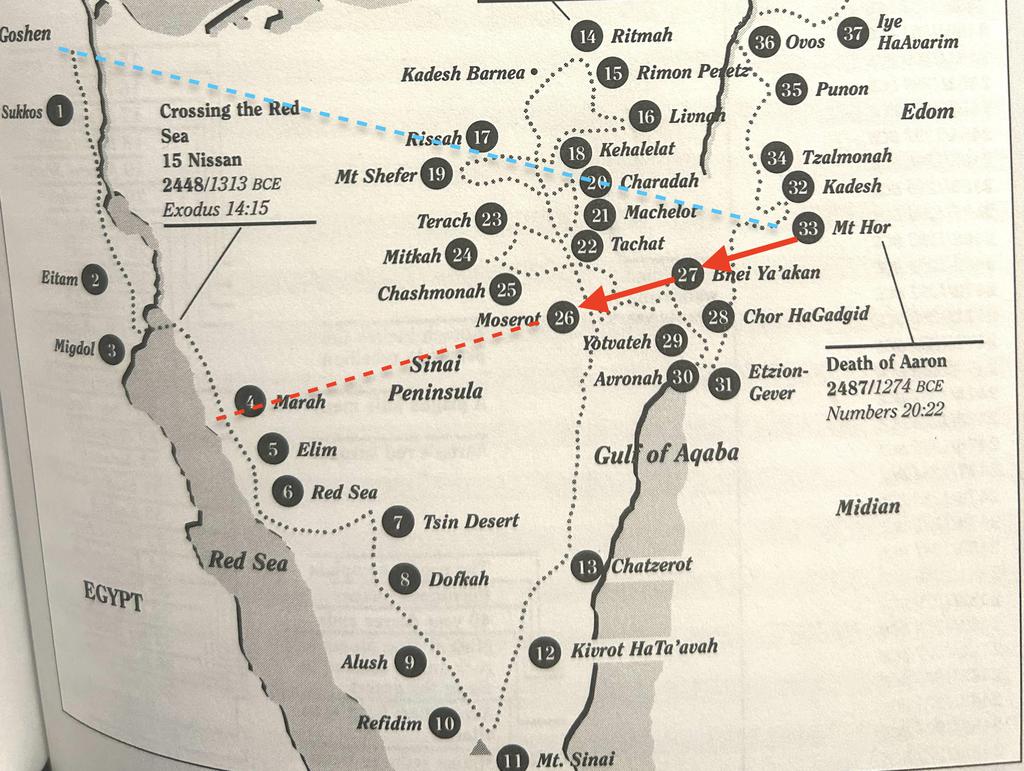
I noticed something interesting about the route that they began to take towards Egypt. Based on their trajectory, they were heading south, and heading straight into the Red Sea. Why didn't they bear further north and make a more direct route for Egypt?
Perhaps to strengthen the question, it could stand to reason that they would want to love in Goshen, which is in Northern Egypt, since that is where the pasture lands were, and presumably wanting to become sheppards?
(The red line shows the path they took and the dotted lines is the trajectory based on the route they took, and the blue dotted line represents the "proposed" trajectory that would lead straight into Egypt.
The Seforno supports this interpretation. He explains that the route was selected with the needs of the livestock in mind, ensuring there would be adequate grazing available at the different encampments. Seforno writes: