


(4) Hear, O Israel! יהוה is our God, יהוה alone (5) You shall love your God יהוה with all your heart and with all your soul and with all your might. (6) Take to heart these instructions with which I charge you this day. (7) Impress them upon your children. Recite them when you stay at home and when you are away, when you lie down and when you get up. (8) Bind them as a sign on your hand and let them serve as a symbol between your eyes. (9) inscribe them on the doorposts of your house and on your gates.
(18) Therefore impress these My words upon your very heart: bind them as a sign on your hand and let them serve as a symbol on your between your eyes. (19) and teach them to your children—reciting them when you stay at home and when you are away, when you lie down and when you get up; (20) and inscribe them on the doorposts of your house and on your gates.
(8) And you shall explain to your child on that day, ‘It is because of what יהוה did for me when I went free from Egypt.’ (9) “And this shall serve you as a sign on your hand and as a reminder on your between your eyes in order that the Teaching of יהוה may be in your mouth—that with a mighty hand יהוה freed you from Egypt. (10) You shall keep this institution at its set time from year to year.
(14) And when, in time to come, a child of yours asks you, saying, ‘What does this mean?’ you shall reply, ‘It was with a mighty hand that יהוה brought us out from Egypt, the house of bondage. (15) When Pharaoh stubbornly refused to let us go, יהוה slew every [male] first-born in the land of Egypt, the first-born of both human and beast. Therefore I sacrifice to יהוה every first male issue of the womb, but redeem every male first-born among my children.’ (16) “And so it shall be as a sign upon your hand and as a symbol between your eyes that with a mighty hand יהוה freed us from Egypt.”
Do not forsake your mother’s teaching. (21) Tie them over your heart always;
Bind them around your throat. (22) When you walk it will lead you;
When you lie down it will watch over you;
And when you are awake it will talk with you. (23) For the commandment is a lamp,
The teaching is a light,
And the way to life is the rebuke that disciplines.
(6) Let me be a seal upon your heart,
Like the seal upon your arm,
For love is fierce as death,
Passion is mighty as Sheol;
Its darts are darts of fire,
A blazing flame.
לאות על ידך, according to the true meaning: an exhortation that this memory should be with you permanently, as if the subject matter had literally been inscribed on your hand. We find a similar syntax in Song of Songs 8,6 שימי כחותם על לבך, “place it on your heart as if it had been engraved there like a seal,” בין עיניך, like a precious jewel which one places on one’s forehead as a decoration.
(2) על ידך ולזכרון בין עיניך — meaning, that you shall write these paragraphs (verses 1—10 and 11—16) and bind them upon the head and upon the arm.
by Dr. Yehudah Cohn
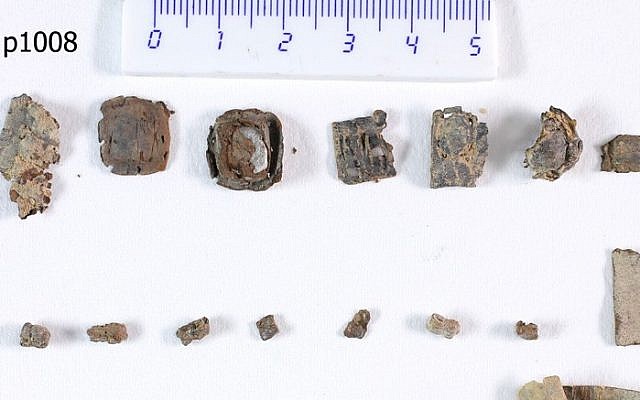
The earliest known tefillin were found together with other Dead Sea Scrolls in the Judean desert, in the mid-twentieth century. They were dated by archaeologists as far back as the 1st or 2nd centuries BCE. Although their texts are more varied than rabbinic tefillin, it is clear that they are based on a specific understanding of the same four verses noted above as associated by the rabbis with the tefillin ritual. A full analysis is beyond the scope of this article, but one particularly anomalous tefillin text from Qumran may provide an important clue as to the origins of the practice.
A remarkable tefillin parchment, known by archaeologists as 4QPhyl N, includes text from Parashat Ha’azinu (also called the Song of Moses), and was part of a set of such parchments that preserve otherwise unremarkable text from tefillin passages found elsewhere at Qumran. Uniquely though, its text seems to bear no direct connection to the four “tefillin verses” discussed above.
Why was the Song of Moses deemed suitable as a tefillin parchment? In all likelihood because both the second paragraph of the Shema, as well as the verses immediately after the Song of Moses in Parashat Ha’azinu, contain references to length of days.
§ And Rav Chananel says that Rav says: the titora of tefillin, i.e., the base of phylacteries upon which the compartments rest, is a halakha from Moses on Sinai. Abaye said: the ma’ebarta of phylacteries, i.e., the passageway through which the straps are inserted, is a halakha from Moses on Sinai. And Abaye says: The shin protruding on the tefillin is a halakha from Moses on Sinai.
It was taught: Tefillin being square is a law from Moses on Sinai. Rav Pappa says along their seams and their diagonals.
Let us say this supports this opinion (Megilla 24b): One who fashions their tefillin in a round shape endangers, and there is no mitzva. Rav Pappa said: the mishna means when they are fashioned like a nut.
Rav Yehuda, son of Rav Shmuel bar Sheilat, says in the name of Rav: The knot of tefillin is a law from Moses on Sinai.
And, Abaye said: the dalet of the tefillin of the head is a halakha transmitted to Moses from Sinai. And, Abaye said: the yod of the tefillin is a halakha transmitted to Moses from Sinai.
...ובעי דליצור בקילפא דביתא צורת דשי"ן דימינא תלתא רישין ודשמאל ד' רישין. אמר אביי אי הוו איפכא פסול...
One needs to create in the case of the Tefillin of the head a shin, on the right with 3 heads, and on the left with 4 heads. Abaye says that if they are the other way around they aren't kosher.
a) The tefillin must be square and must be sewn closed in a square. [Both] diagonals must be equal, and thus all four angles will be equal.
b) The leather of the head [tefillin] should have a shin embossed on both its right and left sides.
c) The passages should be wrapped in fabric.
d) A hair should be wound around that fabric. Afterwards, they should be placed in their compartment.
e) They should be sewn [closed] with the sinews [of an animal].
f) The leather compartment in which they are placed should have a place for the straps to pass through so that they can be moved through the [tefillin's] handle.
g) The straps should be black.
h) The knot with which they are tied should be the renowned knot that is formed like a dalet.
וְלוֹקְחִין עוֹר וּמַרְטִיבִין אוֹתוֹ בְּמַיִם וּמְשִׂימִין בּוֹ אֶת הָעֵץ וּמַכְנִיסִין אֶת הָעוֹר בֵּין כָּל חָרִיץ וְחָרִיץ וּמְכַמְּשִׁים אוֹתוֹ וְהוּא רָטֹב מִכָּאן וּמִכָּאן עַד שֶׁעוֹשִׂין בּוֹ דְּמוּת שִׁי״ן שֶׁיֵּשׁ לָהּ שְׁלֹשָׁה רָאשִׁין מִיָּמִין הַמֵּנִיחַ תְּפִלִּין וּדְמוּת שִׁי״ן שֶׁיֵּשׁ לָהּ אַרְבָּעָה רָאשִׁים מִשְּׂמֹאל הַמֵּנִיחַ:
Three grooves are carved into it so that four projections will be made as depicted. Leather is taken and soaked in water, and then, the mold is placed within it. The leather is inserted in between the grooves.
While [the leather] is still wet, it is plucked and squeezed until the shape of a shin with three heads is formed on the right side of the tefillin as they will be worn, and the shape of a shin with four heads is formed on the left side of the tefillin as they will be worn.

תַּנִּי. רַבָּן שִׁמְעוֹן בֶּן גַּמְלִיאֵל אוֹמֵר. אֵין מְרוּבַּע מִשֵּׁשֶׁת יְמֵי בְּרֵאשִׁית...
It was stated: “Rabban Gamliel says, there is nothing square from the six days of Creation.”...
(מב) אָמְרוּ אִי נִיחָא קַמֵּיהּ דְּמַר לֵימָא לָן מִלָּה. אָמְרוּ שְׁמַעְנָא מֵאֲבוּךְ דְּקוּדְשָׁא בְּרִיךְ הוּא בִּרְחִימוּ סַגִּיאָה דְּהֲוָה לֵיהּ עִם יִשְׂרָאֵל אָמַר לוֹן לְמֶעְבַּד לֵיהּ בֵּי מַשְׁכְּנָא כְּגַוונָא דִּרְתִיכָא עִלָּאָה דִלְעֵילָא וְיֵיתֵי דִיּוּרֵיהּ עִמְּהוֹן הֲדָא הוּא דִכְתִיב, (שמות כ״ה:ח׳) וְעָשׂוּ לִי מִקְדָּשׁ וְשָׁכַנְתִּי בְּתוֹכָם. וְשָׁמַעְנָא מֵאֲבוּךְ דְּהָכָא סָתִים טַעְמָא דִּתְפִילִּין בְּהַאי פְּסוּקָא.
(מג) אָמַר לֵיהּ תָּא חֲזִי, כְּגַוְונָא עִלָּאָה אִתְעֲבַד מִקְדָּשׁ בִּרְתִיכוֹי קַדִּישִׁין, וּבָתַר כֵּן אַשְׁרֵי קוּדְשָׁא בְּרִיךְ הוּא דִּיּוּרֵיהּ עִמְּהוֹן, כְּעִנְיָינָא דָא, וּכְגַוונָא דָא אִתְעָרוּ חַבְרַיָּיא מָארֵי מַתְנִיתָּא בְּטַעְמָא דִּתְפִלִּין, לְמֶהֱוִי הַהוּא גַבְרָא דּוּגְמָא דִרְתִיכֵי עִלָּאִין, רְתִיכָא תַּתָּאָה רְתִיכָא עִלָּאָה, לְמֵיתֵי מַלְכוּתָא דִילֵיהּ וְיַשְׁרֵי דִּיּוּרֵיהּ עִלָוִיה.
(מד) וְתָנִינָן אִית בֵּיהּ רָזִין עִלָּאִין וְדוּגְמֵיהוֹן, וְאִית בֵּיהּ תְּלַת רְתִיכִין, דּוּגְמַת עִלָּאִין קַדִּישִׁין רָזִין דִּתְלַת אַתְוָותָא דִּשְׁמָהָן קַדִּישֵׁי, עָלְמִין תְּלַת, רְתִיכִין תְּלָתָא אַתְוָותָא, אַרְבַּע פָּרָשִׁיּוֹת שַׁלִּיט עַל אַרְבַּע, וְעַל כָּךְ רָזָא דְשי"ן דִּתְלַת כִּתְרִין, ושי"ן דְּאַרְבַּע כִּתְרִין, תְּלָתָא מְלָכִין שַׁלִּיטִין בְּגוּפָא תְּפִילִּין עֲלוֹי קוּדְשָׁא בְּרִיךְ הוּא לְעֵילָא, אִלֵּין תְּפִילִּין דְּרֵישָׁא, תְּפִילִּין דִּדְרוֹעָא אַרְבַּע פָּרָשִׁיָּין.
(42) They said, If it is well before you, Master, may you tell us something. They said, We learned from your father that the Holy One, blessed be He, in His great love for the children of Yisrael, told them to build Him a tabernacle, reflecting the supernal high Chariot, so He might come and dwell among them. This is the meaning of, "And let them make Me a sanctuary, so that I may dwell among them" (Shemot 25:8). We learned from your father that the reason for the Tefilin was hidden in this verse.
(43) He said to them, Come and behold, The Temple was made to reflect the upper one in its holy Chariots. And then the Holy One, blessed be He, caused His Shechinah to dwell among them. In this manner, those versed in the Mishnah discussed the reason for the Tefilin. Any man who wears tefilin will be patterned after the upper Chariots, the lower Chariot and the upper Chariot so that His kingdom will come and the Shechinah will dwell upon him.
(44) We learned that there are deep secrets in the tefilin and its patterns. There are three Chariots within them, like the high and holy ones, reflecting the secrets of the three letters of His Holy Name. For these three Chariots are the three letters YUD-HEI-VAV. The four sections govern the four letters of His Holy Name. This is therefore the secret of the Shin of three crowns and Shin of four crowns, the three kings ruling over the body and the Tefilin upon the Holy One, blessed be He, above the head Tefilin and the hand Tefilin, four sections, which correspond to the Shin with four heads.
