בָּרוּךְ אַתָּה יהוה אֱלֹהֵינוּ מֶלֶך הָעוֹלָם אֲשֶׁר קִדְּשָנוּ בְּמִצְוֹתָיו וְצִוָּנוּ לַעֲסוֹק בְּדִבְרֵי תוֹרָה
בְּרוּךֶ אַתֶה חֲוָיָה שְׁכִינּוּ רוּחַ הָעוֹלָם אֲשֶׁר קִדַשְׁתַנוּ בְּמִצְוֹתֶיהֶ וְצִוְתָנוּ לַעֲסוֹק בְּדִבְרֵי תוֹרָה
בְּרוּכָה אַתְּ יָהּ אֱלֹהָתֵינוּ רוּחַ הָעוֹלָם אֲשֶׁר קֵרְבָתְנוּ לַעֲבוֹדָתָהּ וְצִוְתָנוּ לַעֲסוֹק בְּדִבְרֵי תוֹרָה
Barukh atah Adonai Eloheinu melekh ha’olam asher kid’shanu b’mitzvotav v’tzivanu la’asok b’divrei Torah
Nonbinary Hebrew Project:
B’rucheh ateh Khavayah Shekhinu ruach ha’olam asher kidash’tanu b’mitzvotei’he v’tziv’tanu la’asok b’divrei Torah
Feminine God Language:
Brukhah at Ya Elohateinu ruach ha’olam asher keir’vat’nu la’avodatah v’tziv’tavnu la’asok b’divrei Torah
אָֽנֹכִ֖י֙ יְהֹוָ֣ה אֱלֹהֶ֑֔יךָ אֲשֶׁ֧ר הוֹצֵאתִ֛יךָ מֵאֶ֥רֶץ מִצְרַ֖יִם מִבֵּ֣֥ית עֲבָדִ֑͏ֽים׃ לֹֽ֣א־יִהְיֶ֥͏ֽה־לְךָ֛֩ אֱלֹהִ֥֨ים אֲחֵרִ֖֜ים עַל־פָּנָֽ͏ַ֗י׃ לֹֽ֣א־תַֽעֲשֶׂ֨ה־לְךָ֥֣ פֶ֣֙סֶל֙ ׀ וְכׇל־תְּמוּנָ֔֡ה אֲשֶׁ֤֣ר בַּשָּׁמַ֣֙יִם֙ ׀ מִמַּ֔֡עַל וַֽאֲשֶׁ֥ר֩ בָּאָ֖֨רֶץ מִתָּ֑͏ַ֜חַת וַאֲשֶׁ֥ר בַּמַּ֖֣יִם ׀ מִתַּ֥֣חַת לָאָֽ֗רֶץ׃ לֹֽא־תִשְׁתַּחֲוֶ֥֣ה לָהֶ֖ם֮ וְלֹ֣א תׇעׇבְדֵ֑ם֒ כִּ֣י אָֽנֹכִ֞י יְהֹוָ֤ה אֱלֹהֶ֙יךָ֙ אֵ֣ל קַנָּ֔א פֹּ֠קֵ֠ד עֲוֺ֨ן אָבֹ֧ת עַל־בָּנִ֛ים עַל־שִׁלֵּשִׁ֥ים וְעַל־רִבֵּעִ֖ים לְשֹׂנְאָֽ֑י׃ וְעֹ֥֤שֶׂה חֶ֖֙סֶד֙ לַאֲלָפִ֑֔ים לְאֹהֲבַ֖י וּלְשֹׁמְרֵ֥י מִצְוֺתָֽי׃ {ס}
I יהוה am your God who brought you out of the land of Egypt, the house of bondage: You shall have no other gods besides Me. You shall not make for yourself a sculptured image, or any likeness of what is in the heavens above, or on the earth below, or in the waters under the earth. You shall not bow down to them or serve them. For I your God יהוה am an impassioned God, visiting the guilt of the parents upon the children, upon the third and upon the fourth generations of those who reject Me. but showing kindness to the thousandth generation of those who love Me and keep My commandments.
לא תעשה לך פסל. אפילו שלא לעבדו:
לא תעשה לך פסל, even if you do not mean to use it as an object of worship.
ונראה שיכוין לומר איסור מין עבודה זרה חוץ מהמוזכר בפסוק לא יהיה לך, והוא כי יאמר אדם האמת כי ה' הוא האלהים וכל זולתו אין אבל לצד עוצם גדולתו תתמעט תכונת האדם והשגתו לדבר לפניו ולשאול פרטי שאלותיו כי אינו ממוסר גדר הכבוד שתבא בריה שפלה אפילה כמוני ותשאל שאלות מלפני המלך הגדול והנורא ולפעמים ירבה בפרטי צרכיו דקים ורבים ואיך יהיה לו כל כך עזות פנים להרבות לשאול דקדוקי השאלות, אשר על כן יתיעץ בדעת יצרו שיבחר לדבר דבריו לפני אחד ממשמשי עליון המשמשים לפניו במרום והוא יעזור לו גם יהיה אמצעי לדבר דבריו לפני המלך הגדול בדבר הגדול אם יצטרך ובאמצעות כן כבד יכבד את השמש ההוא ויברכהו וישתחוה לפניו בדרך כל הכבוד והמעלה שבזה יתרצה לשאת משאו עליו לעשות לו צרכיו. ודע כי טעות זה בה טעו רוב העובדים עבודה זרה כי יודעים הם שעובדים ללא אלוה אלא כדי שיהיה להם לאמצעי וכו' כנזכר, ובחינה זו לא יקרא לה שם אלוה אלא פסל כי הוא יודע כי לא אלוה הוא וזה הוא פסלותו שאין בו כח אלהי ופסולת הוא לפני העיקר שהוא הבורא עולם, או קראו פסל כי הוא עומד להתפסל כשיעבירנו ה' מממשלתו על ידי סיבה או על ידי סיבת זה המשתחוה לו שיהא גורם להתפסל על דרך אומרם ז"ל (איכה רבתי פ"ב) במעשה דור המבול שאמרו אנו משביעים לשרים הממונים וכו' וה' העביר ממשלת השרים כאומרו (ישעיהו מ״ג:כ״ח) ואחלל שרי קודש. וצוה ה' גם על בחינה זו ואמר לא תעשה לך פסל פירוש הגם כי לך בעצמך בדעתך שהוא פסל אף על פי כן לא תעשהו לך.
Apparently, the Torah speaks about a prohibition of idol worship over and above that which was mentioned in verse 3. It may well refer to the person who believes in the One and only G'd but, who, due to G'd's invisibility, desires to remind himself of His existence and all-pervasiveness by means of a symbol such as a picture or a sculpture. When such a person offers up a prayer he feels more comfortable if he can concentrate on a visual image of sorts; hence he constructs for himself such an image in order to pray more intensely to our One and only G'd. Or, such a worshiper may feel embarassed to bother G'd Himself with all his little problems, but he feels at ease speaking of these problems to someone whom he considers merely a subordinate of G'd. Most of the idol worshipers have fallen victim to this error. Originally, they knew very well that they did not bow down in front of a deity but only in front of one of G'd's servants whom they had decided to adopt as a symbol. The reason that the Torah refers to such a sculpture as פסל and not as אלוה is precisely because that is all the sculpture meant to the person who fashioned it. The word is closely connected to פסולת, refuse, something to be discarded; as such it reminds a person that it has no intrinsic value or power. Another reason the Torah may call it פסל is that it is liable to become worthless as soon as G'd decides to rob it of its value because someone had idolised it. We find something along these lines in Eycha Rabbati chapter 2 where the people of the generation which perished during the deluge [in my edition this seems to apply to the generation of the time of Jeremiah, Ed.] are described as making use of G'd's celestial forces to overcome their enemies. G'd outmanoeuvered them by changing the names of these various forces so that people could not make improper use of their knowledge of the powers invested in these celestial forces. At any rate, G'd said: "Do not make a פסל for yourself (of anything representing celestial forces) even if you are fully aware that it has no intrinsic value." G'd then continued to describe what purpose such a פסל was meant to serve, i.e. to bow down to it.
גְּמָ׳ וּמִי שְׁרֵי? וְהָכְתִיב: ״לֹא תַעֲשׂוּן אִתִּי״ — לֹא תַּעֲשׂוּן כִּדְמוּת שַׁמָּשַׁיי. אָמַר אַבָּיֵי: לָא אָסְרָה תּוֹרָה אֶלָּא שַׁמָּשִׁין שֶׁאֶפְשָׁר לַעֲשׂוֹת כְּמוֹתָן, כִּדְתַנְיָא: לֹא יַעֲשֶׂה אָדָם בַּיִת תַּבְנִית הֵיכָל, אַכְסַדְרָה תַּבְנִית אוּלָם, חָצֵר כְּנֶגֶד עֲזָרָה, שֻׁלְחָן כְּנֶגֶד שֻׁלְחָן, מְנוֹרָה כְּנֶגֶד מְנוֹרָה. אֲבָל עוֹשֶׂה שֶׁל חֲמִשָּׁה וְשֶׁל שִׁשָּׁה וְשֶׁל שְׁמוֹנָה. וְשֶׁל שִׁבְעָה — לֹא יַעֲשֶׂה, אֲפִילּוּ שֶׁל שְׁאָר מִינֵי מַתָּכוֹת. רַבִּי יוֹסֵי בַּר יְהוּדָה אוֹמֵר: אַף שֶׁל עֵץ לֹא יַעֲשֶׂה, כְּדֶרֶךְ שֶׁעָשׂוּ מַלְכֵי בֵּית חַשְׁמוֹנַאי. אָמְרוּ לוֹ: מִשָּׁם רְאָיָיה?! שַׁפּוּדִין שֶׁל בַּרְזֶל הָיוּ וְחִיפּוּם בְּבַעַץ. הֶעֱשִׁירוּ — עֲשָׂאוּם שֶׁל כֶּסֶף, חָזְרוּ הֶעֱשִׁירוּ — עֲשָׂאוּם שֶׁל זָהָב. וְשַׁמָּשִׁין שֶׁאִי אֶפְשָׁר לַעֲשׂוֹת כְּמוֹתָן מִי שְׁרֵי? וְהָתַנְיָא: ״לֹא תַעֲשׂוּן אִתִּי״ — לֹא תַּעֲשׂוּן כִּדְמוּת שַׁמָּשַׁיי הַמְשַׁמְּשִׁין לְפָנַי בַּמָּרוֹם! אָמַר אַבָּיֵי: לֹא אָסְרָה תּוֹרָה אֶלָּא דְּמוּת אַרְבָּעָה פָּנִים בַּהֲדֵי הֲדָדֵי. אֶלָּא מֵעַתָּה פַּרְצוּף אָדָם לְחוֹדֵיהּ תִּשְׁתְּרֵי? אַלְּמָה תַּנְיָא: כׇּל הַפַּרְצוּפוֹת מוּתָּרִין חוּץ מִפַּרְצוּף אָדָם! אָמַר רַב הוּנָא בְּרֵיהּ דְּרַב אִידִי: מִפִּרְקֵיהּ דְּאַבָּיֵי שְׁמִיעָא לִי: ״לֹא תַעֲשׂוּן אִתִּי״ — לֹא תַּעֲשׂוּן אוֹתִי. וּשְׁאָר שַׁמָּשִׁין מִי שְׁרֵי? וְהָא תַּנְיָא ״לֹא תַעֲשׂוּן אִתִּי״ — לֹא תַּעֲשׂוּן כִּדְמוּת שַׁמָּשַׁיי הַמְּשַׁמְּשִׁין לְפָנַי בַּמָּרוֹם, כְּגוֹן אוֹפַנִּים וּשְׂרָפִים וְחַיּוֹת הַקּוֹדֶשׁ וּמַלְאֲכֵי הַשָּׁרֵת! אָמַר אַבָּיֵי: לֹא אָסְרָה תּוֹרָה אֶלָּא שַׁמָּשִׁין שֶׁבַּמָּדוֹר הָעֶלְיוֹן. וְשֶׁבַּמָּדוֹר הַתַּחְתּוֹן מִי שְׁרֵי? וְהָתַנְיָא: ״אֲשֶׁר בַּשָּׁמַיִם״ — לְרַבּוֹת חַמָּה וּלְבָנָה כּוֹכָבִים וּמַזָּלוֹת, ״מִמַּעַל״ — לְרַבּוֹת מַלְאֲכֵי הַשָּׁרֵת! כִּי תַּנְיָא הָהִיא — לְעׇבְדָם. אִי לְעׇבְדָם, אֲפִילּוּ שִׁלְשׁוּל קָטָן נָמֵי! אִין הָכִי נָמֵי, דְּתַנְיָא: ״אֲשֶׁר בָּאָרֶץ״ — לְרַבּוֹת הָרִים וּגְבָעוֹת יַמִּים וּנְהָרוֹת אֲפִיקִים וְגֵאָיוֹת, ״מִתַּחַת״ — לְרַבּוֹת שִׁלְשׁוּל קָטָן. וַעֲשִׂיָּיה גְּרֵידְתָּא מִי שְׁרֵי? וְהָתַנְיָא: ״לֹא תַעֲשׂוּן אִתִּי״ — לֹא תַּעֲשׂוּן כִּדְמוּת שַׁמָּשַׁיי הַמְשַׁמְּשִׁין לְפָנַי, כְּגוֹן חַמָּה וּלְבָנָה כּוֹכָבִים וּמַזָּלוֹת. שָׁאנֵי רַבָּן גַּמְלִיאֵל, דַּאֲחֵרִים עָשׂוּ לוֹ. וְהָא רַב יְהוּדָה, דַּאֲחֵרִים עָשׂוּ לוֹ, וַאֲמַר לֵיהּ שְׁמוּאֵל לְרַב יְהוּדָה: שִׁינָּנָא, סַמִּי עֵינֵיהּ דְּדֵין! הָתָם, חוֹתָמוֹ בּוֹלֵט הֲוָה, וּמִשּׁוּם חֲשָׁדָא. כִּדְתַנְיָא: טַבַּעַת, חוֹתָמוֹ בּוֹלֵט — אָסוּר לְהַנִּיחָהּ וּמוּתָּר לַחְתּוֹם בָּהּ. חוֹתָמוֹ שׁוֹקֵעַ — מוּתָּר לְהַנִּיחָהּ וְאָסוּר לַחְתּוֹם בָּהּ. וּמִי חָיְישִׁינַן לַחֲשָׁדָא? וְהָא הָהִיא בֵּי כְנִישְׁתָּא דְּשַׁף וִיתֵיב בִּנְהַרְדְּעָא, דַּהֲוָה בֵּיהּ אִנְדְּרָטָא, וַהֲווֹ עָיְילִי רַב וּשְׁמוּאֵל וַאֲבוּהּ דִּשְׁמוּאֵל וְלֵוִי וּמְצַלּוּ הָתָם, וְלָא חָיְישִׁי לַחֲשָׁדָא! רַבִּים שָׁאנֵי. וְהָא רַבָּן גַּמְלִיאֵל יָחִיד הוּא? כֵּיוָן דְּנָשִׂיא הוּא — שְׁכִיחִי רַבִּים גַּבֵּיהּ. אִיבָּעֵית אֵימָא: דִּפְרָקִים הֲוָה. וְאִיבָּעֵית אֵימָא: לְהִתְלַמֵּד עֲבַד, וּכְתִיב: ״לֹא תִּלְמַד לַעֲשׂוֹת״ — אֲבָל אַתָּה לָמֵד לְהָבִין וּלְהוֹרוֹת.
GEMARA: The Gemara asks: And is it permitted to create these types of forms? Isn’t it written: “You shall not make with Me gods of silver, or gods of gold” (Exodus 20:20), which is interpreted as teaching: You shall not make images of My attendants, i.e., those celestial bodies that were created to serve God, including the sun and the moon? § Abaye said: The Torah prohibited only the images of those attendants with regard to which it is possible to reproduce an item in their likeness. Since it is impossible for anyone to reproduce the sun and the moon, the prohibition does not apply to these objects. As it is taught in a baraita: A person may not construct a house in the exact form of the Sanctuary, nor a portico in the exact form of the Entrance Hall of the Sanctuary, nor a courtyard corresponding to the Temple courtyard, nor a table corresponding to the table in the Temple, nor a candelabrum corresponding to the candelabrum in the Temple. However, one may fashion a candelabrum of five or of six or of eight lamps. But one may not fashion a candelabrum with seven lamps even if he constructs it from other kinds of metal rather than gold, as in exigent circumstances the candelabrum in the Temple may be fashioned from other metals. Rabbi Yosei bar Yehuda says: Also, one may not fashion a candelabrum of wood, in the manner that the kings of the Hasmonean monarchy fashioned it. The other Sages said to Rabbi Yosei bar Yehuda: From there you seek to bring a proof? There the branches of the candelabrum were comprised of spits [shippudin] of iron and they covered them with tin. Later, when they grew richer and could afford a candelabrum of higher-quality material, they fashioned them from silver. When they grew even richer, they fashioned them from gold. The Gemara asks: And is it really permitted to form images of those attendants concerning which it is impossible to reproduce their likeness? Isn’t it taught in a baraita that the verse: “You shall not make with Me gods of silver” (Exodus 20:19), comes to teach: You shall not make images of My attendants that serve before Me on high. Apparently, this includes the sun and the moon. Abaye said: This does not include the sun and the moon, as the Torah prohibited only the fashioning of an image of all four faces of the creatures of the Heavenly Chariot together (see Ezekiel, chapter 1). The Gemara raises a difficulty: However, if that is so, let the fashioning of an image of a human face [partzuf ] alone be permitted. Why, then, is it taught in a baraita: All faces are permitted for ornamental purposes, except for the face of a person? Rav Huna, son of Rav Idi, said: From a lecture of Abaye I heard that there is a different reason why one may not form an image of a human face, as the verse states: “You shall not make with Me [iti]” (Exodus 20:19). This can be read as: You shall not make Me [oti]. Since man is created in the image of God, it is prohibited to form an image of a human being. The Gemara asks: And is it permitted to form images of other attendants? Isn’t it taught in another baraita that the verse: “You shall not make with Me gods of silver” (Exodus 20:19), teaches that you shall not make images of My attendants that serve before Me on high, for example, ofanim and seraphim and the sacred ḥayyot and the ministering angels. Abaye said: The Torah prohibited only those attendants that are found in the upper Heaven, i.e., the supreme angels in the highest firmament, but not the celestial bodies, e.g., the sun and the moon, despite the fact that they too are located in heaven. The Gemara raises another difficulty: And is it permitted to form images of those bodies found in the lower heaven? Isn’t it taught in a baraita: “You shall not make for yourself any graven image, nor any manner of likeness, of anything that is in heaven above, or that is in the earth beneath, or that is in the water under the earth” (Exodus 20:3). The phrase “that is in heaven” comes to include the sun, the moon, the stars, and the constellations. The term “above” serves to include the ministering angels. Apparently, it is prohibited to form an image even of the celestial bodies found in the lower Heaven. The Gemara answers: When that baraita is taught, it is in reference to the prohibition against worshipping them. However, there is no prohibition against forming an image in their likeness. The Gemara asks: If that baraita is referring to the prohibition against worshipping them, then even a tiny worm should also be prohibited. The Gemara answers: Yes, it is indeed so, as it is taught in the same baraita with regard to the continuation of the verse, “in the earth” comes to include mountains and hills, seas and rivers, streams and valleys; “beneath” comes to include a tiny worm. If so, it is indeed possible to explain that the entire baraita is referring to the prohibition against idol worship. The Gemara raises yet another objection: And is the mere fashioning of images of the celestial bodies permitted? Isn’t it taught in another baraita: “You shall not make with Me gods of silver” (Exodus 20:19). This verse teaches that you shall not make images of My attendants that serve before Me, for example the sun, the moon, the stars and the constellations. This is explicit proof that it is prohibited to form images of the sun and the moon; consequently, the solution proposed by Abaye is rejected, leaving the difficulty with Rabban Gamliel’s diagram unresolved. The Gemara proposes an alternative resolution: The case of Rabban Gamliel is different, as others, i.e., gentiles, fashioned those images for him, and it is prohibited only for a Jew to fashion such images; there is no prohibition against having them in one’s possession. The Gemara raises a difficulty: But there is the case of Rav Yehuda, as others fashioned for him a seal in the form of a human being, and Shmuel said to Rav Yehuda, who was his student: Sharp-witted one, blind this one’s eyes, i.e., disfigure the image, as it is prohibited even to have the image of a human being in one’s possession. The Gemara answers: There, in the case of Rav Yehuda, his was a protruding seal, i.e., the image projected from the ring, and Shmuel prohibited it due to the potential suspicion that he had an object of idol worship in his hand. As it is taught in a baraita: With regard to a ring, if its seal protrudes it is prohibited to place it on one’s finger, due to the suspicion of idol worship, but it is permitted to seal objects with it. In this case, the act of sealing creates an image that is sunken below the surface, which is not prohibited. However, if its seal is sunken, it is permitted to place it on one’s finger, but it is prohibited to seal objects with it, as that creates a protruding image. The Gemara asks: And are we concerned about arousing suspicion in a case of this kind? But what about that certain synagogue that had been destroyed in Eretz Yisrael and its stones were relocated and it was rebuilt so that it sat in Neharde’a, and there was a statue [andarta] of the king in it. And nevertheless Rav and Shmuel and Shmuel’s father and Levi would all enter and pray there and they were not concerned about arousing suspicion. The Gemara answers: When many Jews are present it is different, as a large group is not suspected of having idolatrous intentions. Rather, it is assumed that the statue is there exclusively for purposes of ornamentation. The Gemara asks: But isn’t Rabban Gamliel an individual? According to this reasoning, his images of the moon should have been prohibited, as they would have aroused suspicion. The Gemara answers: Since he is the Nasi, the head of the Great Sanhedrin, many people were always found with him, and therefore there was no room for suspicion. The Gemara suggests an alternative answer: If you wish, say that these images were not whole; rather, they were formed from pieces of images that had to be put together. Only complete images are prohibited. The Gemara suggests yet another answer: If you wish, say: Rabban Gamliel did this to teach himself, which is not prohibited, as it is written: “You shall not learn to do after the abominations of those nations” (Deuteronomy 18:9), which indicates: However, you may learn to understand and to teach. In other words, it is permitted to do certain things for the sake of Torah study which would otherwise be prohibited.
אָסוּר לַעֲשׂוֹת צוּרוֹת לְנוֹי וְאַף עַל פִּי שֶׁאֵינָהּ עֲבוֹדַת כּוֹכָבִים שֶׁנֶּאֱמַר (שמות כ כ) "לֹא תַעֲשׂוּן אִתִּי" כְּלוֹמַר צוּרוֹת שֶׁל כֶּסֶף וְזָהָב שֶׁאֵינָם אֶלָּא לְנוֹי כְּדֵי שֶׁלֹּא יִטְּעוּ בָּהֶן הַטּוֹעִים וִידַמּוּ שֶׁהֵם לַעֲבוֹדַת כּוֹכָבִים. וְאֵין אִסּוּר לָצוּר לְנוֹי אֶלָּא צוּרַת הָאָדָם בִּלְבַד. לְפִיכָךְ אֵין מְצַיְּרִים לֹא בְּעֵץ וְלֹא בְּסִיד וְלֹא בְּאֶבֶן צוּרַת הָאָדָם. וְהוּא שֶׁתִּהְיֶה הַצּוּרָה בּוֹלֶטֶת כְּגוֹן הַצִּיּוּר וְהַכִּיּוּר שֶׁבַּטְּרַקְלִין וְכַיּוֹצֵא בָּהֶן וְאִם צָר לוֹקֵה. אֲבָל אִם הָיִתָה הַצּוּרָה מֵשִׁקַעַת אוֹ צוּרָה שֶׁל סַמָּנִין כְּגוֹן הַצּוּרוֹת שֵׁעַל גַּבֵּי הַלּוּחוֹת וִהַטַּבְלִיּוֹת אוֹ צוּרוֹת שֶׁרוֹקְמִין בָּאָרִיג הֲרֵי אֵלּוּ מֻתָּרוֹת:
It is prohibited to make images for decorative purposes, even though they do not represent false deities, as [implied by Exodus 20:20]: "Do not make with Me [gods of silver and gods of gold]." This refers even to images of gold and silver which are intended only for decorative purposes, lest others err and view them as deities.It is forbidden to make decorative images of the human form alone. Therefore, it is forbidden to make human images with wood, cement, or stone. This [prohibition] applies when the image is protruding - for example, images and sculptures made in a hallway and the like. A person who makes such an image is [liable for] lashes.In contrast, it is permitted to make human images that are engraved or painted - e.g., portraits, whether on wood or on stone - or that are part of a tapestry.
וְעָשִׂ֛יתָ שְׁנַ֥יִם כְּרֻבִ֖ים זָהָ֑ב מִקְשָׁה֙ תַּעֲשֶׂ֣ה אֹתָ֔ם מִשְּׁנֵ֖י קְצ֥וֹת הַכַּפֹּֽרֶת׃ וַ֠עֲשֵׂ֠ה כְּר֨וּב אֶחָ֤ד מִקָּצָה֙ מִזֶּ֔ה וּכְרוּב־אֶחָ֥ד מִקָּצָ֖ה מִזֶּ֑ה מִן־הַכַּפֹּ֛רֶת תַּעֲשׂ֥וּ אֶת־הַכְּרֻבִ֖ים עַל־שְׁנֵ֥י קְצוֹתָֽיו׃ וְהָי֣וּ הַכְּרֻבִים֩ פֹּרְשֵׂ֨י כְנָפַ֜יִם לְמַ֗עְלָה סֹכְכִ֤ים בְּכַנְפֵיהֶם֙ עַל־הַכַּפֹּ֔רֶת וּפְנֵיהֶ֖ם אִ֣ישׁ אֶל־אָחִ֑יו אֶ֨ל־הַכַּפֹּ֔רֶת יִהְי֖וּ פְּנֵ֥י הַכְּרֻבִֽים׃
Make two cherubim of gold—make them of hammered work—at the two ends of the cover. Make one cherub at one end and the other cherub at the other end; of one piece with the cover shall you make the cherubim at its two ends. The cherubim shall have their wings spread out above, shielding the cover with their wings. They shall confront each other, the faces of the cherubim being turned toward the cover.
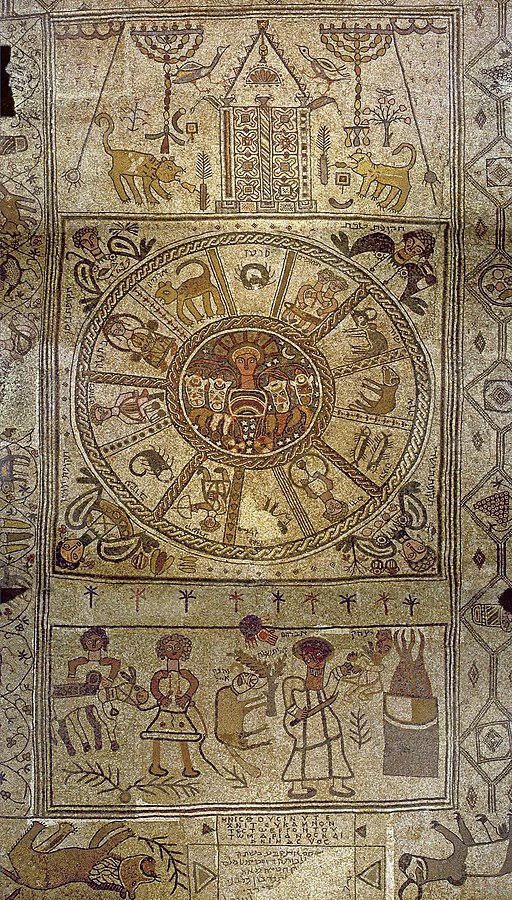
Photograph of the ancient mosaic floor at the synagogue in Beit Alfa, ancient Jezreel Valley: