



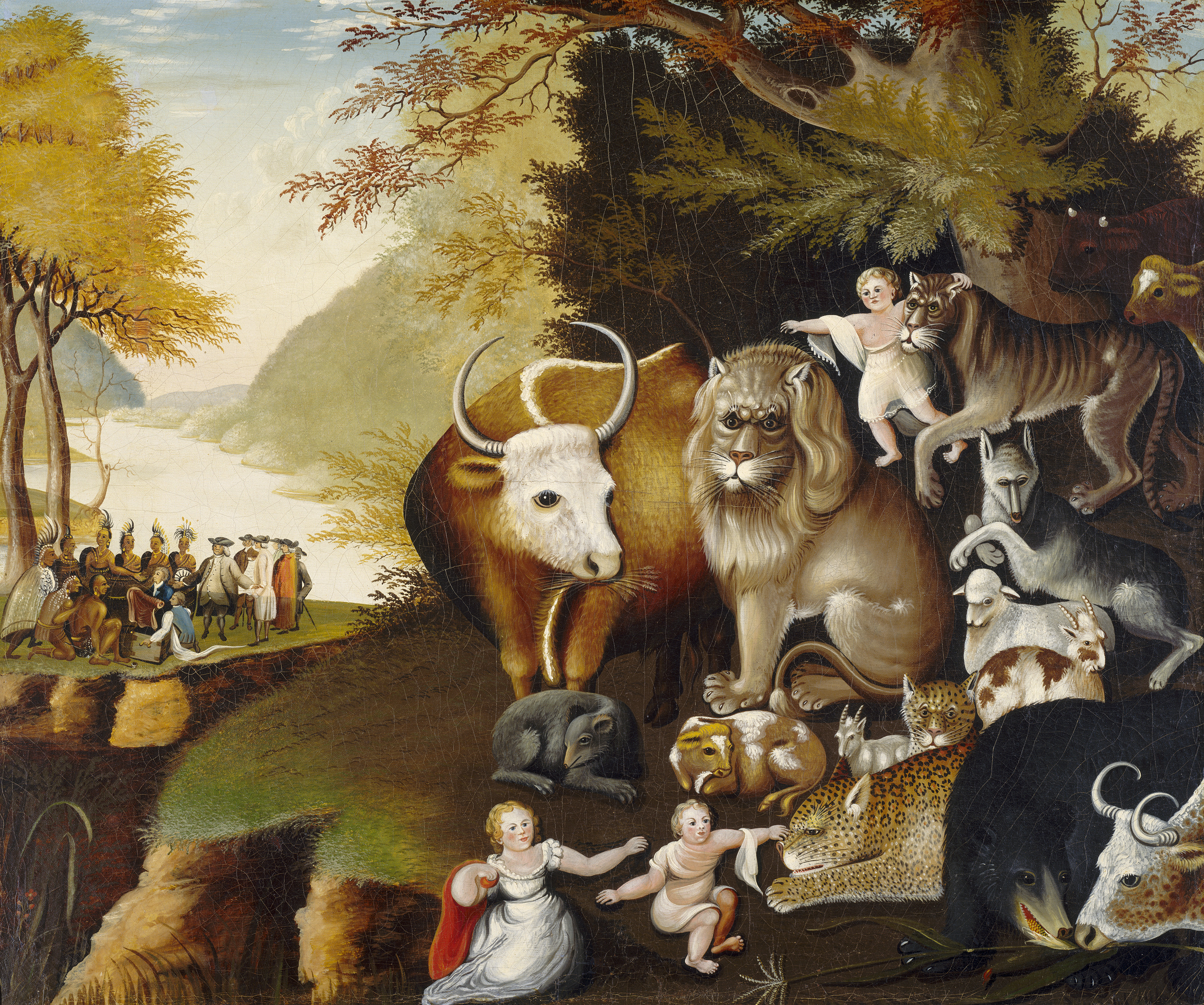
The Torah and subsequent Jewish texts have much to say about the topic of Jews eating meat from animals. In short, vegetarianism is the Jewish ideal, meat is a concession, and you should limit your meat consumption. Keeping kosher (Jewish dietary laws) is a way to encourage both limited meat eating and also an awareness that eating meat requires taking a life created by G-d.
(כט) וַיֹּ֣אמֶר אֱלֹהִ֗ים הִנֵּה֩ נָתַ֨תִּי לָכֶ֜ם אֶת־כָּל־עֵ֣שֶׂב ׀ זֹרֵ֣עַ זֶ֗רַע אֲשֶׁר֙ עַל־פְּנֵ֣י כָל־הָאָ֔רֶץ וְאֶת־כָּל־הָעֵ֛ץ אֲשֶׁר־בּ֥וֹ פְרִי־עֵ֖ץ זֹרֵ֣עַ זָ֑רַע לָכֶ֥ם יִֽהְיֶ֖ה לְאָכְלָֽה׃ (ל) וּֽלְכָל־חַיַּ֣ת הָ֠אָרֶץ וּלְכָל־ע֨וֹף הַשָּׁמַ֜יִם וּלְכֹ֣ל ׀ רוֹמֵ֣שׂ עַל־הָאָ֗רֶץ אֲשֶׁר־בּוֹ֙ נֶ֣פֶשׁ חַיָּ֔ה אֶת־כָּל־יֶ֥רֶק עֵ֖שֶׂב לְאָכְלָ֑ה וַֽיְהִי־כֵֽן׃
(29) And God said: ‘Behold, I have given you every herb yielding seed, which is upon the face of all the earth, and every tree, in which is the fruit of a tree yielding seed—to you it shall be for food; (30) and to every beast of the earth, and to every fowl of the air, and to every thing that creepeth upon the earth, wherein there is a living soul, [I have given] every green herb for food.’ And it was so.
(כא) וַיָּ֣רַח יְהֹוָה֮ אֶת־רֵ֣יחַ הַנִּיחֹ֒חַ֒ וַיֹּ֨אמֶר יְהֹוָ֜ה אֶל־לִבּ֗וֹ לֹֽא־אֹ֠סִ֠ף לְקַלֵּ֨ל ע֤וֹד אֶת־הָֽאֲדָמָה֙ בַּעֲב֣וּר הָֽאָדָ֔ם כִּ֠י יֵ֣צֶר לֵ֧ב הָאָדָ֛ם רַ֖ע מִנְּעֻרָ֑יו וְלֹֽא־אֹסִ֥ף ע֛וֹד לְהַכּ֥וֹת אֶת־כׇּל־חַ֖י כַּֽאֲשֶׁ֥ר עָשִֽׂיתִי׃ (כב) עֹ֖ד כׇּל־יְמֵ֣י הָאָ֑רֶץ זֶ֡רַע וְ֠קָצִ֠יר וְקֹ֨ר וָחֹ֜ם וְקַ֧יִץ וָחֹ֛רֶף וְי֥וֹם וָלַ֖יְלָה לֹ֥א יִשְׁבֹּֽתוּ׃ (א) וַיְבָ֣רֶךְ אֱלֹהִ֔ים אֶת־נֹ֖חַ וְאֶת־בָּנָ֑יו וַיֹּ֧אמֶר לָהֶ֛ם פְּר֥וּ וּרְב֖וּ וּמִלְא֥וּ אֶת־הָאָֽרֶץ׃ (ב) וּמוֹרַאֲכֶ֤ם וְחִתְּכֶם֙ יִֽהְיֶ֔ה עַ֚ל כׇּל־חַיַּ֣ת הָאָ֔רֶץ וְעַ֖ל כׇּל־ע֣וֹף הַשָּׁמָ֑יִם בְּכֹל֩ אֲשֶׁ֨ר תִּרְמֹ֧שׂ הָֽאֲדָמָ֛ה וּֽבְכׇל־דְּגֵ֥י הַיָּ֖ם בְּיֶדְכֶ֥ם נִתָּֽנוּ׃ (ג) כׇּל־רֶ֙מֶשׂ֙ אֲשֶׁ֣ר הוּא־חַ֔י לָכֶ֥ם יִהְיֶ֖ה לְאׇכְלָ֑ה כְּיֶ֣רֶק עֵ֔שֶׂב נָתַ֥תִּי לָכֶ֖ם אֶת־כֹּֽל׃ (ד) אַךְ־בָּשָׂ֕ר בְּנַפְשׁ֥וֹ דָמ֖וֹ לֹ֥א תֹאכֵֽלוּ׃
(21) יהוה smelled the pleasing odor, and יהוה resolved: “Never again will I doom the earth because of humankind, since the devisings of the human mind are evil from youth; nor will I ever again destroy every living being, as I have done. (22) So long as the earth endures, Seedtime and harvest, Cold and heat, Summer and winter, Day and night Shall not cease.” (1) God blessed Noah and his sons, and said to them, “Be fertile and increase, and fill the earth. (2) The fear and the dread of you shall be upon all the beasts of the earth and upon all the birds of the sky—everything with which the earth is astir—and upon all the fish of the sea; they are given into your hand. (3) Every creature that lives shall be yours to eat; as with the green grasses, I give you all these. (4) You must not, however, eat flesh with its life-blood in it.
(1) In the third year of the reign of King Jehoiakim of Judah, King Nebuchadnezzar of Babylon came to Jerusalem and laid siege to it. (2) The Lord delivered King Jehoiakim of Judah into his power, together with some of the vessels of the House of God, and he brought them to the land of Shinar to the house of his god; he deposited the vessels in the treasury of his god. (3) Then the king ordered Ashpenaz, his chief officer, to bring some Israelites of royal descent and of the nobility— (4) youths without blemish, handsome, proficient in all wisdom, knowledgeable and intelligent, and capable of serving in the royal palace—and teach them the writings and the language of the Chaldeans. (5) The king allotted daily rations to them from the king’s food and from the wine he drank. They were to be educated for three years, at the end of which they were to enter the king’s service. (6) Among them were the Judahites Daniel, Hananiah, Mishael, and Azariah. (7) The chief officer gave them new names; he named Daniel Belteshazzar, Hananiah Shadrach, Mishael Meshach, and Azariah Abed-nego. (8) Daniel resolved not to defile himself with the king’s food or the wine he drank, so he sought permission of the chief officer not to defile himself, (9) and God disposed the chief officer to be kind and compassionate toward Daniel. (10) The chief officer said to Daniel, “I fear that my lord the king, who allotted food and drink to you, will notice that you look out of sorts, unlike the other youths of your age—and you will put my life in jeopardy with the king.” (11) Daniel replied to the guard whom the chief officer had put in charge of Daniel, Hananiah, Mishael, and Azariah, (12) “Please test your servants for ten days, giving us legumes to eat and water to drink. (13) Then compare our appearance with that of the youths who eat of the king’s food, and do with your servants as you see fit.” (14) He agreed to this plan of theirs, and tested them for ten days. (15) When the ten days were over, they looked better and healthier than all the youths who were eating of the king’s food. (16) So the guard kept on removing their food, and the wine they were supposed to drink, and gave them legumes. (17) God made all four of these young men intelligent and proficient in all writings and wisdom, and Daniel had understanding of visions and dreams of all kinds. (18) When the time the king had set for their presentation had come, the chief officer presented them to Nebuchadnezzar. (19) The king spoke with them, and of them all none was equal to Daniel, Hananiah, Mishael, and Azariah; so these entered the king’s service. (20) Whenever the king put a question to them requiring wisdom and understanding, he found them to be ten times better than all the magicians and exorcists throughout his realm. (21) Daniel was there until the first year of King Cyrus.
(ו) וְגָ֤ר זְאֵב֙ עִם־כֶּ֔בֶשׂ וְנָמֵ֖ר עִם־גְּדִ֣י יִרְבָּ֑ץ וְעֵ֨גֶל וּכְפִ֤יר וּמְרִיא֙ יַחְדָּ֔ו וְנַ֥עַר קָטֹ֖ן נֹהֵ֥ג בָּֽם׃ (ז) וּפָרָ֤ה וָדֹב֙ תִּרְעֶ֔ינָה יַחְדָּ֖ו יִרְבְּצ֣וּ יַלְדֵיהֶ֑ן וְאַרְיֵ֖ה כַּבָּקָ֥ר יֹאכַל־תֶּֽבֶן׃ (ח) וְשִֽׁעֲשַׁ֥ע יוֹנֵ֖ק עַל־חֻ֣ר פָּ֑תֶן וְעַל֙ מְאוּרַ֣ת צִפְעוֹנִ֔י גָּמ֖וּל יָד֥וֹ הָדָֽה׃ (ט) לֹא־יָרֵ֥עוּ וְלֹֽא־יַשְׁחִ֖יתוּ בְּכׇל־הַ֣ר קׇדְשִׁ֑י כִּֽי־מָלְאָ֣ה הָאָ֗רֶץ דֵּעָה֙ אֶת־יְהֹוָ֔ה כַּמַּ֖יִם לַיָּ֥ם מְכַסִּֽים׃ {ס}
(6) The wolf shall dwell with the lamb, The leopard lie down with the kid; The calf, the beast of prey, and the fatling together, With a little boy to herd them. (7) The cow and the bear shall graze, Their young shall lie down together; And the lion, like the ox, shall eat straw. (8) A babe shall play Over a viper’s hole, And an infant pass its hand Over an adder’s den. (9) In all of My sacred mount Nothing evil or vile shall be done; For the land shall be filled with devotion to. GOD As water covers the sea.
(20) In that day, I will make a covenant for them with the beasts of the field, the birds of the air, and the creeping things of the ground; I will also banish bow, sword, and war from the land. Thus I will let them lie down in safety.
(1) יהוה spoke to Moses and Aaron, saying to them: (2) Speak to the Israelite people thus: These are the creatures that you may eat from among all the land animals: (3) any animal that has true hoofs, with clefts through the hoofs, and that chews the cud—such you may eat. (4) The following, however, of those that either chew the cud or have true hoofs, you shall not eat: the camel—although it chews the cud, it has no true hoofs: it is impure for you; (5) the rabbit—although it chews the cud, it has no true hoofs: it is impure for you; (6) the hare—although it chews the cud, it has no true hoofs: it is impure for you; (7) and the swine—although it has true hoofs, with the hoofs cleft through, it does not chew the cud: it is impure for you. (8) You shall not eat of their flesh or touch their carcasses; they are impure for you.
Note that both rabbits and hares are forbidden -- hares are bigger than rabbits with longer ears, and hares tend to run from predators while rabbits prefer to hide.
(13) The following you shall abominate among the birds—they shall not be eaten, they are an abomination: the eagle, the vulture, and the black vulture; (14) the kite, falcons of every variety; (15) all varieties of raven; (16) the ostrich, the nighthawk, the sea gull; hawks of every variety; (17) the little owl, the cormorant, and the great owl; (18) the white owl, the pelican, and the bustard; (19) the stork; herons of every variety; the hoopoe, and the bat.
וַיְדַבֵּר ה' אֶל מֹשֶׁה לֵאמֹר, זֹאת הַחַיָּה אֲשֶׁר תֹּאכְלוּ....אָמַר לוֹ: רַבִּי, מָה אִכְפַּת לוֹ לְהַקָּדוֹשׁ בָּרוּךְ הוּא שֶׁיֹּאכְלוּ יִשְׂרָאֵל בְּלֹא שְׁחִיטָה, שֶׁיְּהֵא יִשְׂרָאֵל נוֹחֵר וְאוֹכֵל וְשׁוֹחֵט מִן הַצַּוָּאר מִן הַיֶּרֶךְ. תֵּדַע, שֶׁלֹּא נִצְטַוָּה הַשְּׁחִיטָה הַזּוֹ אֶלָּא כְּדֵי לְצָרֵף אֶת יִשְׂרָאֵל,
(Lev. 11:1-2) “Then the Lord spoke unto Moses…, saying, ‘… these are the creatures that you may eat….’” ...They said to him. “Rabbi, what does the Holy Blessed One care whether one ritually slaughters cattle and eats [the meat] or whether one slaughters cattle by stabbing and eats it? Will some such thing benefit God or harm God?” Know that this ritual slaughter was given only to purify Israel.
|
The modern, mechanized, commercial animal factories that process most of the animal flesh we consume utilize methods that transgress the fundamental Jewish principle of “tsa’ar ba’alei chaim” - responding to the suffering of animals - and violate the spirit, if not the letter, of the kosher dietary laws. The contemporary commentator Rabbi Pinchas Peli, in Torah Today, writes that “the laws of kashrut come to teach us that a Jew’s first preference should be a vegetarian meal. If, however, one cannot control a craving for meat,...” the dietary laws should “...serve as a reminder that the animal being eaten is a creature of God, that the death of such a creature cannot be taken lightly, that hunting for sport is forbidden, that we cannot treat any living thing callously, and that we are responsible for what happens to other beings (human or animal) even if we did not personally come into contact with them.” (Rabbi Jonathan Rubenstein, The Jewish World) |
"וכי מה אכפת לו להקדוש ברוך הוא בין מי שהוא שוחט מן הצואר למי שהוא שוחט מן העורף?... אבל אמיתת הדבר היא כי כאשר הביא ההכרח לאכילת בעלי חיים כוון למיתה הקלה עם קלות המעשה - שאי אפשר הכאת הצואר אלא בסיף וכיוצא בו והשחיטה אפשר בכל דבר; ולברור מיתה קלה התנו חידוד הסכין.
What difference does it make to God whether a beast is killed by cutting the neck in front or in the back? ... For as it has become necessary to eat the flesh of animals, it was intended by the above regulations to ensure an easy death and to effect it by suitable means; whilst decapitation requires a sword or a similar instrument, the shechitah can be performed with any instrument; and in order to ensure an easy death our Sages insisted that the knife should be well sharpened.
(א) הקובע סכין בגלגל אם מותר לשחוט בו. ובו סעיף אחד:
יכול אדם לקבוע סכין בגלגל של אבן או של עץ ומסבב הגלגל בידו או ברגלו. ומשים שם צואר הבהמה או העוף עד שישחט בסביבת הגלגל. ואם המים הם המסבבים את הגלגל ושם הצואר כנגדו בשעה שסבב ונשחט הרי זו פסולה (ל' הרמב"ם שם דין י"ג) ואם פטר אדם את המים עד שבאו וסבבו את הגלגל ושחט בסביבתו הרי זה כשרה בדיעבד שהרי מכח אדם בא במה דברים אמורים בסביבה ראשונה שהיא מכח האדם אבל מסביבה שנייה ולאחריה פסולה שהרי אינה מכח האדם אלא מכח המים בהילוכן:
(1) Seif 1 A person may set a knife on a wheel of stone or wood that rotates by one's hand or foot, and proceed (with the contraption) to the neck of the animal or fowl until it is slaughtered by turning the wheel. (and it is acceptable). And if water rotates the wheel and he places the neck of [the animal] opposite it while it was turning causing it to be slaughtered, it is unacceptable. An exemption is made if a person caused the water to flow until they turned the wheel and caused it to slaughter by turning it, [if so the slaughter] is acceptable after the fact because the act came as a result of man's actions. However (a slaughtering that results) from a second rotation is unacceptable because the force did not come from man's power, but from the power of the flowing water.
I have observed that when kosher slaughter of cattle is done well, there is almost no reaction from the animal when the throat is cut. Flicking my hand near the animal’s face caused a bigger reaction. When the cut is done well, 90% or more of the cattle will collapse and become unconscious within 30 seconds.
(20) When the Eternal enlarges your territory, as promised, and you say, “I shall eat some meat,” for you have the urge to eat meat, you may eat meat whenever you wish.
How grudgingly is such permission granted! ‘If you cannot resist the temptation and must eat meat, then do so’ seems to be the tenor of this barely tolerated dispensation.”
תָּנוּ רַבָּנַן: כְּשֶׁחָרַב הַבַּיִת בַּשְּׁנִיָּה, רַבּוּ פְּרוּשִׁין בְּיִשְׂרָאֵל שֶׁלֹּא לֶאֱכוֹל בָּשָׂר וְשֶׁלֹּא לִשְׁתּוֹת יַיִן. נִטְפַּל לָהֶן רַבִּי יְהוֹשֻׁעַ, אָמַר לָהֶן: בָּנַי, מִפְּנֵי מָה אִי אַתֶּם אוֹכְלִין בָּשָׂר וְאֵין אַתֶּם שׁוֹתִין יַיִן? אָמְרוּ לוֹ: נֹאכַל בָּשָׂר – שֶׁמִּמֶּנּוּ מַקְרִיבִין עַל גַּבֵּי מִזְבֵּחַ, וְעַכְשָׁיו בָּטֵל? נִשְׁתֶּה יַיִן – שֶׁמְּנַסְּכִין עַל גַּבֵּי הַמִּזְבֵּחַ, וְעַכְשָׁיו בָּטֵל? אָמַר לָהֶם: אִם כֵּן, לֶחֶם לֹא נֹאכַל – שֶׁכְּבָר בָּטְלוּ מְנָחוֹת! אֶפְשָׁר בְּפֵירוֹת. פֵּירוֹת לֹא נֹאכַל – שֶׁכְּבָר בָּטְלוּ בִּכּוּרִים! אֶפְשָׁר בְּפֵירוֹת אֲחֵרִים. מַיִם לֹא נִשְׁתֶּה – שֶׁכְּבָר בָּטֵל נִיסּוּךְ הַמַּיִם! שָׁתְקוּ. אָמַר לָהֶן: בָּנַי, בּוֹאוּ וְאוֹמַר לָכֶם: שֶׁלֹּא לְהִתְאַבֵּל כׇּל עִיקָּר אִי אֶפְשָׁר – שֶׁכְּבָר נִגְזְרָה גְּזֵרָה; וּלְהִתְאַבֵּל יוֹתֵר מִדַּאי אִי אֶפְשָׁר – שֶׁאֵין גּוֹזְרִין גְּזֵירָה עַל הַצִּבּוּר, אֶלָּא אִם כֵּן רוֹב צִבּוּר יְכוֹלִין לַעֲמוֹד בָּהּ... תַּנְיָא, אָמַר רַבִּי יִשְׁמָעֵאל בֶּן אֱלִישָׁע: מִיּוֹם שֶׁחָרַב בֵּית הַמִּקְדָּשׁ, דִּין הוּא שֶׁנִּגְזוֹר עַל עַצְמֵנוּ שֶׁלֹּא לֶאֱכוֹל בָּשָׂר וְלֹא לִשְׁתּוֹת יַיִן; אֶלָּא אֵין גּוֹזְרִין גְּזֵרָה עַל הַצִּבּוּר אֶלָּא אִם כֵּן רוֹב צִבּוּר יְכוֹלִין לַעֲמוֹד בָּהּ.
§ Having mentioned the prohibition against plastering, which is a sign of mourning over the destruction of the Temple, the Gemara discusses related matters. The Sages taught in a baraita (Tosefta, Sota 15:11): When the Temple was destroyed a second time, there was an increase in the number of ascetics among the Jews, whose practice was to not eat meat and to not drink wine. Rabbi Yehoshua joined them to discuss their practice. He said to them: My children, for what reason do you not eat meat and do you not drink wine? They said to him: Shall we eat meat, from which offerings are sacrificed upon the altar, and now the altar has ceased to exist? Shall we drink wine, which is poured as a libation upon the altar, and now the altar has ceased to exist? Rabbi Yehoshua said to them: If so, we will not eat bread either, since the meal-offerings that were offered upon the altar have ceased. They replied: You are correct. It is possible to subsist with produce. He said to them: We will not eat produce either, since the bringing of the first fruits have ceased. They replied: You are correct. We will no longer eat the produce of the seven species from which the first fruits were brought, as it is possible to subsist with other produce. He said to them: If so, we will not drink water, since the water libation has ceased. They were silent, as they realized that they could not survive without water. Rabbi Yehoshua said to them: My children, come, and I will tell you how we should act. To not mourn at all is impossible, as the decree was already issued and the Temple has been destroyed. But to mourn excessively as you are doing is also impossible, as the Sages do not issue a decree upon the public unless a majority of the public is able to abide by it... It is taught in a baraita (Tosefta, Sota 15:10) that Rabbi Yishmael ben Elisha said: From the day that the Temple was destroyed, by right, we should decree upon ourselves not to eat meat and not to drink wine, but the Sages do not issue a decree upon the public unless a majority of the public is able to abide by it.
(ד) וְהָֽאסַפְסֻף֙ אֲשֶׁ֣ר בְּקִרְבּ֔וֹ הִתְאַוּ֖וּ תַּאֲוָ֑ה וַיָּשֻׁ֣בוּ וַיִּבְכּ֗וּ גַּ֚ם בְּנֵ֣י יִשְׂרָאֵ֔ל וַיֹּ֣אמְר֔וּ מִ֥י יַאֲכִלֵ֖נוּ בָּשָֽׂר׃
(4) The riffraff in their midst felt a gluttonous craving; and then the Israelites wept and said, “If only we had meat to eat!
(34) That place was named Kivrot-hata'avah, because the people who had the craving were buried there.
(18) If a parent has a wayward and defiant child, who does not heed their father or mother and does not obey them even after they discipline him, (19) their father and mother shall take hold of him and bring him out to the elders of his town at the public place of his community. (20) They shall say to the elders of his town, “This child of ours is disloyal and defiant; he does not heed us. He is a glutton and a drunkard.”
...he does not become a stubborn and rebellious son, unless he actually eats meat and actually drinks wine, as it is stated: “This son of ours is stubborn and rebellious; he does not listen to our voice; he…is a glutton [zolel] and a drunkard [vesovei]” (Deuteronomy 21:20). One is not called a glutton and a drunkard unless he eats meat and drinks wine....as it is stated: “Be not among wine drunkards, nor among meat gluttons” (Proverbs 23:20).
..צִוּוּ חֲכָמִים בְּדֶרֶךְ אֶרֶץ שֶׁלֹּא יֹאכַל אָדָם בָּשָׂר אֶלָּא לְתֵאָבוֹן. שֶׁנֶּאֱמַר (דברים יב כ) "כִּי תְאַוֶּה נַפְשְׁךָ לֶאֱכל בָּשָׂר". דַּיּוֹ לַבָּרִיא לֶאֱכל בָּשָׂר מֵעֶרֶב שַׁבָּת לְעֶרֶב שַׁבָּת.
The sages instructed us that the proper path is that one should not eat meat save when craving it, even as it is said: "Because thy soul desires to eat flesh" (Deut. 12.20). It is enough for a healthy person to eat meat from Friday night to Friday night.
(י) אֲכִילַת בָּשָׂר וּשְׁתִיַּת יַיִן בְּשַׁבָּת עֹנֶג הוּא לוֹ. וְהוּא שֶׁהָיְתָה יָדוֹ מַשֶּׂגֶת.
(10) Eating meat and drinking wine is considered delight (oneg), as long as one can afford it.
(ב) יַרְבֶּה בְּבָשָׂר וְיַיִן וּמִגְדָּנוֹת כְּפִי יְכָלְתּוֹ.
[on Shabbat] one should eat lots of meat, wine and sweets.
מילים: פייטן לא ידוע
לחן: לא ידוע
מַה יְּדִידוּת מְנוּחָתֵךְ, אַתְּ שַׁבָּת הַמַּלְכָּה. בְּכֵן נָרוּץ לִקְרָאתֵךְ, בּואִי כַלָּה נְסוּכָה. לְבוּשׁ בִּגְדֵי חֲמוּדות, לְהַדְלִיק נֵר בִּבְרָכָה. וַתֵּכֶל כָּל הָעֲבודות, לא תַעֲשוּ מְלָאכָה: לְהִתְעַנֵּג בְּתַעֲנוּגִים. בַּרְבּוּרִים וּשלָיו וְדָגִים: מֵעֶרֶב מַזְמִינִים כָּל מִינֵי מַטְעַמִּים. מִבְּעוד יום מוּכָנִים תַּרְנְגולִים מְפֻטָּמִים. וְלַעֲרוךְ כַּמָּה מִינִים, שְׁתות יֵינות מְבֻשּמִים. וְתַפְנוּקֵי מַעֲדַנִּים, בְּכָל שָׁלשׁ פְּעָמִים: לְהִתְעַנֵּג בְּתַעֲנוּגִים. בַּרְבּוּרִים וּשלָיו וְדָגִים: [לפיוט עוד 4 בתים] |
Ma Y’didut (one of the Shabbat Z’mirot songs)
How sweet thy precious gift of rest
Queen Sabbath, cherished far and wide!
Let us speed in thy quest,
Haste, we'll greet our pure bride
Decked in splendid robes to meet her.
To our homes the lamp shall be her sure guide.
Labour o'er, we will greet her.
Cease your toil, at home in peace abide.
Let's rejoice to-day with viands fairest
Set in choice array, with morsels rarest,
Fat capons, quails and fish,
Each upon a lordly dish.
... וְהָאֲנָשִׁים אוֹכְלִין בָּשָׂר וְשׁוֹתִין יַיִן שֶׁאֵין שִׂמְחָה אֶלָּא בְּבָשָׂר וְאֵין שִׂמְחָה אֶלָּא בְּיַיִן. וּכְשֶׁהוּא אוֹכֵל וְשׁוֹתֶה חַיָּב לְהַאֲכִיל לַגֵּר לַיָּתוֹם וְלָאַלְמָנָה עִם שְׁאָר הָעֲנִיִּים הָאֻמְלָלִים. אֲבָל מִי שֶׁנּוֹעֵל דַּלְתוֹת חֲצֵרוֹ וְאוֹכֵל וְשׁוֹתֶה הוּא וּבָנָיו וְאִשְׁתּוֹ וְאֵינוֹ מַאֲכִיל וּמַשְׁקֶה לַעֲנִיִּים וּלְמָרֵי נֶפֶשׁ אֵין זוֹ שִׂמְחַת מִצְוָה אֶלָּא שִׂמְחַת כְּרֵסוֹ...
[on Yom tov] people should eat meat and drink wine, for there is no real rejoicing without the use of meat and wine. While eating and drinking, one must feed the stranger, the orphan, the widow, and other poor unfortunates. Anyone, however, who locks the doors of his courtyard and eats and drinks along with his wife and children, without giving anything to eat and drink to the poor and the desperate, does not observe a religious celebration but indulges in the celebration of his stomach.
בית יוסף אורח חיים סימן תקכט
ויש לתמוה על הרמב"ם למה הצריך שיאכלו בשר וישתו יין דהא בברייתא קתני דבזמן הזה אין שמחה אלא ביין ומשמע דביין סגי בלא בשר:
Beit Yosef, Joseph Caro's Commentary on the Tur
And there is good reason to be astonished at the words of Maimonides, why he made the eating of meat and drinking of wine mandatory on festivals, because the rabbis taught that in this time (now that the temple has been destroyed) the only happiness is with wine, which implies that wine alone is sufficient and meat is not required.
The verse states “a trapping” to indicate that in any case, one is obligated to cover the blood of an undomesticated animal. If so, what is the meaning when the verse states: “Who traps,” if it is not to be understood literally? The baraita explains: The Torah taught that it is a desired mode of behavior that a person should consume meat only with this mode of preparation. That is, just as the meat that one traps is not readily available, so too, one should not become accustomed to consuming meat. In a similar vein, the Sages taught in a baraita that the verse states: “When the Lord, your God, expands your boundary…according to every craving of your soul you may eat meat” (Deuteronomy 12:20). The Torah taught that it is a desired mode of behavior that a person should consume meat due only to appetite. That is, one should consume meat only when he feels a need to eat it. The baraita continues: One might have thought that a person may purchase meat from the marketplace and consume it. Therefore, the next verse states: “And you may slaughter of your cattle and of your flock,” indicating that one should consume the meat of animals of his own flock, not those purchased in the marketplace. One might have thought that a person may slaughter all of his cattle, i.e., his only cow, and consume the meat, or slaughter all of his flock, i.e., his only sheep, and consume the meat. Therefore, the verse states: “Of your cattle,” indicating some, but not all of, your cattle; “of your flock,” but not all of your flock. From here, Rabbi Elazar ben Azaria said: One who has one hundred dinars should purchase a litra of vegetables for his stewpot [lefaso]; one who has one thousand dinars should purchase a litra of fish for his stewpot; one who has five thousand dinars should purchase a litra of meat for his stewpot; and if one has ten thousand dinars, his servants should place a pot of meat on the stove for him every day. The Gemara asks: And with regard to these other individuals mentioned by Rabbi Elazar ben Azaria, when, i.e., how often, should they consume meat? The Gemara responds: Every Shabbat eve.
“A person should only eat meat on rare appointed occasions, and the reason is that a person should not become accustomed to eating meat, as it is written, ‘You shall eat meat with all your desire. Eat it, however, as you eat the gazelle and the deer…’ (Deut. 12:21-22) This means that you should eat meat by circumstance rather than in a set way. For the gazelle and the deer are not easily found around human dwellings... Consequently, since one eats them rarely, he will not come to habituate himself to eating ordinary meat since it gives birth to cruelty and other bad qualities in the body of a the person. For it is the birds of prey that kill and eat meat, and the lion that kills prey and eats. Therefore it says that in the future, ‘The lion like the ox will eat straw. For there will be peace between all living creatures.’ (Isaiah 11:7)” (Kli Yakar on Chulin 84a)
The 16th to 17th century Polish Torah commentator Solomon Efraim Lunschitz, author of K’li Yakar [a commentary to the Torah]:
“What was the necessity for the entire procedure of ritual slaughter? For the sake of self-discipline. It is far more appropriate for a person not to eat meat; only if he has a strong desire for meat does the Torah permit it, and even this only after the trouble and inconvenience necessary to satisfy his desire. Perhaps because of the bother and annoyance of the whole procedure, he will be restrained from such a strong and uncontrollable desire for meat.”
(Quoted in http://www.myjewishlearning.com/article/rav-kook-vegetarianism/2/.)
(ט) יש נוהגים שלא לאכול בשר ושלא לשתות יין בשבת זו (ומותר בחומץ של יין) (אגודה ומהרי"ל) ויש שמוסיפין מראש חדש עד התענית ויש שמוסיפין מי"ז בתמוז: הגה ומצניעים מר"ח ואילך הסכין של שחיטה (ר' ירוחם ני"א ח"ג והגהות מיימוני) שאין שוחטים כי אם לצורך מצוה) כגון לחולה או שבת או מילה או פדיון הבן וכיוצא בו:
(9) 9. There are those that are accustomed not to eat meat nor drink wine this week. But, it is allowed to use wine vinegar [Agudah and Maharil]. And there are those that add (on the custom to not eat meat/drink wine) from Rosh Chodesh (Av) until the Fast (Tisha B'av), and there are those that add from Shiva Asar B'Tammuz. Note (Rema): We cover from Rosh Chodesh and on the slaughtering knife [R' Yeruchom Path 11 Chelek 3 and Haagos Maimoni] because we only ritually slaughter for a mitzvah need, for example for a sick person, Shabbos, a Bris Milah, a Pidyon Haben, or similar.
One can look at this as being pro-meat — we’re supposed to reduce our joy, so we don’t eat meat; thus, eating meat = increasing joy. However, there are two ways of looking at this as being anti-meat. One is that we shouldn’t be eating meat at all since the Temple was destroyed (Bava Batra 60b:11-13), but since people were too weak-willed to handle that we get an annual reminder about this. The other is that this practice is to help us realize that if we can make it for an entire week without meat except on Shabbat, perhaps we should incorporate that into the rest of the year. After all, we found other things to eat for that week.
(ח) אָמַר רַבִּי יוֹחָנָן הֶבֶל הָיָה גִּבּוֹר מִקַּיִן, שֶׁאֵין תַּלְמוּד לוֹמַר וַיָּקָם, אֶלָּא מְלַמֵּד שֶׁהָיָה נָתוּן תַּחְתָּיו, אָמַר לוֹ שְׁנֵינוּ בָּעוֹלָם מָה אַתְּ הוֹלֵךְ וְאוֹמֵר לְאַבָּא, נִתְמַלֵּא עָלָיו רַחֲמִים, מִיַּד עָמַד עָלָיו וַהֲרָגוֹ, מִן תַּמָּן אִינוּן אָמְרִין טַב לְבִישׁ לָא תַעֲבֵד וּבִישׁ לָא יִמְטֵי לָךְ. וַיַּהַרְגֵּהוּ, בַּמֶּה הֲרָגוֹ, רַבָּן שִׁמְעוֹן בֶּן גַּמְלִיאֵל אָמַר בְּקָנֶה הֲרָגוֹ, שֶׁנֶּאֱמַר (בראשית ד, כג): וְיֶלֶד לְחַבֻּרָתִי, דָּבָר שֶׁעוֹשֶׂה חַבּוּרָה. וְרַבָּנָן אָמְרֵי בְּאֶבֶן הֲרָגוֹ, שֶׁנֶאֱמַר (בראשית ד, כג): כִּי אִישׁ הָרַגְתִּי לְפִצְעִי, דָּבָר שֶׁהוּא עוֹשֶׂה פְּצָעִים. רַבִּי עֲזַרְיָה וְרַבִּי יוֹנָתָן בַּר חַגַּי בְּשֵׁם רַבִּי יִצְחָק אָמַר נִתְבּוֹנֵן קַיִן מְהֵיכָן שָׁחַט אָבִיו אוֹתוֹ הַפָּר, שֶׁנֶּאֱמַר בּוֹ (תהלים סט, לב): וְתִיטַב לַה' מִשּׁוֹר פָּר, וּמִשָּׁם הֲרָגוֹ, מִמְּקוֹם הַצַּוָּאר מְקוֹם הַסִּימָנִין.
8. And Cain rose up against his brother Abel, etc. R. Johanan said: Abel was stronger than Cain, for the expression rose up can only imply that he [Cain] lay beneath him. He [Cain] said to him, 'We two only are in the world: what will you go and tell our father [if you kill me]? At this he was filled with pity for him; straightway he rose against him and slew him. Out of that incident was born the proverb, 'Do not do good to an evil man, then evil will not befall you.' With what did he kill him? R. Simeon said: He killed him with a staff: And a young man for my bruising (Gen. 4:23) implies a weapon which inflicts a bruise. The Rabbis said: He killed him with a stone: For I have slain a man for wounding me (Gen. 4:23) indicates a weapon which inflicts wounds. R. 'Azariah and R. Jonathan in R. Isaac's name said: Cain had closely observed where his father slew the bullock [which he sacrificed, as it is written], And it shall please the Lord better than a bullock (Ps. 69:32), and there he killed him: by the throat and its organs.
(32) The messenger of יהוה said to him, “Why have you beaten your donkey these three times? It is I who came out as an adversary, for the errand is obnoxious to me.
(9) The LORD is good to all, and God's mercy is upon all that God made.
דרבי ע"י מעשה באו וע"י מעשה הלכו.
ע"י מעשה באו מאי היא? דההוא עגלא דהוו קא ממטו ליה לשחיטה, אזל תליא לרישיה בכנפיה דרבי וקא בכי. אמר ליה זיל לכך נוצרת. אמרי הואיל ולא קא מרחם ליתו עליה יסורין.
וע"י מעשה הלכו: יומא חד הוה קא כנשא אמתיה דרבי ביתא. הוה שדיא בני כרכושתא וקא כנשא להו. אמר לה שבקינהו, כתיב (תהלים קמה, ט) ורחמיו על כל מעשיו. אמרי הואיל ומרחם נרחם עליה.
The Gemara stated that Rabbi Yehuda HaNasi’s suffering came upon him due to an incident. What was that incident that led to his suffering? The Gemara answers that there was a certain calf that was being led to slaughter. The calf went and hung its head on the corner of Rabbi Yehuda HaNasi’s garment and was weeping. Rabbi Yehuda HaNasi said to it: Go, as you were created for this purpose. It was said in Heaven: Since he was not compassionate toward the calf, let afflictions come upon him. The Gemara explains the statement: And left him due to another incident. One day, the maidservant of Rabbi Yehuda HaNasi was sweeping his house. There were young weasels lying about, and she was in the process of sweeping them out. Rabbi Yehuda HaNasi said to her: Let them be, as it is written: “The Lord is good to all; and God's mercies are over all that God made” (Psalms 145:9). They said in Heaven: Since he was compassionate, we shall be compassionate on him, and he was relieved of his suffering.
נִלְמַד צַעַר בַּעֲלֵי חַיִּים דְּאוֹרָיְיתָא.
It can be learned that the requirement to prevent suffering to animals is by Torah law.
(15) I will also provide grass in the fields for your cattle—and thus you shall eat your fill.
1. Grow and Behold - https://www.growandbehold.com/our-story/
2. Kol Foods - https://kolfoods.com/the-kol-foods-way/
3. Kosher Organic - https://kosherorganic.com/info/about_us
אמר רב יהודה אמר רב אדם הראשון לא הותר לו בשר לאכילה דכתיב (בראשית א, כט) לכם יהיה לאכלה ולכל חית הארץ ולא חית הארץ לכם וכשבאו בני נח התיר להם שנאמר (בראשית ט, ג) כירק עשב נתתי לכם את כל
יכול לא יהא אבר מן החי נוהג בו ת"ל (בראשית ט, ד) אך בשר בנפשו דמו לא תאכלו
מיתיבי היה ר' יהודה בן תימא אומר אדם הראשון מיסב בגן עדן היה והיו מלאכי השרת צולין לו בשר ומסננין לו יין הציץ בו נחש וראה בכבודו ונתקנא בו התם בבשר היורד מן השמים
§ Rav Yehuda says that Rav says: Meat was not permitted to Adam, the first man, for consumption, as it is written: “And God said: Behold, I have given you every herb that brings forth seed, which is upon the face of all the earth, and every tree, in which is the fruit of a tree that gives forth seed; for you it shall be for food, and for every animal of the earth” (Genesis 1:29–30) but eating the animals of the earth is not permitted to you. But when the children of Noah came, God permitted them to eat meat; as it is stated: “Every moving thing that lives shall be for food for you; as the green herb I have given you all” (Genesis 9:3).
The Gemara raises an objection from a baraita to the assertion that eating meat was prohibited to Adam: Rabbi Yehuda ben Teima would say: Adam, the first man, would dine in the Garden of Eden, and the ministering angels would roast meat for him and strain wine for him. The snake glanced at him and saw his glory, and was jealous of him, and for that reason the snake incited him to sin and caused his banishment from the Garden. The Gemara answers: There the reference is to meat that descended from heaven, which was created by a miracle and was not the meat of animals at all.
https://www.chabad.org/parshah/article_cdo/aid/800124/jewish/Can-Love-Overcome-Resentment.htm
If you read the first chapters of the Bible, you will discover that human beings were supposed to be vegetarians (see Genesis 1:29 and 2:15). In the Garden of Eden, we ate only fruits and vegetables. We lived in peace with nature. Animals didn’t fear us, and the world was without conflict and violence. That was God’s dream. But humans had other ideas. We wanted to eat meat.
Let’s remember something: Eating meat means killing something. We tend to forget this because our meat comes all nicely wrapped from the market or served on a bun with pickles and ketchup at McDonald’s. But before it reached the market or the restaurant, that burger was a living, breathing creature that someone had to kill. There’s violence involved in the eating of meat.
One ancient Rabbi suggested that anyone who really wants to eat meat should have to kill the animal himself or herself. Think about that. If you really wanted a burger, they’d bring you the animal and a sharp knife, and you’d have to look the animal in the eye and do the killing yourself. Sounds gross? That was the Rabbi’s point. If it’s disgusting to imagine killing the animal ourselves, why is it less gross if someone else does it for us?
Although God dreamed that we’d be vegetarians, God recognized that people want meat. The laws of kashrut, keeping kosher, are God’s compromise. Their purpose is to let us kill animals for food but preserve our love and respect for life. Kill animals if you must, but don’t become a killer.
Tough Questions Jews Ask, by Rabbi Ed Feinstein, p. 59
Vegetarianism certainly simplifies kashrut, since it does away with the need to find kosher meat and resolves issues around mixing meat and dairy. In addition to the biblical and religious justifications for this practice, there are also political, ecological, and ethical rationales for avoiding meat altogether. Given that meat is such a resource-intensive food and since so many other sources of high-quality protein are now available, a vegetarian lifestyle can be seen as a way of helping to repair the world.
- P. 88
The Bible contains two descriptions of paradise: the Garden of Eden in the distant past, and Isaiah’s prophecy of a messianic age in the future. Although the “book of books” does not provide much information about either, it does disclose that the world once was, and again will be, herbivorous.
God said [to Adam and Eve]: “See, I give you every seedbearing plant that is upon all the earth, and every tree that has seed-bearing fruit; they shall be yours for food.” - Genesis 1:29
God also restricted animals to a meatless diet: To them He gave “all the green plants for food” (Genesis 1:30).
The wolf shall dwell with the lamb, the leopard lie down with the kid, and the lion, like the ox, shall eat straw. - Isaiah 11:6,8, prophesying about life in the messianic age
Regarding God’s motives for initially forbidding meat, a medieval Jewish philosopher comments:
In the killing of animals there is cruelty… and the accustoming of oneself to the bad habit of shedding innocent blood. - Joseph Albo, Sefer Ha-Ikkarim, Vol. III, Chapter 15. I came across this quote, as I did many others in this section, in Richard Schwartz’s comprehensive and passionately argued book, Judaism and Vegetarianism
My wife, Dvorah, who worked for many years as a translator, editor, and assistant to Isaac Bashevis Singer, the Nobel Prize-winning novelist and a strict vegetarian, recalls that he often said, “There will be no end of wars in the world until people stop killing animals. Slaughter and justice cannot dwell together.”
Just as God is depicted as initially forbidding meat to humans, so too it is He who later permitted it. Generations after the Garden of Eden, the world had turned evil, and God annihilated all of humanity except for Noah and his family. He then promised them and their descendants to eat meat:
Every creature that lives shall be yours to eat…You must not, however, eat flesh with its blood in it. - Genesis 9:3-4
How to account for God’s turnabout? The Bible doesn’t explain it. But as a result of this dispensation, the nature of the human-animal relationship changes: Beasts now dread people (Genesis 9:2).
With the permission to eat meat, however, the Bible now imposes an absolute prohibition against consuming blood. Biblical scholar Jacob Milgrom notes that “none of Israel’s neighbors possessed this absolute and universally binding blood prohibition. Blood is everywhere [else] partaken of as food… Man has a right to nourishment, not to life. Hence the blood, which is the symbol of life, must be drained, returned to the universe, to God” (“The Biblical Diet as an Ethical System”, Interpretation, July 1963).
Based on this enactment, the laws of kosher slaughter require that after an animal is slaughtered, its blood must be fully drained. What eventually became a Jewish obsession with not eating any creature’s blood (i.e. salting the meat so that every drop of blood is removed) helped to produce a general Jewish abhorrence of bloodshed. Thus, Jews have committed fewer violent crimes than their non-Jewish neighbors in every society with which we are familiar.
Kashrut and the Vegetarian Ideal
A man should not eat meat unless he has a special craving for it. - Babylonian Talmud, Hullin 84a, basing itself on the wording of Deuteronomy 12:20, which permits one to eat meat “when you have an urge to eat meat”
The laws of kashrut come to teach us that a Jew’s first preference should be for a vegetarian meal. If, however, one cannot control a craving for meat, it should be kosher meat, which would serve as a reminder that the animal being eaten is a creature of God, that the death of such a creature cannot be taken lightly, that hunting for sport is forbidden, that we cannot treat any living thing callously, and that we are responsible for what happens to other beings (human or animal) even if we did not personally come into contact with them. - Pinchas Peli, Torah Today, page 118
The dietary laws are intended to teach us compassion and lead us gently to vegetarianism. - Rabbi Shlomo Riskin, The Jewish Week (New York), August 14, 1987, page 21
While Jewish scholars have long noted that one important outgrowth of kashrut was limiting gratuitous pain to slaughtered animals, Richard Schwartz, a committed Jewish vegetarian, argues that kashrut laws today sometimes are perverted to permit cruelty to animals:
[How are veal calves raised?] After being allowed to nurse for only one or two days, the veal calf is removed from its mother, with no consideration of its need for motherly nourishment, affection, and physical contact. The calf is locked in a small slotted stall without enough space to move around, stretch, or even lie down. To obtain the pale tender meat desired by consumers, the calf is purposely kept anemic by giving it a special high-calorie, iron-free diet. The calf craves iron so much that it would lick the iron fittings on its stall and its own urine if permitted to do so; it is prevented from turning by having its head tethered to the stall… The calf leaves its pen only when taken for slaughter. - Richard Schwartz, Judaism and Vegetarianism, page 28
Defenders of eating veal claim that there are farms where veal is not raised in this cruel manner. The next time you are offered this meat, think about Schwartz’s description and ask the person offering it whether he or she is certain that the animal was raised on the kind of farm that did not practice such cruelty.
For those who believe that vegetarians manifest too much sympathy for “dumb creatures”, it is worth remembering the moral test posed by British philosopher Jeremy Bentham (1748-1832). The test of our behavior toward animals must be “not can they reason, not can they talk, but can they suffer?” (Quoted in The Extended Circle, edited by Jon Wynne-Tyson, page 28).
Two Twentieth-Century Reflections on Jews, Vegetarianism, and the Animal World
Now I can look at you in peace; I don’t eat you anymore. - Franz Kafka, ruminating in front of some fish at an aquarium; cited in Richard Schwartz, Judaism and Vegetarianism, page 153
When asked if he was a vegetarian for health reasons, Isaac Bashevis Singer answered, “Yes, for the chicken’s health”.
- P. 449-453
On two occasions when the Bible describes a utopian world, the creatures inhabiting it are vegetarian. Thus, in the Garden of Eden, God instructs Adam and Eve to restrict their diets to vegetables and fruits (Genesis 1:29). Later, during the time of Noah, God gives humankind permission to eat meat (Genesis 9:3). But the prophet Isaiah, envisioning a future messianic age, sees it as one in which even the animals will be herbivorous, a world in which "the wolf shall dwell with the lamb and the leopard lie down with the kid," and "the cow and the bear shall graze, and their young shall lie down together" (11:6,7).
Although permission to eat meat was apparently granted initially as a concession to human nature, meat-eating has long since become an important part of traditional Jewish culture. In Jewish tradition, one of the characteristics of a joyous holiday meal is that both meat and wine are served (Babylonian Talmud, Pesachim 109a; obviously, vegetarians and recovering alcoholics should not feel bound by this tradition, since eating meat or consuming liquor would destroy the joy of the holiday for them).
Nevertheless, Jewish law never wanted the permission to eat meat to lead to an indifference to animal suffering. Thus slaughtering of animals was strictly regulated, and great effort was expended to limit their pain.
And although the Rabbis regarded human life as far more valuable than animal life (because people, unlike animals, are created "in God's image"), they also maintained that the treatment of animals is of concern not only to animals and humans; it very much matters to God. Of no less a figure than Rabbi Judah the Prince (editor of the Mishna, and the most distinguished rabbi of the early third century C.E.), the Talmud relates:
The sufferings of Rabbi Judah came to him because of a certain incident, and left him in the same way. What was the incident that led to his suffering?
A calf was once taken to be slaughtered. It [escaped, and] ran to Rabbi Judah, where it hid its head under his cloak, and cried.
Rabbi Judah, however, [pushed it away, and] said, "Go. It was for this that you were created."
It was then said [in heaven], "Since he has no pity, let us bring suffering upon him." [For the next thirteen years, Rabbi Judah suffered from various painful ailments.]
And how did his sufferings end?
One day his maid was sweeping the house, and she came upon some young rats. She was about to sweep them out of the house, when Rabbi Judah stopped her. "Let them be. As it is written in Psalms, 'His mercy is upon all His works' " (145:9).
It was then said [in Heaven], "Since he was merciful, let us be merciful to him" [and he was immediately healed].
In traditional Jewish thought, a tender concern for animals has long been regarded as an important characteristic of a great leader. A famous rabbinic Midrash suggests that Moses' kindness as a shepherd was one of the factors that motivated God to choose him to lead the Jews from Egypt.
Once, while Moses was tending the flock of his father-in-law, Jethro, one young sheep ran away. Moses ran after it until the sheep reached as shady place, where he found a pool of water and began to drink. When Moses reached the sheep, he said, "I did not know you ran away because you were thirsty. Now, you must be exhausted [from running]. Moses put the sheep on his shoulders and carried him [back to the herd]. God said, "Because you tend to the sheep belong to human beings with such mercy, by your life I swear you shall be the shepherd of My sheep, Israel."
- P. 323-325
On Passover, some Conservative rabbis have recommended that vegetarians, even if they are Ashkenazic Jews, need not feel obliged to abstain from rice, corn, millet, soy, and legumes.
----------
One of the fundamentals of the whole system of kashrut is that people who have taken the responsibility of taking the lives of animals themselves be acutely aware of the preciousness -- and the sanctity -- of God's gift of life. Although eating meat outside the sacrificial context is formally allowed by the Torah at Deuteronomy 12:15 (which was apparently intended to clear up the ambiguity of Leviticus 17), there is little question that the Torah posits the ideal menu to be the vegetarian one offered to Adam and Eve in the Garden of Eden. Therefore the slaughter's role is, by definition, an ethically difficult one because the act of taking an animal's life so that people can eat meat is, at best, a compromise. With that in mind, the halakhah mandates that the slaughter of God's creatures must be scrupulous in terms of devotion to even the slightest detail of the law. To take life, even animal life, requires that the slaughterer be wholly attuned to the serious nature of the activity and never callous or uncaring.
-------
From the Torah, we learn that Adam and Eve were vegetarians and that it was not until the time of Noah that people were permitted to eat meat. But even then, the rabbis understood Scripture to be placing some restrictions upon them, most notably that they were forbidden from eating any limb of an animal that had been cut off while the best was still living. (The technical term for such a limb is eiver min ha-chai, cf. MT Hilkhot Ma-akhalot Asurot 5:1).
Scripture endorses the slaughter of animals not only food, but also as sacrifices. Initially, the Israelites were even told that they must bring animals intended for domestic slaughter to the alter first, where some of their fat would be offered up and then their flesh would be permitted to be eaten. (This legislation is preserved at Leviticus 17:1-7.) Subsequently, however, the legislation at Deuteronomy 12:20-25 was understood to permit profane slaughter even outside the Temple, or in our day, in the absence of Temple and priesthood entirely.
The clear implications of the scriptural narrative, however, is that the ideal state that prevailed in the Garden of Eden was one in which the animals and humans lived in harmony and either ate the flesh of the other. Should Jews strive to imitate that primeval perfection by becoming vegetarians? Or should they at least limit their intake of meat to the greatest extent possible? There are those who take this latter position, arguing that, if slaughter is a concession to human appetite, we should still do what we can to control those carnivorous urges and, at least, to save the ingestion of meat for special occasions. But the halakhah clearly permits the slaughter of animals for food and no law requires a Jew to refrain from eating meat out of ethical concerns.
There is a well-known story about the great sage Rabbi Judah the Patriarch, preserved in the Talmud at BT Bava M'tzi-a 85a, in which a calf, escaping the slaughterer, runs away to see shelter with the rabbi. The rabbi, however, fails utterly to show compassion to the animal, telling it, "Go back, for this is the purpose for which you were created." As punishment for his lack of sensitivity, Rabbi Judah suffered a painful illness that lasted many years, until he finally showed compassion to a litter of young weasels, which he did while quoting Psalm 145:9: "God's compassion extends to all creatures." The story is not intended to prohibit slaughtering animals, but simply to remind us of the importance of being compassionate to all creatures, even those whose flesh we eat.
------
For those who are trying to incorporate the principles of kashrut into their lives, but are not quite ready simply to abandon all food in all unsupervised venues, a first choice can be to search out vegan or vegetarian restaurants. In these establishments, many of the problematic issues are solved almost ipso facto. When there are no eat products or meat by-products of any kind in the restaurant, one can feel relatively confident that the food is acceptable, even if the establishment is not kosher-certified or supervised.
The next best choice would be to eat only minimally processed foods when eating in unsupervised establishments. Breakfast, for instance, can be relatively simple. Many outlets serve some food prepared under certification, such as pastry, bagels, cold cereal, and yogurts. These foods can be consumed with confidence, as can coffee, tea, juices, and other beverages. For other melas, the choices become a bit more limited, but eating only minimally processed cold foods is always a reasonable option. Salad bars can provide many possibilities, although it is always best to ask what ingredients pre-prepared salads (and salad dressings) actually contain, and also to pay special attention to to mysterious items one cannot identify easily. One should always assume that ersatz meat products like bacon bits are at least partially made from meat products.
Less preferable than cold food is strictly vegetarian hot food. Many restaurants expect some clients to be vegans or vegetarians, and are eager to accommodate them and make them feel welcome. An excellent source of information on which restaurant chains offer vegetarian food options is the Vegetarian Resource Group (located on-line at www.vrg.org), which seeks out vegetarian restaurants and vegetarian options in chain restaurants. This organization also helps make vegetarian customers aware of hidden areas of concern in restaurant food, and that information can be invaluable to the kosher diner in a non-kosher restaurant.
- P. 208, 312, 866, 336-337
New Israeli research reveals surprising results about how the animal protein in our diets exacts a high price from the planet.
By Ruthie Blum AUGUST 21, 2014 https://www.israel21c.org/read-this-before-you-eat-another-burger/
Now, new research published in the journal PNAS combines the two perspectives to show that the widespread adoption of vegetarian and vegan diets could save millions of lives and trillion of dollars. “There is huge potential,” says study author Marco Springmann, a researcher at Oxford University, “from a health perspective, an environmental perspective and an economic perspective, really.”
Researchers assessed four different scenarios with humans consuming varying levels of meat to evaluate the links between diet, health and the environment. The lowest level of meat consumption—widespread adoption of the vegan diet—could help avoid more than 8 million deaths by 2050, according to the study. A vegetarian diet would save 7.3 million lives.
The environmental impacts of a dietary shift could be just as dramatic, according to the researchers. Livestock alone account for more than 14% of global greenhouse gas emissions, and by 2050 the food sector could account for half if cuts are implemented in other sectors along the lines that countries have committed to doing. A vegan or vegetarian diet could cut those emissions by 70% and 63%, respectively.
Changing dietary patterns could save $1 trillion annually by preventing health care costs and lost productivity. That figure balloons to as much as $30 trillion annually when also considering the economic value of lost life. And that doesn’t even include the economic benefits of avoiding devastating extreme weather events that could result from climate change.
Aren’t Judaism and veganism contrary to one another? If there are Jewish laws about sacrifices and keeping kosher, doesn’t that mean that Judaism and veganism don’t align?
Judaism and veganism are actually incredibly aligned.
Tza’ar ba’alei chayim – the idea that we should not cause any undue suffering to living creatures – is enshrined in Jewish law as far back as the Talmud, in which the rabbis draw on the following Biblical source text: “When you see the ass of your enemy lying under its burden and would refrain from raising it, you must nevertheless raise it with him.” (Exodus 23:5). The pshat, or plain meaning of this text, is that no matter how you feel about the owner of an animal, if you see the animal suffering, you should help the animal no matter what. The Rabbis extrapolate from this text that “the requirement to prevent suffering towards animals is by Torah law” (Babylonian Talmud Bava Metzia 32b). There’s no question about it – veganism is one of the top ways a person can prevent suffering towards animals.
Re: sacrifices – they haven’t been around in a literal sense since the destruction of the Temple. We’ve replaced them instead with prayers, study and symbolic actions. Rabbinic Judaism doesn’t require literal animal sacrifice and, in fact, many branches of Judaism have actually rejected sacrifice as an ideal. While some branches of Judaism do still hope for the restoration of the Temple in Jerusalem, as well as animal sacrifice, there’s definitely a strong traditional voice that argues that we’ll all be vegetarian/vegan in the Messianic era, and that all Temple sacrifices will be plant-based. “In the primitive ideal age (as also in the Messianic future …), the animals were not to prey on one another,” wrote Rabbi Joseph Hertz in his commentary on Genesis 1:29. Isaac Arama (1420-1494) and Rabbi Abraham Isaac Kook, the first Chief Rabbi of pre-state Israel, agree that in the days of the Messiah people will again be vegetarians: “the effect of knowledge will spread even to animals…and sacrifices in the Temple will consist of vegetation, and it will be pleasing to God as in days of old…”(Rabbi Alfred Cohen, Vegetarianism from a Jewish Perspective, Journal of Halacha and Contemporary Society, Vol. 1, No. II, (Fall, 1981) p. 45).
Kashrut is fundamentally about animal welfare. Because of the legal requirement of tza’ar ba’alei chayim (preventing the suffering of animals), eating animals is really only permissible if it is absolutely required, and the ideal of kashrut (even if it doesn’t happen this way in practice) is to slaughter the animal in the kindest, least painful way. Many scholars agree that the “permission” from G-d/dess to eat meat in the time of Noah was only a temporary provision, since all plant life was destroyed (Rabbi Isaak Hebenstreit, Graves of Lust (Hebrew), Resnow, Poland, 1929, p. 6). Even extremely traditional Jews dream of a time when we will go back to the way things were in the Garden of Eden, where it will be possible for every person to have a plant-based diet. Which leads us to…
Didn’t G-d/dess give us dominion over all the Earth, and permission to eat all of the animals?
The first time G-d/dess gives us any indication of what humans should eat, it’s all the way back in the Garden of Eden. S/he says to Adam and Eve, “See, I give you every seed-bearing plant that is upon all the earth, and every tree that has seed-bearing fruit; they shall be yours for food” (Genesis 1:29). The famous medieval commentator, Rashi, spells this out more clearly: “Scripture places cattle and beasts on a level with them (human beings: that is, it places all alike in the same category) with regard to food, and did not permit Adam to kill any creature and eat its flesh, but all alike were to eat herbs” (Rashi on Genesis 1:29). Our initial instructions about what to eat were 100% vegan. This only changed in the time of Noah, because it was a time of need, and even then, the consumption of animals was severely restricted, and became even more so when the laws of kashrut were instituted. Many Jews believe that G-d/dess’s original intention was for us to be vegan, and will be so again in the time of the Messiah (see above).
In terms of human dominion over the Earth – an idea that is called anthropocentrism – there is definitely a strong Jewish voice for this, as in other Abrahamic religions. However, it’s not the only way to read Jewish tradition, or indeed the only way that Judaism has ever been read. As with most things, Judaism is multi-vocal – there isn’t a singular “Jewish” way of viewing anything; the strength of our tradition is that there’s loads of different opinions. In his work, Kabbalah and Ecology, Rabbi David Mevorach Seidenberg argues that there are many strands within Judaism that undercut this idea. For example, the idea that the whole world – not just human beings – was made in the image of God, and so therefore we’re not at the centre of everything, we’re a part of the infinite web of creation. He argues for a Jewish ecotheology, a form of Jewish thought that weaves together the way we think about God, ourselves and the way that we must cultivate a healthy relationship to the natural world.
How do you do Shabbat without fish or meat?
The whole purpose of Shabbat is to enjoy, and there’s lots of yummy recipes that you can make that are also vegan.
https://www.jvs.org.uk/being-jewish-and-vegan-faqs/
| Original |
|---|
|
The ever-increasing cattle population is wreaking havoc on the earth’s ecosystems, destroying habitats on six continents. Cattle raising is a primary factor in the destruction of the world’s remaining tropical rainforests. Millions of acres of ancient forests in Central and South America are being felled and cleared to make room for pastureland to graze cattle. Cattle herding is responsible for much of the spreading desertification in the sub-Sahara of Africa and the western rangeland of the United States and Australia. The overgrazing of semiarid and arid lands has left parched and barren desserts on four continents. Organic runoff from feedlots is now a major source of organic pollution in our nations ground water. Cattle are also a major cause of global warming…The devastating environmental, economic and human toll of maintaining a worldwide cattle complex is little discussed in policy circles… Yet, cattle production and beef consumption now rank among the gravest threat to the future well-being of the earth and its human population.
|
Rav Kook was a very prolific writer who helped inspire many people to move toward spiritual paths. He urged religious people to become involved in social questions and efforts to improve the world. His powerful words on vegetarianism are found primarily in "A Vision of Vegetarianism and Peace" (edited by Rabbi David Cohen).
Rav Kook believed that the permission to eat meat was only a temporary concession; he felt that a God who is merciful to his creatures would not institute an everlasting law permitting the killing of animals for food. [1] He stated:
It is inconceivable that the Creator who had planned a world of harmony and a perfect way for man to live should, many thousands of years later, find that this plan was wrong. [2]
According to Rav Kook, because people had sunk to an extremely low level of spirituality (in the time of Noah), it was necessary that they be given an elevated image of themselves as compared to animals, and that they concentrate their efforts into first improving relationships between people. He felt that were people denied permission to eat meat, they might eat the flesh of human beings due to their inability to control their lust for flesh. He regarded the permission to slaughter animals for food as a "transitional tax" or temporary dispensation until a "brighter era" is reached when people would return to vegetarian diets. [3] Perhaps to reinforce the idea that the ideal vegetarian time had not yet arrived, Rav Kook ate a symbolic small amount of chicken on the Shabbat day.
Rabbi Kook believed that the permission to eat meat "after all the desire of your soul" was a concealed reproach and a qualified command. [4] He stated that a day will come when people will detest the eating of the flesh of animals because of a moral loathing, and then it shall be said that "because your soul does not long to eat meat, you will not eat meat." [5] Along with permission to eat meat, Judaism provides many laws and restrictions (the laws of kashrut). Rabbi Kook believed that the reprimand implied by these regulations is an elaborate apparatus designed to keep alive a sense of reverence for life, with the aim of eventually leading people away from their meat-eating habit. [6]
According to Rav Kook, all the laws and restrictions serve to raise the consciousness of Jews, to get them to think about what they are eating, and to decide if the fare meets religious requirements. The eating of meat is thus not taken for granted, and this mandated consideration of what is on the plate can be a first step toward rejecting meat consumption.
https://www.jewishvirtuallibrary.org/the-vegetarian-teachings-of-rav-kook
Edited by R. David Cohen; English translation: R. David Sears
Chapter 1: The Just Treatment of Animals
There is a fundamental part of a lofty, humane, and progressive sensibility that, according to the present state of the prevailing culture, exists today only in the pleasant dream of a few extremely idealistic souls: an innate ethical striving, a feeling for what is humane and just, to consider the welfare of animals, with all that this entails. Certain cruel philosophies, especially those that denied belief in God, according to their views on human ethics based upon reason, have advocated that man completely stifle within himself any sense of justice for animals. However, they have not succeeded, nor shall they succeed, with all their self-serving cleverness, in perverting the innate sense of justice that the Creator planted within the human soul. Although sympathy for animals is like the glow of a smoldering ember buried under a great heap of ashes, nevertheless, it is impossible for them to negate this sensitivity within every feeling heart. For as a rule, the lack of morality among all humanity consists in failing to heed the good and noble instinct not to take any form of life, whether for one’s needs or physical gratification.
Our sages did not agree with these philosophical views. They tell us that the holy Rabbi Yehudah HaNasi was visited with afflictions because he told a calf being led to slaughter, that had sought refuge in the skirts of his garment, “Go! This is the purpose for which you were created.” His healing, too, was brought about by a deed, when he showed mercy to some weasels (Baba Metzia 85a). They did not conduct themselves like the philosophers, who exchange darkness for light, for the sake of pragmatism. It is impossible to imagine that the Master of all that transpires, Who has mercy upon all His creatures, would establish an eternal decree such as this in the creation that He pronounced “exceedingly good,” that it should be impossible for the human race to exist without violating its own moral instincts by shedding blood, be it even the blood of animals.
Chapter 2: Humankind's Original Diet was Vegetarian
There can be no doubt in the mind of any intelligent, thinking person that when the Torah instructs humankind to dominate – “And have dominion over the fish of the sea, and over the birds of the sky, and over every living thing that moves upon the Earth” (Genesis 1:28) – it does not mean the domination of a harsh ruler, who afflicts his people and servants merely to fulfill his personal whim and desire, according to the crookedness of his heart. It is unthinkable that the Torah would impose such a decree of servitude, sealed for all eternity, upon the world of God, Who is “good to all, and His mercy is upon all His works” (Psalms 145:9), and Who declared, “The world shall be built upon kindness” (ibid. 89:3). Moreover, the Torah attests that all humanity once possessed this lofty moral level. Citing scriptural proofs, our Sages explain (Sanhedrin 57a) that Adam was not permitted to eat meat: “Behold, I have given you every tree… yielding seed for food” (Genesis 1:29). Eating meat was permitted to the children of Noah only after the Flood: “Like the green herb, I have given you everything” (Genesis 9:3). Is it conceivable that this moral excellence, which once existed as an inherent human characteristic, should be lost forever? Concerning these and similar matters, it states, “I shall bring knowledge from afar, and unto my Maker I shall ascribe righteousness” (Job 36:3). In the future, God shall cause us to make great spiritual strides, and thus extricate us from this complex question.
Chapter 6: Enlightenment and Vegetarianism
When humanity reaches its goal of complete happiness and spiritual liberation, when it attains that lofty peak of perfection that is the pure knowledge of God and the full manifestation of the essential holiness of life, then the age of “motivation by virtue of enlightenment” will have arrived. This is like a structure built on the foundation of “motivation by virtue of the law,” which of necessity must precede [that of "motivation
by virtue of enlightenment"] for all humanity. Then human beings will recognize their companions in Creation: all the animals. And they will understand how it is fitting from the standpoint of the purest ethical standard not to resort to moral concessions, to compromise the Divine attribute of justice with that of mercy [by permitting mankind's exploitation of animals]; for they will no longer need extenuating concessions, as in those matters of which the Talmud states: “The Torah speaks only of the evil inclination” (Kiddushin 31b). Rather they will walk the path of absolute good - as the prophet declares: “I will make a covenant for them with the animals of the field, the birds of the air, and the creeping things of the ground; I also will banish the bow and sword, and war from the land [and I will cause them to rest in safety. I will betroth you to Me forever; and I will betroth you to Me with righteousness, with justice, with kindness, and with compassion; and I will betroth you to Me with faith, and you will know God]” (Hosea 2:20).
There is hidden reprimand between the lines of the Torah in the sanction to eat meat, for it is only after “you will say: ‘I will eat meat’, because you lust after eating meat – then you may slaughter and eat”. The only way you would be able to overcome your inclination would be through a moral struggle, but the time for this conquest is not yet… The commandments, therefore, came to regulate the eating of meat, in steps that will take us to the higher purpose… in the course of time people will be educated. The silent protest will in time be transformed into a mighty shout and it will triumph in its objective.
In order to make an impact towards the ethical result for the End of Days, the commandments regarding the ritual slaughter of animals were only permissible for animals that rely generally on humans for food, and any others are anyway more appropriate to prevent man from damaging his nature turning into a cruel hunter, as medieval sages have made well known. However, covering the blood of a bird or an undomesticated animal is like a protest against the permissibility of eating meat, as if to say that there is shame in this behavior, that it is proper to cover up the shame of humanity that they have not yet reached the level that is appropriate for them, to understand that it is something unsavory to take the life of a living thing for one’s needs. However, the ethical preparation is done by our actions, so that it can emerge when the time comes.
בשר לאכל FLESH TO EAT— but it does not add as it does in the next phrase לִשְׂבֹּעַ, “to satisfaction”; the Torah thus teaches us a rule of conduct — that one should not eat meat to satiety. And what did He see (what reason had He) that He made bread fall for them in the morning and flesh at evening? Because the bread they asked for was a proper thing to demand since it is impossible for a person to exist without bread; but meat they asked for improperly, for they had abundant cattle, and besides it was possible for them to exist without flesh. On this account He gave it to them at evening, at a time of (when it would cause them) trouble, a manner which was not favourable to them (Mekhilta d'Rabbi Yishmael 16:8; Yoma 75).
The Gemara raises an objection to Rav Pappi’s opinion. The blessing recited over ritual slaughter is: Blessed…Who has made us holy through His mitzvot and has commanded us concerning slaughtering. This blessing likewise indicates that this formula is appropriate prior to an action. The Gemara again rejects this claim: There too, what alternative formula can we recite? If we say: Who has commanded us to slaughter, is there no alternative to his slaughtering the animal? There is no mitzva to slaughter an animal. It is merely the necessary preparation before one may eat meat. Therefore, the more general formula of the blessing is recited: Concerning slaughtering. The Gemara raises a difficulty: If so, with regard to the slaughter of the Paschal lamb and other consecrated animals, what can be said? One is indeed commanded to slaughter these animals. The Gemara answers: Yes, it is indeed so. When slaughtering the Paschal lamb or any other offering, one recites: Who has commanded us to slaughter.
The Nodeh B'Yehuda writes that it is permitted to kill animals for human benefit, and that using the hides of the animals would destroy any possible violations of Ba'al Tashlichs. However, it is forbidden to hunt animals if the hunt is dangerous and life threatening, so perhaps one should not go big game hunting or whaling and stick to deer and pheasants.
But despite all of this, the Nodeh B'Yehuda is quite perturbed by the actual question. Hunting is an activity directly associated with Eisav and Nimrod. It is not, according to him, the way of our forefathers. In fact the Nodeh B'Yehuda ultimately concludes that hunting for the sake of enjoyment encourages cruelty and cruel behavior, and places a person in dangerous situations. Therefore, one is better off safe at home.
(ח) הֲלָכָה לְמשֶׁה מִסִּינַי שֶׁיִּהְיוּ כּוֹתְבִין סֵפֶר תּוֹרָה עַל הַגְּוִיל וְכוֹתְבִין בִּמְקוֹם הַשֵּׂעָר. וְשֶׁיִּהְיוּ כּוֹתְבִין הַתְּפִלִּין עַל הַקְּלָף וְכוֹתְבִין בִּמְקוֹם הַבָּשָׂר. וְשֶׁיִּהְיוּ כּוֹתְבִין הַמְּזוּזָה עַל דּוּכְסוּסְטוּס וְכוֹתְבִין בִּמְקוֹם הַשֵּׂעָר. וְכָל הַכּוֹתֵב עַל הַקְּלָף בִּמְקוֹם שֵׂעָר אוֹ שֶׁכָּתַב בִּגְוִיל וּבְדוּכְסוּסְטוּס בִּמְקוֹם בָּשָׂר פָּסוּל:
(8) It is a rule dating back to Moses who received it on Sinai that the scroll of the Law should be written on Gevil (whole hide parchment), and the writing should be on the side which had been next to the hair. The Tephillin should be written on Kelaf (the exterior part of the split hide) and the writing should be on the side which had been nearer the flesh; and the Mezuzah should be written on Duxustus (made of the inner part of the split hide), on the side which had been nearer the hair. If, on a Kelaf, one writes on the side that had been next to the hair, or, on a Gewil or Duxustus, one writes on the side that had been next to the flesh, the Scroll, Tephillin or Mezuzah so written is unfit for use.
-David Errico-Nagar
-Menachem Haran
From “thou shalt not seethe a kid in its mother’s milk”
they made the many laws of Kashrut
but the kid is forgotten and the milk is forgotten and
the mother is forgotten.
In this way from “I love you”
we made all our life together.
But I’ve not forgotten you
as you were then.
-Yehuda Amichai
One can explain that the Torah permits eating animals because the quantity and variety of plant foods were limited in ancient times. By
contrast, there is no escape from the determination that in our time, in places where plant foods are in great variety, we must be careful to avoid eating animals and thus walk in God's way, as "God's mercies are over all God's works" (Psalm 145:9).
-Ruhama Weiss, PhD