
Save "Psalms We Pray - Psalm 148
"
Psalms We Pray - Psalm 148
(א) הַ֥לְלוּ־יָ֨הּ ׀ הַֽלְל֣וּ אֶת־ה' מִן־הַשָּׁמַ֑יִם הַֽ֝לְל֗וּהוּ בַּמְּרוֹמִֽים׃ (ב) הַֽלְל֥וּהוּ כׇל־מַלְאָכָ֑יו הַ֝לְל֗וּהוּ כׇּל־צְבָאָֽו׃ (ג) הַֽ֭לְלוּהוּ שֶׁ֣מֶשׁ וְיָרֵ֑חַ הַֽ֝לְל֗וּהוּ כׇּל־כּ֥וֹכְבֵי אֽוֹר׃ (ד) הַֽ֭לְלוּהוּ שְׁמֵ֣י הַשָּׁמָ֑יִם וְ֝הַמַּ֗יִם אֲשֶׁ֤ר ׀ מֵעַ֬ל הַשָּׁמָֽיִם׃ (ה) יְֽ֭הַלְלוּ אֶת־שֵׁ֣ם ה' כִּ֤י ה֖וּא צִוָּ֣ה וְנִבְרָֽאוּ׃ (ו) וַיַּעֲמִידֵ֣ם לָעַ֣ד לְעוֹלָ֑ם חׇק־נָ֝תַ֗ן וְלֹ֣א יַעֲבֽוֹר׃ (ז) הַֽלְל֣וּ אֶת־ה' מִן־הָאָ֑רֶץ תַּ֝נִּינִ֗ים וְכׇל־תְּהֹמֽוֹת׃ (ח) אֵ֣שׁ וּ֭בָרָד שֶׁ֣לֶג וְקִיט֑וֹר ר֥וּחַ סְ֝עָרָ֗ה עֹשָׂ֥ה דְבָרֽוֹ׃ (ט) הֶהָרִ֥ים וְכׇל־גְּבָע֑וֹת עֵ֥ץ פְּ֝רִ֗י וְכׇל־אֲרָזִֽים׃ (י) הַחַיָּ֥ה וְכׇל־בְּהֵמָ֑ה רֶ֝֗מֶשׂ וְצִפּ֥וֹר כָּנָֽף׃ (יא) מַלְכֵי־אֶ֭רֶץ וְכׇל־לְאֻמִּ֑ים שָׂ֝רִ֗ים וְכׇל־שֹׁ֥פְטֵי אָֽרֶץ׃ (יב) בַּחוּרִ֥ים וְגַם־בְּתוּל֑וֹת זְ֝קֵנִ֗ים עִם־נְעָרִֽים׃ (יג) יְהַלְל֤וּ ׀ אֶת־שֵׁ֬ם ה' כִּֽי־נִשְׂגָּ֣ב שְׁמ֣וֹ לְבַדּ֑וֹ ה֝וֹד֗וֹ עַל־אֶ֥רֶץ וְשָׁמָֽיִם׃ (יד) וַיָּ֤רֶם קֶ֨רֶן ׀ לְעַמּ֡וֹ תְּהִלָּ֤ה לְֽכׇל־חֲסִידָ֗יו לִבְנֵ֣י יִ֭שְׂרָאֵל עַ֥ם קְרֹב֗וֹ הַֽלְלוּ־יָֽהּ׃ {פ}

(1) Hallelujah.
Praise the Eternal from the heavens;
praise [God] on high.
(2) Praise [God], all angels,
praise [God], all hosts.
(3) Praise [God], sun and moon,
praise [God], all bright stars.
(4) Praise [God], highest heavens,
and you waters that are above the heavens.
(5) Let them praise the name of the Eternal,
for it was [God] who commanded that they be created.
(6) [God] made them endure forever,
establishing an order that shall never change.
(7) Praise the Eternal, O you who are on earth,
all sea monsters and ocean depths,
(8) fire and hail, snow and smoke,
storm wind that executes Divine command,
(9) all mountains and hills,
all fruit trees and cedars,
(10) all wild and tamed beasts,
creeping things and winged birds,
(11) all kings and peoples of the earth,
all princes of the earth and its judges,
(12) youths and maidens alike,
old and young together.
(13) Let them praise the name of the Eternal,
for [God's] name, [God's] alone, is sublime;
Whose splendor covers heaven and earth.
(14) [God] has exalted the horn of [God's] people
for the glory of all [God's] faithful ones,
Israel, the people close to [God].
Hallelujah.

Liturgical use of Psalm 148
-In opening section of morning service (Pesukei DeZimra, songs of Praise), in the section of Psalms 145-150.
-Last two verses are part of the morning Torah service.
Marc Brettler commentary from My People's Prayer Book vol 3
"Praise God! Praise Adonai from the heavens" In contrast to the previous psalm, which emphasized many different aspects of God's greatness, Psalm 148 concentrates on God as creator, suggesting that all of creation owes God praise - even the heavenly bodies, like angels and luminaries. Other biblical texts (especially Isaiah 6, whence we get the angelic choir singing, "Holy, holy, holy") feature angels praising God, an idea that is further developed in the Dead Sea Scrolls and that serves as the basis for the Kdushah section of the Amidah...
"Because by his commandment they were created" In agreement with the first creation story of Genesis 1. In general, shows this psalm shows many thematic and vocabulary agreements with that chapter, though (as we shall see) other traditions influenced it also.
"He gave a law that shall never pass" Probably referring to a myth, not preserved in Genesis, that the waters attempted to rebel against God, who quelled them by establishing a boundary that they may not pass. The myth is reflected in a wide variery of biblical sources and rabbinic literature and is probably influenced by earlier Canaanite traditions that are also found in the literature of Ugarit, a Syrian city on the Mediterranean coast that has yielded a large number of texts from a civilization that preceded Israel.
"All cedars" Throughout the Bible, the cedar is an image of strength. The psalmist thus emphasizes that even the strongest building material is not autonomous, but grows according to God's will.
"Wild beasts and all animals, bugs and birds and fowl" This is the way that the biblical world viewed the animal kingdom: it classified large animals as either wild or domesticated, leaving over creepy crawly and swarming things (remes- here "bugs) and birds. Oddly, here, as in the flood account, fish are absent.
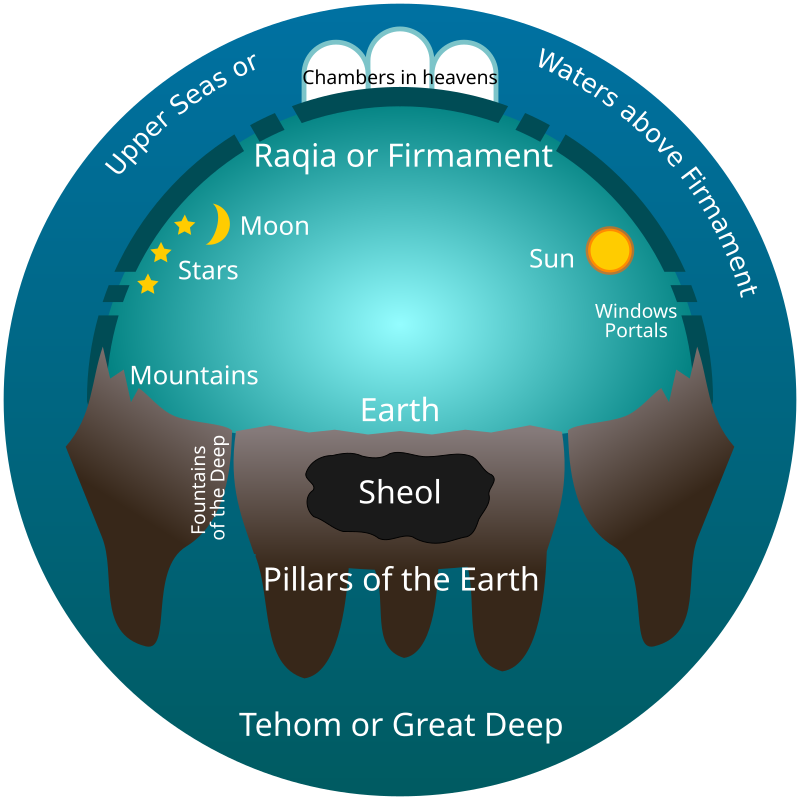
(ו) וַיֹּ֣אמֶר אֱלֹקִ֔ים יְהִ֥י רָקִ֖יעַ בְּת֣וֹךְ הַמָּ֑יִם וִיהִ֣י מַבְדִּ֔יל בֵּ֥ין מַ֖יִם לָמָֽיִם׃ (ז) וַיַּ֣עַשׂ אֱלֹקִים֮ אֶת־הָרָקִ֒יעַ֒ וַיַּבְדֵּ֗ל בֵּ֤ין הַמַּ֙יִם֙ אֲשֶׁר֙ מִתַּ֣חַת לָרָקִ֔יעַ וּבֵ֣ין הַמַּ֔יִם אֲשֶׁ֖ר מֵעַ֣ל לָרָקִ֑יעַ וַֽיְהִי־כֵֽן׃
(6) God said, “Let there be an expanse in the midst of the water, that it may separate water from water.” (7) God made the expanse, and it separated the water which was below the expanse from the water which was above the expanse. And it was so.
Ellen Frankel commentary from My People's Prayer Book vol 3
"Praise God! Praise Adonai from the heavens" This psalm celebrates the interconnectedness of all creation, which is unified through its subordination to God's sovereign will. From the heavenly heights and the waters above those heights, including our own young, who crawl upon the earth, God's grandeur invites universal praise. Ranging in scale from the cosmic to the human, the vividly concrete imagery of this psalm, portraying a God both remote and intimate, lyrically reconciles these opposites. So, for instance, we are assured that God's name is nisgar, literally "inaccessible," like a wall too high to scale, yet we are also assured that we are am krovo, the people near to God, a word that that derives from the same Hebrew root as for "kinsman" and the innermost organs of the body. Thus, even as we praise God's transcendent name, we draw near to God's intimate presence. And so, paradoxically, when we surrender our individual voices to the universal symphony, God singles us out to hear the call of God's keren, the "horn of plenty" that sustains faithful Israel.
http://www.thisexplainsmore.com/
The first section of praise from the heavens is a seven-fold pattern directed at him (heights, angels, hosts, sun & moon, shining stars, highest heavens, and waters above the heavens). This seven-fold pattern of praise is followed by a summary statement of why everything above in the heavens ought to praise the Lord: "Let them praise the name of the Lord, for...". The explanation given by the Psalmist is threefold: because God commanded their existence into being, he established their life-span, and he made a decree concerning their meaning and purpose of existence. These reasons are more than sufficient to explain why his creation ought to praise him.
The second section begins with another seven-fold pattern of praise (great sea creatures, all deeps, fire, hail, snow, mist, stormy winds), all of which are said to be "fulfilling his word." But that is followed by an exhaustive list of basically everything else on the planet (vv. 9-12). In fact, in both the original Hebrew and our English translations, verses 9 through 12 are one long sentence listing eight poetic pairs of nouns (16 total) with no verbs whatsoever (mountains, all hills, fruit-trees, all cedars, beasts, all livestock, creeping things, flying birds, kings of the earth, all peoples, princes, all rulers of the earth, young men, maidens, old men, and children). It’s as though the first seven aspects of nature in the skies above and the waters below were only mentioned in order to tease us into being interested in who or what is to be praising Yahweh. But in the lengthy list that follows, we are confronted with the immense volume of praise from the earth which is due to the name of Yahweh. Again, this overwhelming pattern of praise is followed by a summary statement of why everything below on the earth ought to praise the Lord: "Let them praise the name of the Lord, for...". Here the explanation given by the Psalmist is twofold: because God alone is inaccessibly high above all the heavens and earth, and because this God who is above the earth and heavens has descended low to help mankind give him the praise and the glory due to his name.
Differing Conceptions of the Divine Creator by Prof. Marc Zvi Brettler
The nature of the God of the first creation story is well-expressed in Psalm 148:5; וכי הוא צוה ונבראו, “for it was He who commanded that they be created.” God is extremely powerful, and His (yes—this God is masculine) words cause the primordial chaos (see 1:1-2) to restructure itself into the well-organized world that we know, where everything occupies its proper place. Although powerful, He has a divine council with whom He sometimes deliberates, as made clear in the plural נעשה, “let us make” in 1:26. (see Rashi and the sources he cites from b. Sanhedrin 38b and Tanhuma). This suggests that God is king—it is kings who have such advisors, and engage in massive building projects.
Introduction to Perek Shira
The Sages said concerning King David that when he completed the book of Psalms, he became proud. He said before the Holy Blessed One “Is there any creature You have created in Your world that says more songs and praises than I?” At that moment a frog happened across his path, and it said to him: David! Do not become proud, for I recite more songs and praises than you...

The Heavens are saying: “The heavens speak of God's glory, and the skies tell of Divine
handiwork.” (Psalms 19:2)...
The Night is saying: “To speak of God's kindness in the morning, and of Divine faithfulness by nights.” (Psalms 92:3)...
The Sea Monsters are saying: “Praise God from the land, the sea monsters and all the
depths.” (Psalms 148:7)...
אִיבַּעְיָא לְהוּ: ״הַלְלוּיָהּ״ לְרַב, מַאי? תָּא שְׁמַע, דְּאָמַר רַב: חֲזֵינָא תִּילֵּי דְּבֵי חַבִּיבָא דִּכְתִיב בְּהוּ ״הַלְלוּ״ בְּחַד גִּיסָא, וְ״יָהּ״ בְּחַד גִּיסָא. וּפְלִיגָא דְּרַבִּי יְהוֹשֻׁעַ בֶּן לֵוִי, דְּאָמַר רַבִּי יְהוֹשֻׁעַ בֶּן לֵוִי: מַאי ״הַלְלוּיָהּ״? הַלְּלוּהוּ בְּהִלּוּלִים הַרְבֵּה. ופְלִיגָא דִּידֵיהּ אַדִּידֵיהּ, דְּאָמַר רַבִּי יְהוֹשֻׁעַ בֶּן לֵוִי: בַּעֲשָׂרָה מַאֲמָרוֹת שֶׁל שֶׁבַח נֶאֱמַר סֵפֶר תְּהִלִּים: בְּ״נִיצּוּחַ״, בְּ״נִגּוּן״, בְּ״מַשְׂכִּיל״, בְּ״מִזְמוֹר״, בְּ״שִׁיר״, בְּ״אַשְׁרֵי״, בִּ״תְהִלָּה״, בִּ״תְפִלָּה״, בְּ״הוֹדָאָה״, בְּ״הַלְלוּיָהּ״. גָּדוֹל מִכּוּלָּן ״הַלְלוּיָהּ״, שֶׁכּוֹלֵל שֵׁם וָשֶׁבַח בְּבַת אַחַת.
A dilemma was raised before the Sages: According to the opinion of Rav, what is the status of halleluya? Is it one word or two? The Gemara answers: Come and hear, as Rav said: I saw a book of Psalms in the study hall of my uncle, Rabbi Ḥiyya, in which the word hallelu is written on one side, at the end of a line, and ya was written on one side, at the beginning of the next line. This shows that the word halleluya can indeed be split in two. The Gemara comments: This opinion disputes that of Rabbi Yehoshua ben Levi, as Rabbi Yehoshua ben Levi said: What is the meaning of the word halleluya? It means praise Him [halleluhu] with many praises [hillulim]. According to this opinion, the ya at the end of the word is a superlative, not a divine name. The Gemara adds: This statement of Rabbi Yehoshua ben Levi disagrees with another ruling that he himself issued, as Rabbi Yehoshua ben Levi said: The book of Psalms is said by means of ten expressions of praise: By nitzuaḥ, niggun, maskil, mizmor, shir, ashrei, tehilla, tefilla, hoda’a, and halleluya. He continues: The greatest of them all is halleluya, as it includes God’s name and praise at one time. This statement indicates that Rabbi Yehoshua ben Levi considers halleluya to be a combination of two words, one of which is the name of God.
דין מי ששהה לבוא לב"ה עד ישתבח ובו ס"א:
אם בא לב"ה ומצא צבור בסוף פסוקי דזמרה אומר ברוך שאמר עד מהולל בתשבחות ואח"כ תהלה לדוד עד מעתה ועד עולם הללויה ואח"כ הללו את ה' מן השמים עד לבני ישראל עם קרובו הללויה ואחר כך הללו אל בקדשו עד כל הנשמה תהלל יה: הגה ואם יש לו שהות יותר יאמר הודו לה' קראו עד והוא רחום וידלג עד והוא רחום שקודם אשרי כי בנתיים אינן רק פסוקים מלוקטים [הגהות מיימוני פ"ז מהלכות תפלה] ואח"כ ישתבח ואח"כ יוצר וק"ש וברכותיה ויתפלל עם הצבור ואם אין שהות כ"כ ידלג גם מזמור הללו את ה' מן השמים: הגה אם עוד אין שהות לא יאמר רק ברוך שאמר ותהלה לדוד וישתבח [הרא"ש והר"י פ' אין עומדין] ואם כבר התחילו הצבור יוצר ואין שהות לומר פסוקי דזמר' אפי' בדלוג יקרא ק"ש וברכותיה עם הצבור ויתפלל עמהם ואח"כ יקרא כל פסוקי דזמר' בלא ברכ' שלפניה' ולא של אחריהם: הגה ומ"מ יאמר כל הברכות שמחוייב לברך בבוקר [כל בו וב"י בשם מהרי"א] כמו שנתבאר סי' מ"ו ומ"ז:
If one comes to synagogue and finds the congregation at the end of P'sukei D'zimra, he should say "Barukh She'amar" until "M'hulal B'tishbahot" (i.e. the end of the blessing), and afterwards "T'hillah L'david" until "Me-atah v'ad olam halleluyah" (i.e. all of Ashrei). And afterwards "Hal'lu et Hashem min hashamayim" until "Livnei Yisrael am k'rovo hallelulyah" (i.e. Psalm 148). And aftewards "Hallelu el b'kodsho" until "Kol han'shamah t'hallel yah" (Psalm 150). Rem"a: And if he has more time, he should say "Hodu l'Hashem kiru" (I Chronicles 16:18-36) until "v'hu rahum" (during the anthology of verses from Psalms) and skip to the "v'hu rahum" [immediately] prior to Ashrei because in between [those separate instances of "v'hu rahum"] are simply gathered verses [Hagahot Maimoni, Chapter 7 from Hilkhot T'fillah]. And afterwards Yishtabach, and afterwards [the blessing of] Yotzer [Ohr], and the Sh'ma and its blessings, and then pray with the congregation. And if he doesn't have much time, he should also skip "Hal'lu et Hashem min Hashamayim". Rem"a: If there is still not enough time, he should only recite Barukh She'amar, T'hillah L'david (i.e. Ashrei), and Yishtabah [The Rosh and the Ri from the Chapter "Ein Omdin"]. And if the congregation has already started with Yotzer and one does not have time to recite P'sukei D'zimra even with skipping, he should recite the Sh'ma and its blessings with the congregation and pray with them (ie. the Amidah), and afterwards recite all of P'sukei D'zimra without a blessing before or afterwards. Rem"a: And in any case, he should say all of the blessings required of him to bless in the morning [Kol Bo and Beit Yosef from the Mahari] as it is explained in Siman 46 and 47).