Save "Shemot - The Women of Exodus
"
Shemot - The Women of Exodus
(טו) וַיֹּ֙אמֶר֙ מֶ֣לֶךְ מִצְרַ֔יִם לַֽמְיַלְּדֹ֖ת הָֽעִבְרִיֹּ֑ת אֲשֶׁ֨ר שֵׁ֤ם הָֽאַחַת֙ שִׁפְרָ֔ה וְשֵׁ֥ם הַשֵּׁנִ֖ית פּוּעָֽה׃ (טז) וַיֹּ֗אמֶר בְּיַלֶּדְכֶן֙ אֶת־הָֽעִבְרִיּ֔וֹת וּרְאִיתֶ֖ן עַל־הָאׇבְנָ֑יִם אִם־בֵּ֥ן הוּא֙ וַהֲמִתֶּ֣ן אֹת֔וֹ וְאִם־בַּ֥ת הִ֖וא וָחָֽיָה׃ (יז) וַתִּירֶ֤אןָ הַֽמְיַלְּדֹת֙ אֶת־הָ֣אֱלֹהִ֔ים וְלֹ֣א עָשׂ֔וּ כַּאֲשֶׁ֛ר דִּבֶּ֥ר אֲלֵיהֶ֖ן מֶ֣לֶךְ מִצְרָ֑יִם וַתְּחַיֶּ֖יןָ אֶת־הַיְלָדִֽים׃ (יח) וַיִּקְרָ֤א מֶֽלֶךְ־מִצְרַ֙יִם֙ לַֽמְיַלְּדֹ֔ת וַיֹּ֣אמֶר לָהֶ֔ן מַדּ֥וּעַ עֲשִׂיתֶ֖ן הַדָּבָ֣ר הַזֶּ֑ה וַתְּחַיֶּ֖יןָ אֶת־הַיְלָדִֽים׃ (יט) וַתֹּאמַ֤רְןָ הַֽמְיַלְּדֹת֙ אֶל־פַּרְעֹ֔ה כִּ֣י לֹ֧א כַנָּשִׁ֛ים הַמִּצְרִיֹּ֖ת הָֽעִבְרִיֹּ֑ת כִּֽי־חָי֣וֹת הֵ֔נָּה בְּטֶ֨רֶם תָּב֧וֹא אֲלֵהֶ֛ן הַמְיַלֶּ֖דֶת וְיָלָֽדוּ׃ (כ) וַיֵּ֥יטֶב אֱלֹהִ֖ים לַֽמְיַלְּדֹ֑ת וַיִּ֧רֶב הָעָ֛ם וַיַּֽעַצְמ֖וּ מְאֹֽד׃ (כא) וַיְהִ֕י כִּֽי־יָרְא֥וּ הַֽמְיַלְּדֹ֖ת אֶת־הָאֱלֹהִ֑ים וַיַּ֥עַשׂ לָהֶ֖ם בָּתִּֽים׃
(15) The king of Egypt spoke to the Hebrew midwives, one of whom was named Shiphrah and the other Puah, (16) saying, “When you deliver the Hebrew women, look at the birthstool: if it is a boy, kill him; if it is a girl, let her live.” (17) The midwives, fearing God, did not do as the king of Egypt had told them; they let the boys live. (18) So the king of Egypt summoned the midwives and said to them, “Why have you done this thing, letting the boys live?” (19) The midwives said to Pharaoh, “Because the Hebrew women are not like the Egyptian women: they are vigorous. Before the midwife can come to them, they have given birth.” (20) And God dealt well with the midwives; and the people multiplied and increased greatly. (21) And [God] established households for the midwives, because they feared God.
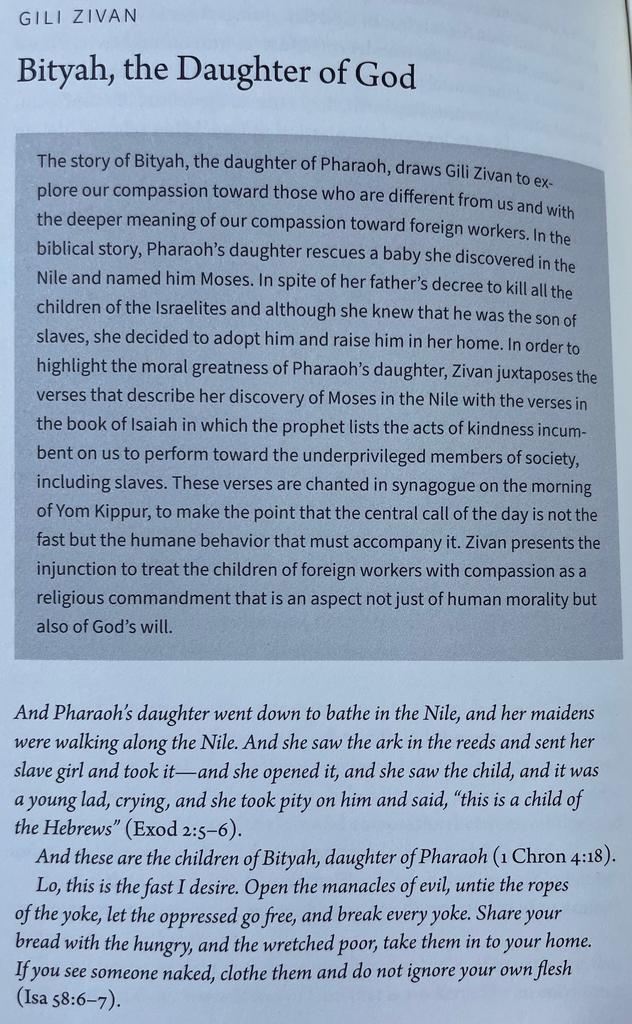
(ה) וַתֵּ֤רֶד בַּת־פַּרְעֹה֙ לִרְחֹ֣ץ עַל־הַיְאֹ֔ר וְנַעֲרֹתֶ֥יהָ הֹלְכֹ֖ת עַל־יַ֣ד הַיְאֹ֑ר וַתֵּ֤רֶא אֶת־הַתֵּבָה֙ בְּת֣וֹךְ הַסּ֔וּף וַתִּשְׁלַ֥ח אֶת־אֲמָתָ֖הּ וַתִּקָּחֶֽהָ׃ (ו) וַתִּפְתַּח֙ וַתִּרְאֵ֣הוּ אֶת־הַיֶּ֔לֶד וְהִנֵּה־נַ֖עַר בֹּכֶ֑ה וַתַּחְמֹ֣ל עָלָ֔יו וַתֹּ֕אמֶר מִיַּלְדֵ֥י הָֽעִבְרִ֖ים זֶֽה׃ (ז) וַתֹּ֣אמֶר אֲחֹתוֹ֮ אֶל־בַּת־פַּרְעֹה֒ הַאֵלֵ֗ךְ וְקָרָ֤אתִי לָךְ֙ אִשָּׁ֣ה מֵינֶ֔קֶת מִ֖ן הָעִבְרִיֹּ֑ת וְתֵינִ֥ק לָ֖ךְ אֶת־הַיָּֽלֶד׃ (ח) וַתֹּֽאמֶר־לָ֥הּ בַּת־פַּרְעֹ֖ה לֵ֑כִי וַתֵּ֙לֶךְ֙ הָֽעַלְמָ֔ה וַתִּקְרָ֖א אֶת־אֵ֥ם הַיָּֽלֶד׃ (ט) וַתֹּ֧אמֶר לָ֣הּ בַּת־פַּרְעֹ֗ה הֵילִ֜יכִי אֶת־הַיֶּ֤לֶד הַזֶּה֙ וְהֵינִקִ֣הוּ לִ֔י וַאֲנִ֖י אֶתֵּ֣ן אֶת־שְׂכָרֵ֑ךְ וַתִּקַּ֧ח הָאִשָּׁ֛ה הַיֶּ֖לֶד וַתְּנִיקֵֽהוּ׃ (י) וַיִּגְדַּ֣ל הַיֶּ֗לֶד וַתְּבִאֵ֙הוּ֙ לְבַת־פַּרְעֹ֔ה וַֽיְהִי־לָ֖הּ לְבֵ֑ן וַתִּקְרָ֤א שְׁמוֹ֙ מֹשֶׁ֔ה וַתֹּ֕אמֶר כִּ֥י מִן־הַמַּ֖יִם מְשִׁיתִֽהוּ׃
(5) The daughter of Pharaoh came down to bathe in the Nile, while her maidens walked along the Nile. She spied the basket among the reeds and sent her slave girl to fetch it. (6) When she opened it, she saw that it was a child, a boy crying. She took pity on it and said, “This must be a Hebrew child.” (7) Then his sister said to Pharaoh’s daughter, “Shall I go and get you a Hebrew nurse to suckle the child for you?” (8) And Pharaoh’s daughter answered, “Yes.” So the girl went and called the child’s mother. (9) And Pharaoh’s daughter said to her, “Take this child and nurse it for me, and I will pay your wages.” So the woman took the child and nursed it. (10) When the child grew up, she brought him to Pharaoh’s daughter, who made him her son. She named him Moses, explaining, “I drew him out of the water.”
(יז) וּבֶ֨ן־עֶזְרָ֔ה יֶ֥תֶר וּמֶ֖רֶד וְעֵ֣פֶר וְיָל֑וֹן וַתַּ֙הַר֙ אֶת־מִרְיָ֣ם וְאֶת־שַׁמַּ֔י וְאֶת־יִשְׁבָּ֖ח אֲבִ֥י אֶשְׁתְּמֹֽעַ׃ (יח) וְאִשְׁתּ֣וֹ הַיְהֻֽדִיָּ֗ה יָלְדָ֞ה אֶת־יֶ֨רֶד אֲבִ֤י גְדוֹר֙ וְאֶת־חֶ֙בֶר֙ אֲבִ֣י שׂוֹכ֔וֹ וְאֶת־יְקוּתִיאֵ֖ל אֲבִ֣י זָנ֑וֹחַ וְאֵ֗לֶּה בְּנֵי֙ בִּתְיָ֣ה בַת־פַּרְעֹ֔ה אֲשֶׁ֥ר לָקַ֖ח מָֽרֶד׃ {ס}

(17) The sons of Ezrah: Jether, Mered, Epher, and Jalon. She conceived and bore Miriam, Shammai, and Ishbah father of Eshtemoa. (18) And his Judahite wife bore Jered father of Gedor, Heber father of Soco, and Jekuthiel father of Zanoah. These were the sons of Bithiah daughter of Pharaoh, whom Mered married.

(ה) הֲכָזֶ֗ה יִֽהְיֶה֙ צ֣וֹם אֶבְחָרֵ֔הוּ י֛וֹם עַנּ֥וֹת אָדָ֖ם נַפְשׁ֑וֹ הֲלָכֹ֨ף כְּאַגְמֹ֜ן רֹאשׁ֗וֹ וְשַׂ֤ק וָאֵ֙פֶר֙ יַצִּ֔יעַ הֲלָזֶה֙ תִּקְרָא־צ֔וֹם וְי֥וֹם רָצ֖וֹן לַיהֹוָֽה׃ (ו) הֲל֣וֹא זֶה֮ צ֣וֹם אֶבְחָרֵ֒הוּ֒ פַּתֵּ֙חַ֙ חַרְצֻבּ֣וֹת רֶ֔שַׁע הַתֵּ֖ר אֲגֻדּ֣וֹת מוֹטָ֑ה וְשַׁלַּ֤ח רְצוּצִים֙ חׇפְשִׁ֔ים וְכׇל־מוֹטָ֖ה תְּנַתֵּֽקוּ׃ (ז) הֲל֨וֹא פָרֹ֤ס לָרָעֵב֙ לַחְמֶ֔ךָ וַעֲנִיִּ֥ים מְרוּדִ֖ים תָּ֣בִיא בָ֑יִת כִּֽי־תִרְאֶ֤ה עָרֹם֙ וְכִסִּית֔וֹ וּמִבְּשָׂרְךָ֖ לֹ֥א תִתְעַלָּֽם׃ (ח) אָ֣ז יִבָּקַ֤ע כַּשַּׁ֙חַר֙ אוֹרֶ֔ךָ וַאֲרֻֽכָתְךָ֖ מְהֵרָ֣ה תִצְמָ֑ח וְהָלַ֤ךְ לְפָנֶ֙יךָ֙ צִדְקֶ֔ךָ כְּב֥וֹד יְהֹוָ֖ה יַֽאַסְפֶֽךָ׃ (ט) אָ֤ז תִּקְרָא֙ וַיהֹוָ֣ה יַעֲנֶ֔ה תְּשַׁוַּ֖ע וְיֹאמַ֣ר הִנֵּ֑נִי אִם־תָּסִ֤יר מִתּֽוֹכְךָ֙ מוֹטָ֔ה שְׁלַ֥ח אֶצְבַּ֖ע וְדַבֶּר־אָֽוֶן׃ (י) וְתָפֵ֤ק לָֽרָעֵב֙ נַפְשֶׁ֔ךָ וְנֶ֥פֶשׁ נַעֲנָ֖ה תַּשְׂבִּ֑יעַ וְזָרַ֤ח בַּחֹ֙שֶׁךְ֙ אוֹרֶ֔ךָ וַאֲפֵלָתְךָ֖ כַּֽצׇּהֳרָֽיִם׃

(5) Is such the fast I desire,
A day for perople to starve their bodies?
Is it bowing the head like a bulrush
And lying in sackcloth and ashes?
Do you call that a fast,
A day when the Eternal is favorable?
(6) No, this is the fast I desire:
To unlock fetters of wickedness,
And untie the cords of the yoke
To let the oppressed go free;
To break off every yoke.
(7) It is to share your bread with the hungry,
And to take the wretched poor into your home;
When you see the naked, to clothe him,
And not to ignore your own kin.

(8) Then shall your light burst through like the dawn
And your healing spring up quickly;
Your Vindicator shall march before you,
The Presence of the Eternal shall be your rear guard.
(9) Then, when you call, the Eternal will answer;
When you cry, He will say: Here I am.
If you banish the yoke from your midst,
The menacing hand, and evil speech,
(10) And you offer your compassion to the hungry
And satisfy the famished creature—
Then shall your light shine in darkness,
And your gloom shall be like noonday.
(ג) רַבִּי סִימוֹן בְּשֵׁם רַבִּי יְהוֹשֻׁעַ בֶּן לֵוִי וְרַבִּי חָמָא אֲבוּהָ דְּרַבִּי הוֹשַׁעְיָא בְּשֵׁם רַב, אָמְרֵי, לֹא נִתַּן דִּבְרֵי הַיָּמִים אֶלָּא לִדָּרֵשׁ...

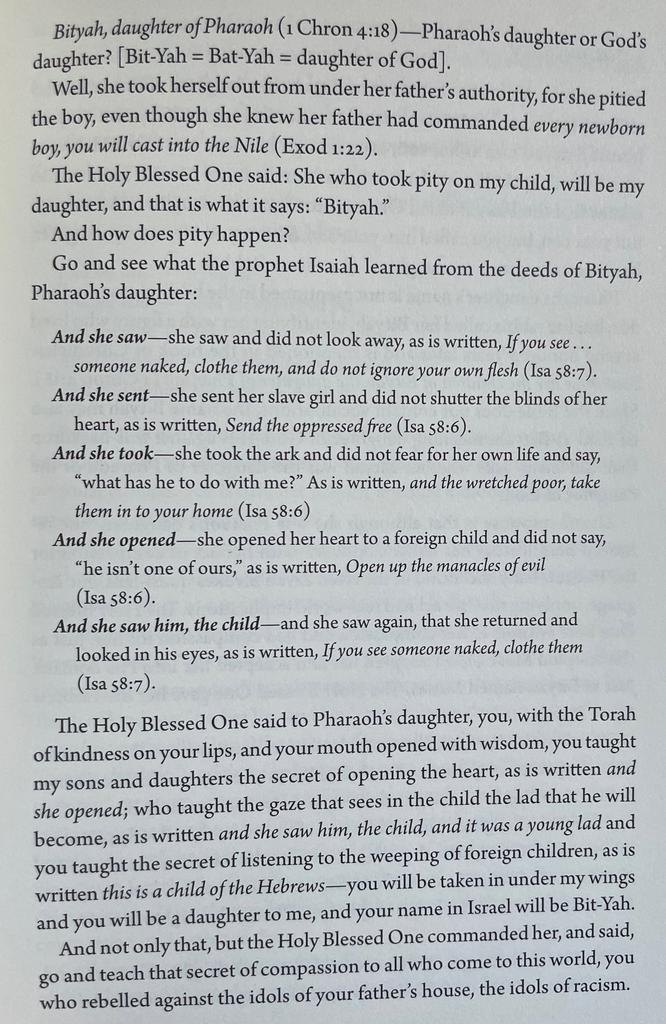
וְאֵלֶּה בְּנֵי בִּתְיָה בַת פַּרְעֹה, רַבִּי יְהוֹשֻׁעַ דְּסִכְנִין בְּשֵׁם רַבִּי לֵוִי אָמַר לָהּ הַקָּדוֹשׁ בָּרוּךְ הוּא לְבִתְיָה בַּת פַּרְעֹה, משֶׁה לֹא הָיָה בְּנֵךְ וּקְרָאתוֹ בְּנֵךְ, אַף אַתְּ לֹא אַתְּ בִּתִּי וַאֲנִי קוֹרֵא אוֹתָךְ בִּתִּי, שֶׁנֶּאֱמַר: אֵלֶּה בְּנֵי בִּתְיָה, בַּת יָהּ.

Rabbi Simon said in the name of Rabbi Yehoshua ben Levi and Rabbi Chama his father that Rabbi Hoshaya said in the name of Rav: The book of Chronicles was given only for the sake of midrash / exegesis...

"And these are the children of Bitya daughter of Pharaoh" (1 Chron 4:18).Rabbi Yehoshua of Sichnin said in the name of Rabbi Levi: God said to Bithiah daughter of Pharaoh, “Moses was not your son, yet you called him your son; you are not my daughter but I will call you my daughter.” as it is said: these are the children of Bithiah - Bat (daughter) Yah (of God).

וַתֵּרֶד בַּת פַּרְעֹה לִרְחוֹץ עַל הַיְאֹר אָמַר רַבִּי יוֹחָנָן מִשּׁוּם רַבִּי שִׁמְעוֹן בֶּן יוֹחַי מְלַמֵּד שֶׁיָּרְדָה לִרְחוֹץ מִגִּלּוּלֵי [בֵּית] אָבִיהָ וְכֵן הוּא אוֹמֵר אִם רָחַץ ה׳ אֵת צוֹאַת בְּנוֹת צִיּוֹן וְגוֹ׳

The verse states: “And the daughter of Pharaoh came down to bathe [lirchotz] in the river” (Exodus 2:5). Rabbi Yochanan says in the name of Rabbi Shimon ben Yochai: This teaches that she came down to the river to cleanse herself from the impurity of her father’s idols. And similarly it states: “When the Eternal shall have washed [rachatz] away the filth of the daughters of Zion..." (Isaiah 4:4).