


" This elliptic story is the most enigmatic episode in all of Exodus."
....
"the bloody foreskin of the son will be matched in the tenth plague by the blood smeared on the lintel to ward off the epidemic of death visiting the firstborn sons. "
-Robert Alter's Note/Essay on Shemot 4:24-26
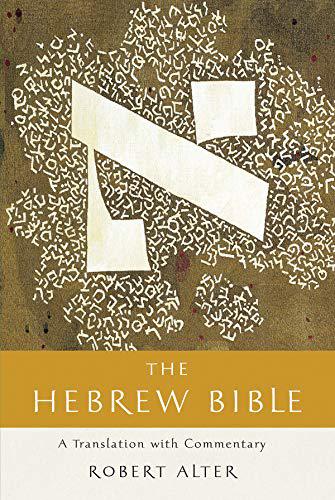
Exodus Chapter 4:24-26 (Alter's Translation)
24 And it happened on the way at the night camp that the LORD encountered him and sought to put him to death.
25 And Zipporah took a flint and cut off her son’s foreskin and touched it to his feet, and she said, “Yes, a bridegroom of blood you are to me.” 26 And He let him go. Then did she say, “A bridegroom of blood by the circumcising.”
Alter, Robert. The Hebrew Bible: A Translation with Commentary: Three-Volume Set (p. 625). W. W. Norton & Company. Kindle Edition. (Copyrighted material)
[MS: Excerpting, formatting and emphasis added]
Alter's Note to 4:24-26
[MS: This essay-Note is among Alter's longest Notes; it is more like the under-appreciated essays, found in his Introductions. See the link: Alter's essays in 28 Introductions in MS Robert Alter Sefaria Sheet Collection.]
This elliptic story is the most enigmatic episode in all of Exodus.
It seems unlikely that we will ever resolve the enigmas it poses, but it nevertheless plays a pivotal role in the larger narrative, and it is worth pondering why such a haunting and bewildering story should have been introduced at this juncture.
There is something starkly archaic about the whole episode.
The LORD here is not a voice from an incandescent bush announcing that this is holy ground but an uncanny silent stranger who “encounters” Moses, like the mysterious stranger who confronts Jacob at the Jabbok ford, in the dark of the night .....
One may infer that both the deity here and the rite of circumcision carried out by Zipporah belong to an archaic—perhaps even premonotheistic—stratum of Hebrew culture, though both are brought into telling alignment with the story that follows.
The potently anthropomorphic and mythic character of the episode generates a crabbed style, as though the writer were afraid to spell out its real content, and thus even the referents of pronominal forms are ambiguous.
Traditional Jewish commentators seek to naturalize the story to a more normative monotheism by claiming that Moses has neglected the commandment to circumcise his son (sons?), and that is why the LORD threatens his life.
What seems more plausible is that Zipporah’s act reflects an older rationale for circumcision among the West Semitic peoples than the covenantal one enunciated in Genesis 17. Here circumcision serves as an apotropaic device [MS: having the power to ward off evil or misfortune], to ward off the hostility of a dangerous deity by offering him a bloody scrap of the son’s flesh, a kind of symbolic synecdoche of human sacrifice. [MS: "synecdoche" is a figure of speech when a part represents the whole, for example, "hungry mouths to feed"]
The circumciser, moreover, is the mother, and not the father, as enjoined in Genesis.
The story is an archaic cousin of the repeated biblical stories of life-threatening trial in the wilderness, and, as modern critics have often noted, it corresponds to the folktale pattern of a perilous rite of passage that the hero must undergo before embarking on his mission proper. [MS: See link below to the Introduction to Exodus, Alter's essay-Introduction that discusses the shift to folklore from the realism in Genesis.]
The more domesticated God of verse 19 has just assured Moses that he can return to Egypt “for all the men who sought your life are dead.” The fierce uncanny YHWH of this episode promptly seeks to kill Moses (the same verb “seek”), just as in the previous verse He had promised to kill Pharaoh’s firstborn. (Here, the more judicial verb, himit, “to put to death,” is used instead of the blunt harag , “kill.”)
The ambiguity of reference has led some commentators to see the son as the object of this lethal intention, though that seems unlikely because the (unspecified) object of the first verb “encountered” is almost certainly Moses.
Confusions then multiply in the nocturnal murk of the language. Whose feet are touched with the bloody foreskin? Perhaps Moses’s, but it could be the boy’s, or even the LORD’s. The scholarly claim, moreover, that “feet” is a euphemism for the genitals cannot be dismissed.
There are again three male candidates in the scene for the obscure epithet “bridegroom of blood,” though Moses strikes me as the most probable.
William H. C. Propp correctly recognizes that the plural form for blood used here, damim, generally means “bloodshed” or “violence” .... He proposes that the deity assaults Moses because he still bears the bloodguilt for the act of involuntary manslaughter he has committed, and it is for this that the circumcision must serve as expiation.
All this may leave us in a dark thicket of bewildering possibilities, yet the story is strikingly apt as a tonal and motivic introduction to the Exodus narrative. The deity that appears here on the threshold of the return to Egypt is dark and dangerous, a potential killer of father or son.
Blood in the same double function it will serve in the Plagues narrative is set starkly in the foreground: the blood of violent death, and blood as the apotropaic stuff that wards off death—the bloody foreskin of the son will be matched in the tenth plague by the blood smeared on the lintel to ward off the epidemic of death visiting the firstborn sons. [MS: See below Alter's Note on 4:9 on the theme of Blood.]
With this troubling mythic encounter, we are ready for the descent into Egypt.
Alter, Robert. The Hebrew Bible: A Translation with Commentary: Three-Volume Set (pp. 633-634). W. W. Norton & Company. Kindle Edition. (Copyrighted material)
From Alter's Introduction to Exodus - See Robert Alter MS Sefaria Sheets Collection
[MS: Alter notes a shift in the mode of storytelling - From realism in Genesis to folktale in Exodus]
"In keeping with this new wide-angle lens through which the characters and the events are seen, the narrative moves from the ... psychological realism of the Patriarchal Tales to a more stylized, sometimes deliberately schematic, mode of storytelling that ... has the feel of a folktale. At the beginning of the story; Pharaoh is referred to several times as "the king of Egypt" rather than by his Egyptian title, which was used in Genesis and will become his set designation as the story goes on. This has the effect of casting him as the archetypal evil king (one who kills babies) in a folktale confrontation between the forces of good and of evil. Other folktale elements are evident: the many thousands of childbearing Hebrew women are attended to, ... in a folkloric motif that has been profusely documented in many traditions of the ancient Near East and elsewhere, the future hero is threatened with death by the evil king and is saved by being hidden and then rescued. " [MS: Copyrighted material; Formatting and emphasis added]
Blood
Alter's Note on Exodus 4:9
9 . the water that you take from the Nile will become blood.
....
"The predominance of blood in this entire narrative should be observed. Moses has already spilled Egyptian blood (the phrase is not used, but it is a fixed biblical idiom for both manslaughter and murder). The Ten Plagues will begin with a plague of blood and end with one in which blood is heavily involved. On the way to Egypt (verses 24–26), Moses’s life will be saved by a rite carried out through blood. The story of liberation from Egyptian bondage is consistently imagined as a process of violent oppression to be broken only by violent counterstrokes." [MS: Alter shows again here how the Bible's word choices (like "blood") create unity in the Bible and highlight the meaning of actions through literary style.]
Alter, Robert. The Hebrew Bible: A Translation with Commentary: Three-Volume Set (p. 628). W. W. Norton & Company. Kindle Edition. [MS: Copyrighted material; Formatting and emphasis added]
/-/-/-/-/-/-/-
Revised January 8, 2023