


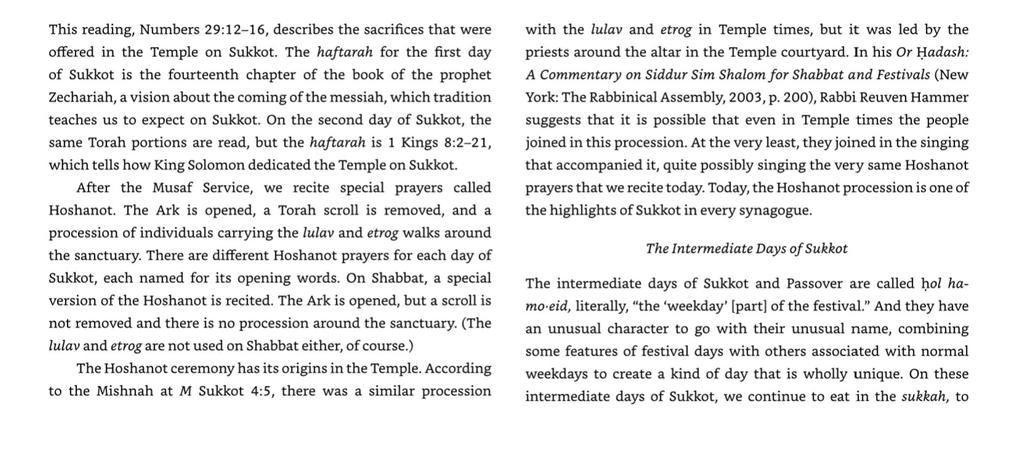
On each of the first six days of Sukkot, we take the etrog and lulav and circle the sanctuary one time, reciting a special prayer as we walk. The chours of this prayer is "hosha na--save us." The ritual is known as Hoshanot, named for the chorus of the special prayer, whose content is otherwise different each day, On the seventh day of Sukkot, we circle the sanctuary seven times with our lulav and etrog. We call this day Hoshanah Rabbah--the Great Hoshanah (or perhaps better, though not grammatically correct "the many hoshanas")
Where does this strange ritual come from and what does it mean? Let's explore some classic and modern sources.
In the Mishnah, we learn about a ritual that resembles our current practice of Hoshanot in at least some ways.
1. According to the Mishnah where was this ritual first practiced?
2. How does it compare to what we do now?
(א) לוּלָב וַעֲרָבָה, שִׁשָּׁה וְשִׁבְעָה.
(1) The lulav is taken and the altar is encircled together with the willow branch either six or seven days, depending on which day of the Festival occurs on Shabbat.
Is there anywhere in the Bible that we can find a ritual similar to Hoshanot? Compare the ritual in the Mishnah with this passage from the Book of Joshua.
(ה) מִצְוַת עֲרָבָה כֵּיצַד, מָקוֹם הָיָה לְמַטָּה מִירוּשָׁלַיִם, וְנִקְרָא מוֹצָא. יוֹרְדִין לְשָׁם וּמְלַקְּטִין מִשָּׁם מֻרְבִּיּוֹת שֶׁל עֲרָבָה, וּבָאִין וְזוֹקְפִין אוֹתָן בְּצִדֵּי הַמִּזְבֵּחַ, וְרָאשֵׁיהֶן כְּפוּפִין עַל גַּבֵּי הַמִּזְבֵּחַ. תָּקְעוּ וְהֵרִיעוּ וְתָקָעוּ. בְּכָל יוֹם מַקִּיפִין אֶת הַמִּזְבֵּחַ פַּעַם אַחַת, וְאוֹמְרִים, אָנָּא ה' הוֹשִׁיעָה נָּא, אָנָּא ה' הַצְלִיחָה נָּא. רַבִּי יְהוּדָה אוֹמֵר, אֲנִי וָהוֹ הוֹשִׁיעָה נָּא. וְאוֹתוֹ הַיּוֹם מַקִּיפִין אֶת הַמִּזְבֵּחַ שֶׁבַע פְּעָמִים. בִּשְׁעַת פְּטִירָתָן, מָה הֵן אוֹמְרִים, יֹפִי לְךָ מִזְבֵּחַ, יֹפִי לְךָ מִזְבֵּחַ. רַבִּי אֱלִיעֶזֶר אוֹמֵר, לְיָהּ וּלְךָ, מִזְבֵּחַ. לְיָהּ וּלְךָ, מִזְבֵּחַ:
(5) How is the mitzva of the willow branch fulfilled? There was a place below Jerusalem, and it was called Motza. They would descend there and gather willow branches [murbiyyot] from there. And they would then come and stand them upright at the sides of the altar, and the tops of the branches would be inclined over the top of the altar. They then sounded a tekia, a simple uninterrupted blast, sounded a terua, a broken sound and/or a series of short staccato blasts, and sounded another tekia. Each day they would circle the altar one time and say: “Lord, please save us. Lord, please grant us success” (Psalms 118:25). Rabbi Yehuda says that they would say: Ani vaho, please save us. And on that day, the seventh day of Sukkot, they would circle the altar seven times. At the time of their departure at the end of the Festival, what would they say? It is beautiful for you, altar; it is beautiful for you, altar. Rabbi Elazar said that they would say: To the Lord and to you, altar; to the Lord and to you, altar.
The similarity between the circling of Jericho and the ritual of the aravot in the Temple leads Rabbi Zev Farber, a contemporary scholar and Hartman Institute Fellow, to make a very interesting suggestion, complete with a reference to Star Trek.
In the conquest of Jericho account, God has taught Joshua how God can be summoned. It requires a magic ritual, using God’s number (seven is God’s number in many biblical texts): seven circuits in seven days, done seven times on the seventh day. Having done this while carrying the ark and ending with a loud sound (the blowing of the shofars) God appears over Jericho and crushes it—and the walls come tumbling down.
I suggest that the hoshanot ritual, like the circuits around Jericho, is a summoning ritual. With this ritual we bring God’s presence (shekhinah) into our synagogues so that we can make our request. What is our request? Specifically, rain, more broadly, survival.
Sukkot marks the end of the dry season and the beginning of the rainy season in Israel. This transition from dry season to rainy season is marked in Rabbinic liturgy; on the day following Sukkot, the holiday of Shemini Atzeret, the prayer for rain is recited by the congregation and the request for rain is inserted into the Amidah prayer, where it will remain until Passover, the holiday marking the beginning of the dry season.
Considering the devastating nature of a drought, the desperation in the tone of the Hoshana Rabbah prayers begins to make more sense. Additionally, when one understands that this is a summoning ritual, a number of other features of the holiday and the ritual begin to make more sense as well.
Jewish tradition sees Hoshana Rabbah as the final day of the High Holiday cycle, the last day before the decrees go into effect, the day the gates of heaven are closed, a mini Yom Kippur with the shaliach tzibbur dressed in a white kittel. The opening of the ark and the removal of all the Torah scrolls makes sense in this context as well; the Torah scroll, like the Ark of the Covenant, is the closest thing to a physical manifestation of God that exists in Jewish tradition.
Although it seems as if many, if not all of the Hoshanot poems were written in the middle ages, they do seem to make sense as appeals for rain, or at least prosperity in the general for the coming year. This is in keeping with the first prayers the Mishnah describes, אָנָּא ה' הוֹשִׁיעָה נָּא, אָנָּא ה' הַצְלִיחָה נָּא "Save us" and "Prosper Us".
Let's look at the Hoshanah for the first day of Sukkot. How do we approach God in this poem?
(ז) לְמַעַן אֲמִתָּךְ. לְמַעַן בְרִיתָךְ. לְמַעַן גָּדְלָךְ וְתִפְאַרְתָּךְ. לְמַעַן דָּתָךְ. לְמַעַן הוֹדָךְ. לְמַעַן וִעוּדָךְ. לְמַעַן זִכְרָךְ. לְמַעַן חַסְדָּךְ. לְמַעַן טוּבָךְ. לְמַעַן יִחוּדָךְ. לְמַעַן כְּבוֹדָךְ. לְמַעַן לִמּוּדָךְ. לְמַעַן מַלְכוּתָךְ. לְמַעַן נִצְחָךְ. לְמַעַן סוֹדָךְ. לְמַעַן עֻזָךְ. לְמַעַן פְּאֵרָךְ. לְמַעַן צִדְקָתָךְ. לְמַעַן קְדֻשָּׁתָךְ. לְמַעַן רַחֲמֶיךָ הָרַבִּים. לְמַעַן שְׁכִינָתָךְ. הוֹשַׁע נָא: לְמַעַן תְּהִלָּתָךְ. הוֹשַׁע נָא:
(7) For the sake of Your truth; for the sake of Your covenant; for the sake of Your greatness and harmony; for the sake of Your doctrine; for the sake of Your majesty; for the sake of Your assembly; for the sake of Your mention; for the sake of Your kindness; for the sake of Your goodness; for the sake of Your unity; for the sake of Your glory; for the sake of Your teaching; for the sake of Your kingdom; for the sake of Your eternity; for the sake of Your secret; for the sake of Your might; for the sake of Your splendor; for the sake of Your righteousness; for the sake of Your holiness; for the sake of Your great mercy; for the sake of Your Divine Presence, please save! For the sake of Your praise, please save!
Compare the poem above to the poems below, which are chanted on different days.
(יא) אוֹם אֲנִי חוֹמָה. בָּרָה כַּחַמָּה. גּוֹלָה וְסוּרָה. דָּמְתָה לְתָמָר. הַהֲרוּגָה עָלֶיךָ. וְנֶחֱשֶׁבֶת כְּצֹאן טִבְחָה. זְרוּיָה בֵּין מַכְעִיסֶיהָ. חֲבוּקָה וּדְבוּקָה בָּךְ. טוֹעֶנֶת עֻלָּךְ. יְחִידָה לְיַחֲדָךְ. כְּבוּשָׁה בַגּוֹלָה. לוֹמֶדֶת יִרְאָתָךְ. מְרוּטַת לֶחִי. נְתוּנָה לְמַכִּים. סוֹבֶלֶת סִבְלָךְ. עֲנִיָּה סֹעֲרָה. פְּדוּיַת טוֹבִיָּה. צֹאן קָדָשִׁים. קְהִלּוֹת יַעֲקֹב. רְשׁוּמִים בִּשְׁמֶךָ. שׁוֹאֲגִים הוֹשַׁע נָא: תְּמוּכִים עָלֶיךָ. הוֹשַׁע נָא:
(11) The nation - 'I am a wall,' bright as the sun, exiled and turned away, compared to a date palm, the one killed for You and considered like sheep for slaughter; scattered among its angerers, hugging and clinging to You, seeking Your yoke, alone to unify You, trampled in the exile, studying Your awe, pulled of cheek, given to be paupers, bearing Your burden, ship in a storm, redeemed of Tuviah (Moses), holy sheep, congregations of Jacob, marked with Your name - roar, "Please save!" [They are] dependent upon You, please save!
(טו) אָדָם וּבְהֵמָה. בָּשָׂר וְרוּחַ וּנְשָׁמָה. גִּיד וְעֶצֶם וְקָרְמָה. דְּמוּת וְצֶלֶם וְרִקְמָה. הוֹד לַהֶבֶל דָּמָה. וְנִמְשַׁל כַּבְּהֵמוֹת נִדְמָה. זִיו וְתוֹאַר וְקוֹמָה. חִדּוּשׁ פְּנֵי אֲדָמָה. טִיעַת עֲצֵי נְשַׁמָּה. יְקָבִים וְקָמָה. כְּרָמִים וְשִׁקְמָה. לְתֵבֵל הַמְּסֻיָּמָה. מִטְרוֹת עֹז לְסַמְּמָה. נְשִׁיָּה לְקַיְּמָה. שִׂיחִים לְקוֹמְמָה. עֲדָנִים לְעָצְמָה. פְּרָחִים לְהַעֲצִימָה. צְמָחִים לְגָשְׁמָה. קָרִים לְזָרְמָה. רְבִיבִים לְשַׁלְּמָה. שְׁתִיָּה לְרוֹמֵמָה. הוֹשַׁע נָא: תְּלוּיָה עַל בְּלִימָה. הוֹשַׁע נָא:
(15) Man and beast - flesh and spirit and soul; tendon, bone and membrane; appearance and image and mesh; 'majesty compared to a breath' - 'and he is like the beasts that perish' - radiance, form and stature. [Effect] the renewal of the face of the ground, the planting of desolate trees, wine-presses and grain, vineyards and sycamores for marked ground, strong rains for healing - invigorating the despoiled - raising plants, strengthening delicacies, establishing flowers, raining [on] vegetation, flowing cold waters, dressing drops, raising drink - please save. [It is] suspended over emptiness, please save.
What is the intended effect when we recite the poems above, and four more, on Hoshannah Rabbh?
What is the ritual of Hoshanot like in our synagogue today?
(א) סדר הקיף הבימה ובו ג סעיפים:
נוהגים להעלות ספר תורה על [הבימה] ולהקיפה פעם א' בכל יום ובשביעי מקיפים אותה ז' פעמים זכר למקדש: הגה ומוציאין שבעה ס"ת על הבימה ביום שביעי [מהרי"ל] ויש מקומות שמוציאים כל ס"ת שבהיכל [מנהגים] (והכי נוהגין במדינות אלו) שהיו מקיפים את המזבח וההקפות לצד ימין [ובשבת אין מקיפים [טור] ואין מוציאין ס"ת על הבימה]:
(1) The Order of Circling the Bimah, 3 Seifim: 1. The practice is to bring a Torah scroll to (the bimah) and to circle it once each day and seven times on the seventh day, in memory of the Temple Rem"a: And we take seven Torah scrolls onto the bimah on the seventh day (Mahari"l). There are places that take out every Torah scroll in the Ark (Minhagim) (and that is the practice in these countries).[This is] because they would circle the altar. The circles go clockwise. And on Shabbat we do not circle (Tur) nor do we take Torah scrolls on to the bimah.
Addendum: Rabbi Farber has some interesting ideas about why we beat the aravot on Hoshanah Rabbah as well.
We find ourselves in this bind on Hoshana Rabbah. On one hand, we wish to summon God so God can hear our unmediated plea for rain, sustenance, and life. On the other hand, what can be more dangerous that God’s presence in the room? When Joshua summoned God to Jericho, the danger to Israel was averted because God’s attention was focused on Jericho, which God destroys. How do we deflect God’s wrath in the synagogue, lest we cause our own demise by calling God into our midst?
This, I believe, is the purpose of the willows ritual. Before we recite the “voice” prayer, which represents the appearance of God in our synagogues, we pick up the willow sprigs and hold them before us.[6] This has the appearance of a transference ritual, where the willows take the place of the congregants holding them. Since the willows have now experienced the presence of God as well, we deflect the possible negative consequences to ourselves by beating the willows.
This is a common theme in apotropaic magic, where allowing a small bad to occur (hurting the willows) protects us from a more significant bad later on. Sending the scapegoat to the demon Azazel carrying all of Israel’s sins (Lev. 16:21-22) would be a classic example of this. In short, the beating of the willows protects the Jews from any negative consequences that might have come with the summoning of God to hear our prayers.