


(יג) כִּֽי־יִקַּ֥ח אִ֖ישׁ אִשָּׁ֑ה וּבָ֥א אֵלֶ֖יהָ וּשְׂנֵאָֽהּ׃ (יד) וְשָׂ֥ם לָהּ֙ עֲלִילֹ֣ת דְּבָרִ֔ים וְהוֹצִ֥א עָלֶ֖יהָ שֵׁ֣ם רָ֑ע וְאָמַ֗ר אֶת־הָאִשָּׁ֤ה הַזֹּאת֙ לָקַ֔חְתִּי וָאֶקְרַ֣ב אֵלֶ֔יהָ וְלֹא־מָצָ֥אתִי לָ֖הּ בְּתוּלִֽים׃ (טו) וְלָקַ֛ח אֲבִ֥י הַֽנַּעֲרָ֖ וְאִמָּ֑הּ וְהוֹצִ֜יאוּ אֶת־בְּתוּלֵ֧י הַֽנַּעֲרָ֛ אֶל־זִקְנֵ֥י הָעִ֖יר הַשָּֽׁעְרָה׃ (טז) וְאָמַ֛ר אֲבִ֥י הַֽנַּעֲרָ֖ אֶל־הַזְּקֵנִ֑ים אֶת־בִּתִּ֗י נָתַ֜תִּי לָאִ֥ישׁ הַזֶּ֛ה לְאִשָּׁ֖ה וַיִּשְׂנָאֶֽהָ׃ (יז) וְהִנֵּה־ה֡וּא שָׂם֩ עֲלִילֹ֨ת דְּבָרִ֜ים לֵאמֹ֗ר לֹֽא־מָצָ֤אתִי לְבִתְּךָ֙ בְּתוּלִ֔ים וְאֵ֖לֶּה בְּתוּלֵ֣י בִתִּ֑י וּפָֽרְשׂוּ֙ הַשִּׂמְלָ֔ה לִפְנֵ֖י זִקְנֵ֥י הָעִֽיר׃ (יח) וְלָ֥קְח֛וּ זִקְנֵ֥י הָֽעִיר־הַהִ֖וא אֶת־הָאִ֑ישׁ וְיִסְּר֖וּ אֹתֽוֹ׃ (יט) וְעָנְשׁ֨וּ אֹת֜וֹ מֵ֣אָה כֶ֗סֶף וְנָתְנוּ֙ לַאֲבִ֣י הַֽנַּעֲרָ֔ה כִּ֤י הוֹצִיא֙ שֵׁ֣ם רָ֔ע עַ֖ל בְּתוּלַ֣ת יִשְׂרָאֵ֑ל וְלֽוֹ־תִהְיֶ֣ה לְאִשָּׁ֔ה לֹא־יוּכַ֥ל לְשַׁלְּחָ֖הּ כׇּל־יָמָֽיו׃ {ס} (כ) וְאִם־אֱמֶ֣ת הָיָ֔ה הַדָּבָ֖ר הַזֶּ֑ה לֹא־נִמְצְא֥וּ בְתוּלִ֖ים לַֽנַּעֲרָֽ׃ (כא) וְהוֹצִ֨יאוּ אֶת־הַֽנַּעֲרָ֜ אֶל־פֶּ֣תַח בֵּית־אָבִ֗יהָ וּסְקָל֩וּהָ֩ אַנְשֵׁ֨י עִירָ֤הּ בָּאֲבָנִים֙ וָמֵ֔תָה כִּֽי־עָשְׂתָ֤ה נְבָלָה֙ בְּיִשְׂרָאֵ֔ל לִזְנ֖וֹת בֵּ֣ית אָבִ֑יהָ וּבִֽעַרְתָּ֥ הָרָ֖ע מִקִּרְבֶּֽךָ׃ {ס} (כב) כִּֽי־יִמָּצֵ֨א אִ֜ישׁ שֹׁכֵ֣ב ׀ עִם־אִשָּׁ֣ה בְעֻֽלַת־בַּ֗עַל וּמֵ֙תוּ֙ גַּם־שְׁנֵיהֶ֔ם הָאִ֛ישׁ הַשֹּׁכֵ֥ב עִם־הָאִשָּׁ֖ה וְהָאִשָּׁ֑ה וּבִֽעַרְתָּ֥ הָרָ֖ע מִיִּשְׂרָאֵֽל׃
(1) If you see your fellow Israelite’s ox or sheep gone astray, do not ignore it; you must take it back to your peer. (2) If your fellow Israelite does not live near you or you do not know who [the owner] is, you shall bring it home and it shall remain with you until your peer claims it; then you shall give it back. (3) You shall do the same with that person’s ass; you shall do the same with that person’s garment; and so too shall you do with anything that your fellow Israelite loses and you find: you must not remain indifferent. (4) If you see your fellow Israelite’s ass or ox fallen on the road, do not ignore it; you must raise it together. (5) A woman must not put on man’s apparel, nor shall a man wear woman’s clothing; for whoever does these things is abhorrent to your God יהוה. (6) If, along the road, you chance upon a bird’s nest, in any tree or on the ground, with fledglings or eggs and the mother sitting over the fledglings or on the eggs, do not take the mother together with her young. (7) Let the mother go, and take only the young, in order that you may fare well and have a long life. (8) When you build a new house, you shall make a parapet for your roof, so that you do not bring bloodguilt on your house if anyone should fall from it. (9) You shall not sow your vineyard with a second kind of seed, else the crop—from the seed you have sown—and the yield of the vineyard may not be used. (10) You shall not plow with an ox and an ass together. (11) You shall not wear cloth combining wool and linen. (12) You shall make tassels on the four corners of the garment with which you cover yourself. (13) A householder takes a woman [as his wife] and cohabits with her. Then he takes an aversion to her (14) and makes up charges against her and defames her, saying, “This is the party I took [to wife]; but when I approached her, I found that she was not a virgin.” (15) In such a case, the girl’s father and mother shall produce the evidence of the girl’s virginity before the elders of the town at the gate. (16) And the girl’s father shall say to the elders, “To this party I gave my own daughter to wife, but he has taken an aversion to her; (17) so he has made up charges, saying, ‘I did not find your daughter a virgin.’ But here is the evidence of my daughter’s virginity!” And they shall spread out the cloth before the elders of the town. (18) The elders of that town shall then take that party and flog him, (19) and they shall fine him a hundred [shekels of] silver and give it to the girl’s father; for [that householder] has defamed a virgin in Israel. Moreover, she shall remain his wife; he shall never have the right to divorce her. (20) But if the charge proves true, the girl was found not to have been a virgin, (21) then the girl shall be brought out to the entrance of her father’s house, and her town’s council shall stone her to death; for she did a shameful thing in Israel, committing fornication while under her father’s authority. Thus you will sweep away evil from your midst. (22) If a man is found lying with another man’s wife, both of them—the man and the woman with whom he lay—shall die. Thus you will sweep away evil from Israel. (23) In the case of a virgin who is engaged to someone —if another man comes upon her in town and lies with her, (24) you shall take the two of them out to the gate of that town and stone them to death: the girl because she did not cry for help in the town, and the man because he violated his neighbor’s wife. Thus you will sweep away evil from your midst. (25) But if the man comes upon the engaged girl in the open country, and the man lies with her by force, only the party who lay with her shall die, (26) but you shall do nothing to the girl. The girl did not incur the death penalty, for this case is like that of one party attacking and murdering another. (27) He came upon her in the open; though the engaged girl cried for help, there was no one to save her. (28) If a man comes upon a virgin who is not engaged and he seizes her and lies with her, and they are discovered, (29) the party who lay with her shall pay the girl’s father fifty [shekels of] silver, and she shall be his wife. Because he has violated her, he can never have the right to divorce her.
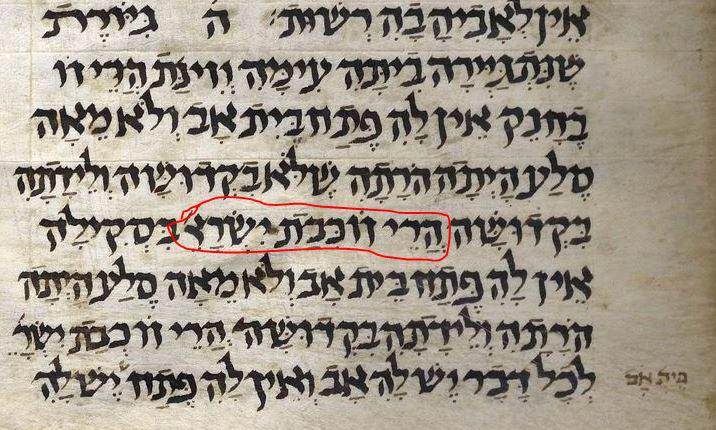
הלכה: הַגִּיּוֹרֶת שֶׁנִּתְגַּייְרָה כול׳.
כְּתִיב "כִּי הוֹצִיא שֵׁם רָע עַל בְּתוּלַת יִשְׂרָאֵל" - יָֽצְתָה זוֹ שֶׁאֵינָהּ מִיִּשְׂרָאֵל; "כִּי הוֹצִיא שֵׁם רָע עַל בְּתוּלָה" - לְרַבּוֹת אֶת הַגִּיּוֹרֶת שֶׁהָֽיְתָה הוֹרָתָהּ שֶׁלֹּא בִקְדוּשָּׁה וְלֵידָתָהּ בִּקְדוּשָּׁה תְּהֵא בִסְקִילָה. וְרִבָּה אוֹתָה לִקְנָס? לֵית יְכִיל, וְתַנֵּי חִזְקִיָּה כֵן: מִמַּשְׁמַע שֶׁנֶּאֱמַר "וּסְקָלוּהָ", אֵין אָנוּ יוֹדְעִין שֶׁהִיא מֵתָה? מַה תַלְמוּד לוֹמַר "מֵתָה"? אֶלָּא יֵשׁ לָךְ אֲחֶרֶת שֶׁהִיא בִסְקִילָה וְהִיא פְטוּרָה. וְאֵי זוֹ זוֹ? זוֹ גִּיּוֹרֶת שֶׁהָֽיְתָה הוֹרָתָהּ שֶׁלֹּא בִקְדוּשָּׁה וְלֵידָתָהּ בִּקְדוּשָּׁה שֶׁתְּהֵא בִסְקִילָה.
HALAKHAH: “If a proselyte woman converted,” etc. It is written: “For he calumniated a virgin of Israel”. That excludes this one who is not from Israel. “For he calumniated a virgin,” to include the proselyte whose conception was not in holiness but her birth was in holiness, that she should be stoned. Why does one not add her for the fine? You cannot do that; as Ḥizqiah stated: We understand that it was said “they shall stone her,” does that not imply that she dies? Why does the verse say, “and she shall die”? But there must be another one who is stoned but (she) [he] is free; who is that? That is the proselyte whose conception was not in holiness but who was born in holiness.
רִבִּי יוֹסֵי בֵּירִבִּי חֲנִינָה: הָאוֹנֵס וְהַמְפַתֶּה אֶת הַיְתוֹמָה פָּטוּר.
אָמַר רִבִּי בָּא בַר מָמָל: מַחֲלוֹקֶת כְּרִבִּי יוֹסֵי הַגָּלִילִי, בְּרַם כְּרִבִּי עֲקִיבָה יֵשׁ לָהּ קְנָס וּקְנָסָהּ שֶׁלְּעַצְמָהּ.
אָמַר רִבִּי יוֹסֵי: מַתְנִיתָא אָֽמְרָה כֵן - "אֵין לָהּ פֶּתַח בֵּית אָב וְלֹא מַאָה סֶלַע", וְלֹא כִיתוֹמָה הִיא?!
רִבִּי אִימִּי וְרִבִּי יְהוֹשֻׁעַ בֶּן לֵוִי תְּרֵיהוֹן אָֽמְרִין: הַמּוֹצִיא שֵׁם רַע עַל הַקְטַנָּה פָטוּר.
אָמַר רִבִּי הוֹשַׁעְיָה: וְיֵאוּת, אִילּוּ גְדוֹלָה שֶׁלֹּא הִתְרוּ בָהּ שֶׁמָּא כְּלוּם הִיא? וּקְטַנָּה שֶׁהִתְרוּ בָהּ כִּגְדוֹלָה שֶׁלֹּא הִתְרוּ בָהּ.
Rebbi Yose ben Rebbi Ḥanina: One who rapes or seduces an orphan is free. Rebbi Abba bar Mamal said, this is in dispute; following Rebbi Yose the Galilean. But following Rebbi Aqiba a fine is due, and the fine belongs to herself. Rebbi Yose said, the Mishnah says so: “She has neither a door to her father’s house nor 100 tetradrachmas;” is she not like an orphan? Rebbi Immi and Rebbi Joshua ben Levi both say, one who calumniates an underage girl is free. Rebbi Hoshaiah said, that is correct. If she were an adult who was not warned, would there be any case? And an underage girl who was warned is like an adult who was not warned.
טַסְקָא f. (v. Freit. Arab. Dict. s. v. task) 1) a basket, as a measure. Gitt. 78ᵃ לאיתויי ט׳ דאכלא בה וכ׳ (Tosaf. to Ab. Zar. 14ᵇ quotes … ביה) to include the measure in which she measures (or eats) figs (destined) for her particular use. Meg. 7ᵇ מלא ט׳ וכ׳ (Ms. O. טיסקא, v. Rabb. D. S. a. l., Var. צנא) a taska full of &c. —2) name of a Persian land-tax (a certain measure for each certain quantity of produces). B. Mets. 73ᵇ ארעא לט׳ וכ׳ the land is pledged to the taska, and the king has decreed that he who pays the taska shall have the usufruct of the land; B. Bath. 54ᵇ. B. Mets. 110ᵃ תקינו … יהיב ט׳ the Rabbis have given him a remedy in hand in ordering that the mortgagee shall pay the taxes (and thus secure his ownership against the mortgager’s eventual claims). Gitt. 58ᵇ קביל ארעא בט׳ rented a piece of land for the taxes on it; Ned. 46ᵇ. B. Bath. 55ᵃ, v. זִיהֲרוֹרָא.—Kidd. 70ᵇ, v. דַּסְקָא.
נוסח:
רב אחא בר אבא - בכל כתבי היד: "רב אדא בר אהבה"
תשובת רב שרירא גאון (תשובות גאונים הרכבי, סימן יח)
וששאלתם מי שקידש אשה וקודם שישאנה נפלה ביניהן קטטה והוא מבקש לגרשה [דף ז'] חייב ליתן לה כלום מכתובתה [או לא. כ]ך ראינו שאם כתב לה כתובה ועכשו בא ל[גרשה] יש לה עיקר כתובה שהוא [מנה מא]תים שכך שנינו אף על פי שאמרו בתולה גובה מאתים ואלמנה מנה אם רצה להוסיף אפילו מאה מנה מוסיף נתארמלה או נתגרשה בין מן האירוסין בין מן הנשואין גובה את [הכל] ר' אלעזר בן עזריה אומ' מן הנשואין גובה את הכל מן האירוסין בתולה גובה מאתים ואלמנה מנה שלא כתב לה אלא על מנת שהוא כונסה. ואמרינן עלה איתמר רב ור' יונתן חד אמ' הלכה כר' אלעזר בן עזריה וחד אמ' אין הלכה כר' אלעזר בן עזריה ואמר[ינן] אמ' רב נחמן אמ' שמואל הלכה כר' אלעזר בן עזריה ומתפכינן כמה טעמי ומסקינן לבסוף והלכה למעשה כר' אלעזר בן עזריה. הרי נתברר שאין לה אלא מנה מאתים בלבד וכשגובה מנה מאתים מן האירוסין אין לה לגבות אלא מנכסים בני חורין אבל מנכסים משועבדין לא שכך שנינו המארס את בתו וגירשה ארסה ונתארמלה כתובתה שלו השיאה וגרשה השיאה ונתארמלה כתובתה ש[לה] ואמרינן ע[לה מ]יגבא מאימת גביה אמ' רב הו[נא] [מנ]א (כן) מאתים מן האירוסין ותוספת [מן הנשואין] ורב אסי אמ' אחד זה וא[חד זה] מן הנישואין. ואמרינן בסופה מאי הואי עלה ד[כתו]בה תא שמע דאמ' רב יהודה אמ' שמואל [משום] ר' אלעזר בן שמוע מנה מאתים מן האירוסין תוספת מן הנשואין וחכמ' (ע"ב) אומ' אחד זה ואחד זה מן הנישואין והיל' אחד זה ואחד זה מן הנישואין. וקש
יא לן היל' אהיל' הכא אמרינן אחד זה ואחד זה מן הנשואין והתם אמרינן היל' כר' אלעזר בן עזריה דאמ' מן האירוסין בתולה גובה מאתים ואלמנה מנא ומפרקינן הא דר' אלעזר בן עזריה מבני חרי והא דאחד זה ואחד זה מן הנישואין אפילו למי[טר]ף משעבדי ולא קשיא היל' אהיל'. אבל אם קידשה ולא כתב לה כתובה אין לה כלום אם גירשה מדוקא דברי ר' אלעזר בן עזרי' שלא כתב לה אלא על מנת שהוא כונסה שמע מינה בדכתב לה קאמ'. ועוד הרי אנו אומ' אמ' ליה מר קשישא בריה דרב חיסדא לרב אשי אלמנה מן האירוסין מנא לן דאית לה כתובה או לימא מדתנן נתארמלו או נתגרשו בין מן האירוסין ובין מן הנישואין גובה את הכל דילמא בדכתב לה וכי תימא בדכתב לה מאי למימרה לאפוקי מר' אלעזר בן עזריה דאמ' שלא כתב לה אלא על מנת שכונסה ודוקא נמי דקתני גובה את [הכל אי אמרת ב]שלמא דכתב לה הינו דגובה את הכל אלא אי אמרת דלא כתב לה מאי גביא מנא [מאת]ים הוא דאית לה ללמדך שב... ר' אל[עזר בן] עזריה ואם לא כתב לה... כתו[בה].. האירוסין.
והוציאו את הנערה אל פתח בית אביה. אין לי אלא שיש לה אב, ויש לה פתח בית אב. יש לה פתח בית אב, ואין לה אב, מנין? ת"ל והוציאו את הנערה, מכל מקום.
(Ibid. 21) "Then they shall take out the maiden to the door of her father's house." This tells me only of her having a father and a door of her father's house. Whence do I derive (the same for) a maiden who lacks either one? From "Then they shall take out the maiden" (to be stoned) — in any event.
ונתנו לאבי הנערה. ולא לאבי גיורת, שהיתה הורתה שלא בקדושה ולידתה בקדושה; שאין לה מאה כסף.
"and they shall give it to the father of the na'arah": and not to the father of a convert, whose conception was not in holiness and whose birth was in holiness, (there being no "fatherhood" to a gentile). She does not receive the hundred shekels.
ומתו. בסתם מיתה האמורה בתורה - בחנק.
"then they shall die": by the unqualified death penalty of the Torah — strangulation.