


(27) I will send forth My terror before you, and I will throw into panic all the people among whom you come, and I will make all your enemies turn tail before you. (28) I will send the Tzirah ahead of you, and it shall drive out before you the Hivites, the Canaanites, and the Hittites. (29) I will not drive them out before you in a single year, lest the land become desolate and the wild beasts multiply to your hurt.
(17) Should you say to yourselves, “These nations are more numerous than we; how can we dispossess them?” (18) You need have no fear of them. You have but to bear in mind what the Eternal your God did to Pharaoh and all the Egyptians: (19) the wondrous acts that you saw with your own eyes, the signs and the portents, the mighty hand, and the outstretched arm by which the Eternal your God liberated you. Thus will the Eternal your God do to all the peoples you now fear. (20) The Eternal your God will also send the Tzirah against them, until those who are left in hiding perish before you. (21) Do not stand in dread of them, for the Eternal your God is in your midst, a great and awesome God. (22) The Eternal your God will dislodge those peoples before you little by little; you will not be able to put an end to them at once, else the wild beasts would multiply to your hurt.
(11) “Then you crossed the Jordan and you came to Jericho. The citizens of Jericho and the Amorites, Perizzites, Canaanites, Hittites, Girgashites, Hivites, and Jebusites fought you, but I delivered them into your hands. (12) I sent the Tzirah ahead of you, and it drove them out before you—[just like] the two Amorite kings—not by your sword or by your bow. (13) I have given you a land for which you did not labor and towns which you did not build, and you have settled in them; you are enjoying vineyards and olive groves which you did not plant.
AND I WILL SEND THE TZIRAH. The reference is to a plague in the body which saps its strength. The word tzirah comes from the same root as tzara’at (leprosy). Scripture mentions three of the seven Canaanite nations. However, the same applies to all of the other Canaanite nations. It is also possible that this plague ravaged these three nations more than it did the others.
הצרעה THE TZIRAH — This is a kind of insect which wounded their eyes and injected poison in them, so that they died. The hornets did not cross the Jordan and the Hittite and the Canaanite whom Scripture mentions here as being driven out by them were the inhabitants of the land of Sichon and Og (on the east side of the Jordan). It is for this reason that Scripture enumerates here of all the seven nations that Israel fought against when entering Palestine only these two (cf. Joshua 24:12, where the text expressly states that the peoples driven out by the hornets were those of שני מלכי האמרי, “of the two kings of the Amorites” who are identical with Sihon and Og). But the Hivites lived on the other bank of the Jordan and somewhat beyond it and yet it states here that the hornets would drive them out! They were indeed driven out by the hornets, for our Rabbis have explained in Treatise Sotah 36a that the hornets placed themselves on the east bank of the Jordan and from there cast the poison against them.
ושלחתי את הצרעה ... ולפי הפשט משל הוא לא בחרב ולא בקשת אני מגרשם אלא בדבר קל.
ושלחתי את הצרעה, “I will dispatch the hornets, etc." According to the straightforward meaning, the verse is a metaphor saying that neither by sword nor bow will they be driven out but rather by something easy [for the Israelites].

(ז) אָמַר לוֹ מֹשֶׁה: אֵינִי מְבַקֵּשׁ שֶׁיֵּלֵךְ מַלְאָךְ עִמָּנוּ אֶלָּא אַתָּה. וְאִם אֵין אַתָּה הוֹלֵךְ, אֵין אָנוּ זָזִים מִמְּקוֹמֵנוּ, שֶׁנֶּאֱמַר: וּבַמֶּה יִוָּדַע אֵפוֹא, הֲלוֹא בְּלֶכְתְּךָ עִמָּנוּ (שמות לג, טז). אָמַר לוֹ: חַיֶּיךָ, וְאַף לֹא יֵלֵךְ מַלְאָךְ, אֶלָּא וְשָׁלַחְתִּי אֶת הַצִּרְעָה לְפָנֶיךָ.
(ח) כֵּיצַד הָאֱמוֹרִיִּים מֵתִים? אָמַר רַבִּי לֵוִי: שְׁתֵּי צִרְעִיּוֹת הָיָה הַקָּדוֹשׁ בָּרוּךְ הוּא מְזַוֵּג לְכָל אֶחָד וְאֶחָד מֵהֶן, וְכָל אַחַת וְאַחַת הוֹלֶכֶת וְשׁוֹפֶכֶת אַרְסָהּ לְתוֹךְ עֵינוֹ וְהָעַיִן מִתְבַּקַּעַת וְנוֹפֵל מְלֹא קוֹמָתוֹ וָמֵת. רַבִּי אַחָא בַּר רַב אָמַר: הַחִלְחוּל הָיָה נִכְנָס לָהֶם, וְהָיוּ מִתְרַפִּין לִפְנֵי יִשְׂרָאֵל וְהוֹרְגִין אוֹתָן. וְאָמְרוּו רַבּוֹתֵינוּ זִכְרוֹנָם לִבְרָכָה: הָיוּ נַעֲשִׂים פְּנֵיהֶם כְּמֻסָּקוֹת מִכִּבְשַׁן הָאֵשׁ, וְהָיוּ מִתְרַפִּין לִפְנֵי יִשְׂרָאֵל וְהוֹרְגִין אוֹתָן.
(7) Moses declared: I do not wish an angel to accompany us, only You. If You will not accompany us, we shall not leave this place, as it is said: For wherein now shall it be known that I have found grace in Thy sight, I and Thy people? Is it not in that Thou goest with us? (ibid. 33:16). The Holy Blessed One replied: Be assured that even if the angel does not accompany you, I shall send a hornet ahead of you.
(8) How did the Amorites die? R. Levi said: The Holy Blessed One attached two hornets to each of the angels, and they went ahead and poured poison into the eyes of an Amorite. His eye would split open, and the man would fall to the ground and die. Rav Acha the son of Rav stated: Their bodies trembled, and they became weak in the presence of the Israelites, who then slew them. Our sages stated: Their faces turned black as the soot of a burning furnace, and they became weak in the presence of the Israelites, who killed them.
(Deut. 2:31): SEE I HAVE BEGUN TO GIVE <SIHON AND HIS LAND> OVER TO YOU (in the singular). He did not say: "To you (in the plural)," but TO YOU (in the singular), <i.e.,> because of you (in the singular). Now it was not because Israel possessed good works that I handed them over, but because of you. Moses said: You are sending an Angel. I have no need for him, (in the words of Exod. 33:15) IF YOUR PRESENCE DOES NOT GO ALONG. The Holy One said: Is it because of the angel that you are making a complaint? By your life, it shall not be an angel but a single hornet that I will send, and it shall finish them; for so it says (in Josh. 24:12): I SENT THE HORNET BEFORE YOU, <WHICH DROVE OUT THOSE TWO KINGS OF THE AMORITES FROM BEFORE YOU>.
Rav Yehuda said that Rav said: Out of everything that the Holy Blessed One created in the world, nothing was without purpose. God created a snail as a remedy for a sore; The fly for the hornet/tzirah; the mosquito for a snake; and the snake for a rash; and a gecko for a scorpion bite. How does one use them? Bring two geckos, one black and one white, cook them, and spread the resulting ointment on the affected area.
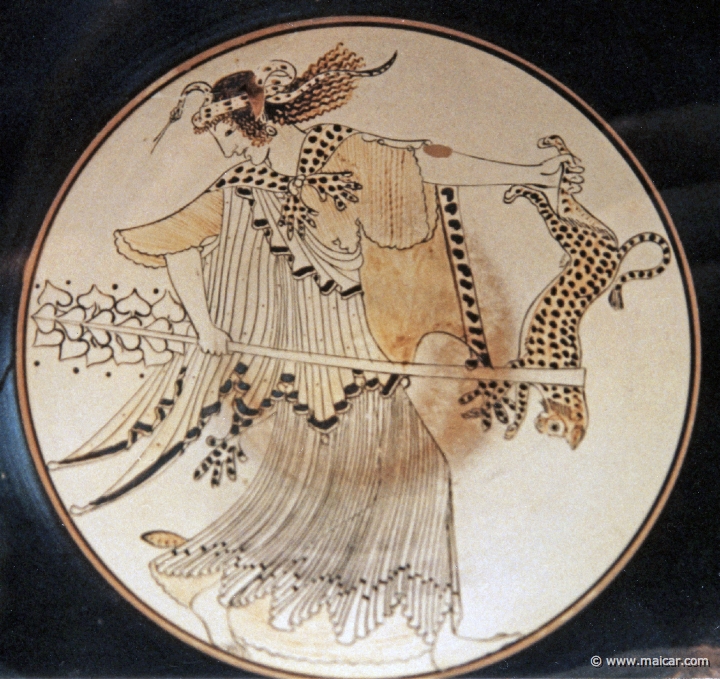
The ancient sources, to summarise, clearly describe the behaviour of the hornet as very similar to that of Maenads – and above all of the murderous Maenads in rage. According to the ancients the hornet twists and twirls around, lives in the mountains, does not move in hierarchical groups, is without (male)-“kings”, and acts in a somewhat aggressive way, as it searches for raw meat. The detail of the cut off heads of other larger insects recalled by Pliny is particularly “Maenadic”, since decapitation was a typical act of the frenzied Maenads: it is sufficient to recall the Euripidean Agave with the head of her son Pentheus fixed on the top of her thyrsus (Eur. Bacch. 1139-43)...
This tradition repeatedly notes that while the “good” bees love the flowers, the wild wasps–including the hornets—eat raw and bloody meat. We cannot help observing that the “bad” evolution of the “good” bees into wild wasps perfectly matches the degeneration of good women–who, according to the ancient moral code, were required to be modest, industrious, and perfect mothers into anti-social Maenads, profligate mothers and uncontrolled females roaming in the wild. No doubt this tradition reveals no more than a literary conceit, a stereotype which by no means diminished the legitimacy and prestige of ancient Dionysism and its rituals. Nonetheless, such a literary theme may well convey the remnants of a popular belief which normally associated hornets and wasps with a kind of delirium characterised by Dionysian symptoms.