


- To understand what definitions of antisemitsm are available
- To investigate and discuss the utility of different definitions of antisemitism
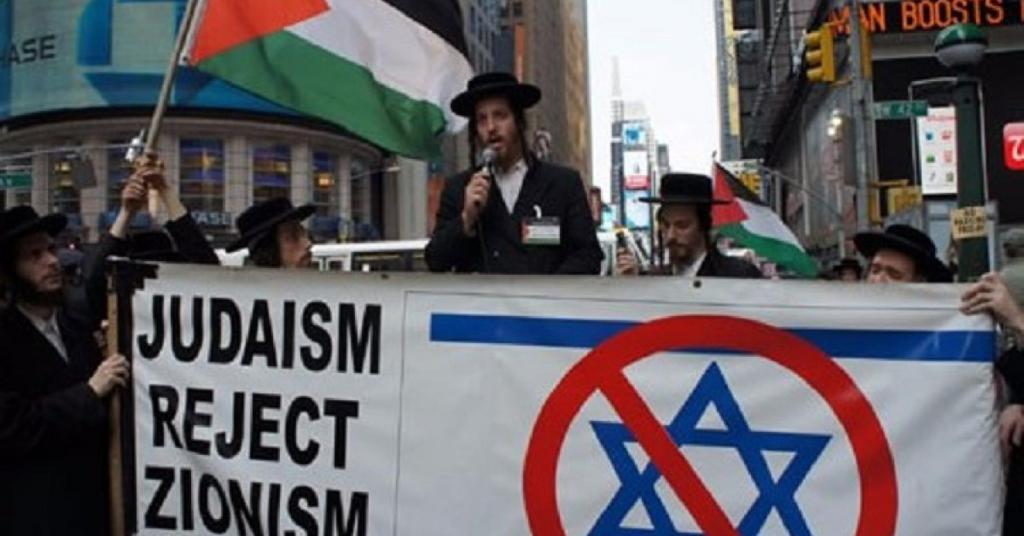
- To investigate to crossovers of anti-zionism and antisemitism
- To have a meta-discussion on educating about antisemitism
Antisemitism was originally coined by Wilhelm Marr in 1879 as a political movement against ethnic Jews as the cause of Germany and the world's ills. He would later renounce his political philosophy with the rise of the NSDAP and blame the Industrial Revolution. Post-Holocaust, the word went through a process of catachresis (the definition of a word changing) and was reclaimed to mean (well we'll investigate here) but essentially prejudice against Jews. While an etymological analysis might confuse someone into thinking antisemitism means prejudice against all Semitic peoples, such conflations do not recognize the history of the term and are either ignorant at best and often intentionally intellectually dishonest.
Oxford (UK)
Hostility to or prejudice against Jewish people.
‘Indeed, I am sure she would not hesitate a minute in condemning both racism and anti-Semitism in the highest terms.’
Macquarie (AUS) (1991)
Hostility towards Jews
Merriam-Webster (USA)
Hostility toward or discrimination against Jews as a religious, ethnic, or racial group
What do you think of these dictionary definitions?
Delegitimization of Israel
Demonization of Israel
Subjecting Israel to Double standards
Sharanksy's definition was previously the definition used by the majority of Jewish and Pro-Israel orgs for when criticism of Israel became antisemitic. However it has been criticised for not being nuanced enough and stifling free speech. What do you think?
“Antisemitism is a certain perception of Jews, which may be expressed as hatred toward Jews. Rhetorical and physical manifestations of antisemitism are directed toward Jewish or non-Jewish individuals and/or their property, toward Jewish community institutions and religious facilities.”
To guide IHRA in its work, the following examples may serve as illustrations:
Manifestations might include the targeting of the state of Israel, conceived as a Jewish collectivity. However, criticism of Israel similar to that leveled against any other country cannot be regarded as antisemitic. Antisemitism frequently charges Jews with conspiring to harm humanity, and it is often used to blame Jews for “why things go wrong.” It is expressed in speech, writing, visual forms and action, and employs sinister stereotypes and negative character traits.
Contemporary examples of antisemitism in public life, the media, schools, the workplace, and in the religious sphere could, taking into account the overall context, include, but are not limited to:
- Calling for, aiding, or justifying the killing or harming of Jews in the name of a radical ideology or an extremist view of religion.
- Making mendacious, dehumanizing, demonizing, or stereotypical allegations about Jews as such or the power of Jews as collective — such as, especially but not exclusively, the myth about a world Jewish conspiracy or of Jews controlling the media, economy, government or other societal institutions.
- Accusing Jews as a people of being responsible for real or imagined wrongdoing committed by a single Jewish person or group, or even for acts committed by non-Jews.
- Denying the fact, scope, mechanisms (e.g. gas chambers) or intentionality of the genocide of the Jewish people at the hands of National Socialist Germany and its supporters and accomplices during World War II (the Holocaust).
- Accusing the Jews as a people, or Israel as a state, of inventing or exaggerating the Holocaust.
- Accusing Jewish citizens of being more loyal to Israel, or to the alleged priorities of Jews worldwide, than to the interests of their own nations.
- Denying the Jewish people their right to self-determination, e.g., by claiming that the existence of a State of Israel is a racist endeavor.
- Applying double standards by requiring of it a behavior not expected or demanded of any other democratic nation.
- Using the symbols and images associated with classic antisemitism (e.g., claims of Jews killing Jesus or blood libel) to characterize Israel or Israelis.
- Drawing comparisons of contemporary Israeli policy to that of the Nazis.
- Holding Jews collectively responsible for actions of the state of Israel.
Criminal acts are antisemitic when the targets of attacks, whether they are people or property – such as buildings, schools, places of worship and cemeteries – are selected because they are, or are perceived to be, Jewish or linked to Jews.
Antisemitic discrimination is the denial to Jews of opportunities or services available to others and is illegal in many countries.
The Jerusalem Declaration on Antisemitism responds to “the IHRA Definition,” the document that was adopted by the International Holocaust Remembrance Alliance (IHRA) in 2016. Because the IHRA Definition is unclear in key respects and widely open to different interpretations, it has caused confusion and generated controversy, hence weakening the fight against antisemitism. Noting that it calls itself “a working definition,” we have sought to improve on it by offering (a) a clearer core definition and (b) a coherent set of guidelines. We hope this will be helpful for monitoring and combating antisemitism, as well as for educational purposes. We propose our non-legally binding Declaration as an alternative to the IHRA Definition. Institutions that have already adopted the IHRA Definition can use our text as a tool for interpreting it.
The IHRA Definition includes 11 “examples” of antisemitism, 7 of which focus on the State of Israel. While this puts undue emphasis on one arena, there is a widely-felt need for clarity on the limits of legitimate political speech and action concerning Zionism, Israel, and Palestine. Our aim is twofold: (1) to strengthen the fight against antisemitism by clarifying what it is and how it is manifested, (2) to protect a space for an open debate about the vexed question of the future of Israel/Palestine. We do not all share the same political views and we are not seeking to promote a partisan political agenda. Determining that a controversial view or action is not antisemitic implies neither that we endorse it nor that we do not.
"Antisemitism is discrimination, prejudice, hostility or violence against Jews as Jews (or Jewish institutions as Jewish)."
Guidelines
A. General
-
It is racist to essentialize (treat a character trait as inherent) or to make sweeping negative generalizations about a given population. What is true of racism in general is true of antisemitism in particular.
-
What is particular in classic antisemitism is the idea that Jews are linked to the forces of evil. This stands at the core of many anti-Jewish fantasies, such as the idea of a Jewish conspiracy in which “the Jews” possess hidden power that they use to promote their own collective agenda at the expense of other people. This linkage between Jews and evil continues in the present: in the fantasy that “the Jews” control governments with a “hidden hand,” that they own the banks, control the media, act as “a state within a state,” and are responsible for spreading disease (such as Covid-19). All these features can be instrumentalized by different (and even antagonistic) political causes.
-
Antisemitism can be manifested in words, visual images, and deeds. Examples of antisemitic words include utterances that all Jews are wealthy, inherently stingy, or unpatriotic. In antisemitic caricatures, Jews are often depicted as grotesque, with big noses and associated with wealth. Examples of antisemitic deeds are: assaulting someone because she or he is Jewish, attacking a synagogue, daubing swastikas on Jewish graves, or refusing to hire or promote people because they are Jewish.
-
Antisemitism can be direct or indirect, explicit or coded. For example, “The Rothschilds control the world” is a coded statement about the alleged power of “the Jews” over banks and international finance. Similarly, portraying Israel as the ultimate evil or grossly exaggerating its actual influence can be a coded way of racializing and stigmatizing Jews. In many cases, identifying coded speech is a matter of context and judgement, taking account of these guidelines.
-
Denying or minimizing the Holocaust by claiming that the deliberate Nazi genocide of the Jews did not take place, or that there were no extermination camps or gas chambers, or that the number of victims was a fraction of the actual total, is antisemitic.
-
Applying the symbols, images and negative stereotypes of classical antisemitism (see guidelines 2 and 3) to the State of Israel.
-
Holding Jews collectively responsible for Israel’s conduct or treating Jews, simply because they are Jewish, as agents of Israel.
-
Requiring people, because they are Jewish, publicly to condemn Israel or Zionism (for example, at a political meeting).
-
Assuming that non-Israeli Jews, simply because they are Jews, are necessarily more loyal to Israel than to their own countries.
-
Denying the right of Jews in the State of Israel to exist and flourish, collectively and individually, as Jews, in accordance with the principle of equality.
(whether or not one approves of the view or action)
-
Supporting the Palestinian demand for justice and the full grant of their political, national, civil and human rights, as encapsulated in international law.
-
Criticizing or opposing Zionism as a form of nationalism, or arguing for a variety of constitutional arrangements for Jews and Palestinians in the area between the Jordan River and the Mediterranean. It is not antisemitic to support arrangements that accord full equality to all inhabitants “between the river and the sea,” whether in two states, a binational state, unitary democratic state, federal state, or in whatever form.
-
Evidence-based criticism of Israel as a state. This includes its institutions and founding principles. It also includes its policies and practices, domestic and abroad, such as the conduct of Israel in the West Bank and Gaza, the role Israel plays in the region, or any other way in which, as a state, it influences events in the world. It is not antisemitic to point out systematic racial discrimination. In general, the same norms of debate that apply to other states and to other conflicts over national self-determination apply in the case of Israel and Palestine. Thus, even if contentious, it is not antisemitic, in and of itself, to compare Israel with other historical cases, including settler-colonialism or apartheid.
-
Boycott, divestment and sanctions are commonplace, non-violent forms of political protest against states. In the Israeli case they are not, in and of themselves, antisemitic.
-
Political speech does not have to be measured, proportional, tempered, or reasonable to be protected under Article 19 of the Universal Declaration of Human Rights or Article 10 of the European Convention on Human Rights and other human rights instruments. Criticism that some may see as excessive or contentious, or as reflecting a “double standard,” is not, in and of itself, antisemitic. In general, the line between antisemitic and non-antisemitic speech is different from the line between unreasonable and reasonable speech.
Which definition do you prefer?
Are either of these definitions thorough enough or have they included examples that you don't consider antisemitic? What are they missing if anything or what should be removed?


Posted by Yair Netanyahu (Bibi Netanyahu's son) on Twitter. Pictured from left to right: Jewish Billionair George Soros, a reptilian overlord, a member of the Illuminati, Ehud Barak (Former Israeli PM who unseated Netanyahu), Eldad Yaniv (Labor Party Activist and Lawyer), Menny Naftalin (Caretaker at PM's Residence and key witness in Sarah Netanyahu corruption charges)




Who gets to define antisemitism?
Why is defining antisemitism so difficult? Is it anymore difficult defining antisemitism than other prejudices?
Do we need to define antisemitism to fight it?
What is the best way to educate non-Jews about antisemitism?