


Explore the Maharashal who objected to the codification of law as it would stymie the law's ability to evolve, Rav Kook's views on vegetarianism and humanism, and how the Tzitz Eliezer thought Jewish law should approach gender reassignment surgery,
"I have a liking for pioneers, for experimenters, for people who do not follow the crowd. I have always admired the first ones, the early ones, the beginners, the originators. Even in my derashot I prefer to speak about those who defied public opinion, disregarded mockery and ridicule, and blazed new trails leading man to God" - Rabbi J B Soloveitchik

Solomon Luria / Maharashal (1510 – November 7, 1573) was one of the great Ashkenazic poskim (decisors of Jewish law) and teachers of his time. He is known for his work of Halakha, Yam Shel Shlomo, and his Talmudic commentary Chochmat Shlomo
Yam Shel Shlomo - Introduction to Bava Kama
One should never be astonished by the range of debate and argumentation in matters of Halacha. . . . All these views are in the category of “these and those are the words of the Living God” as if each one of them was directly received by Moshe at Sinai. . . . The kabbalists explained that the basis for this is that each individual soul was present at Sinai and received the Torah by means of forty-nine tzinorot, spiritual channels. Each one perceived the Torah from his own perspective in accordance with his intellectual capacity as well as the nature and uniqueness of his particular soul. This accounts for the discrepancy in perception inasmuch as one concluded that an object was tamei (ritually impure) in the extreme, another perceived it be absolutely tahor (ritually pure), and yet a third individual argues the ambivalent status of the object in question. All these are true and authentic views. Thus the sages declared that in a debate among the scholars, all positions articulated are different forms of the same truth.
One should never be astonished by the range of debate and argumentation in matters of Halacha. . . . All these views are in the category of “these and those are the words of the Living God” as if each one of them was directly received by Moshe at Sinai. . . . The kabbalists explained that the basis for this is that each individual soul was present at Sinai and received the Torah by means of forty-nine tzinorot, spiritual channels. Each one perceived the Torah from his own perspective in accordance with his intellectual capacity as well as the nature and uniqueness of his particular soul. This accounts for the discrepancy in perception inasmuch as one concluded that an object was tamei (ritually impure) in the extreme, another perceived it be absolutely tahor (ritually pure), and yet a third individual argues the ambivalent status of the object in question. All these are true and authentic views. Thus the sages declared that in a debate among the scholars, all positions articulated are different forms of the same truth.
Rabbi Shlomo Brody - http://text.rcarabbis.org/against-the-shulchan-aruch-the-critique-of-the-maharshal-by-shlomo-brody/
For Luria, however, the Talmud not only proves the futility of the Mishnah’s project, but also positively perceives the plurality of voices within the halakhic tradition. One should not fear makhloket, since each opinion represents one of the different facets of Torah. Maharshal subsequently cites a number of Talmudic sources that embrace halakhic pluralism, claiming that stem from the same source of authority and represent the word of God. Subsequently, opinions derived solely from rational thought retain the same stature as halakhot le-Moshe mi-Sinai. Luria even cites a Kabbalistic teaching that each sage derives his opinion from personal “channels” (tzinorot) to Sinai.[5] In addition to its infeasibility, the codification of halakha represents an undesirable repression of the plurality of Torah.
Maharshal, of course, recognizes the attempts of different groups of scholars, beginning with the Geonim, who attempted to extrapolate normative rulings from the Talmud. Rambam’s Mishneh Torah in particular deserves tremendous praise for its comprehensiveness and clarity. Yet following a distinguished strand of rishonim, he chastises Rambam’s failure to cite his sources as the Achilles heel of his project. Without proofs for his ruling, his work fails to compel the reader to follow his opinion. The Tosafists greatly contributed to our understanding of the Talmud, especially by their project of harmonizing seemingly conflicting passages. Yet their interpretations sometimes fall short, and they themselves frequently disagree with each other, recognizing the difficulty of deciphering the cryptic Talmudic passages. Others like Ramban and Rosh wrote great works, consequently turning the Torah into “613 torot” with the multiplicity of interpretations.
For Luria, however, the Talmud not only proves the futility of the Mishnah’s project, but also positively perceives the plurality of voices within the halakhic tradition. One should not fear makhloket, since each opinion represents one of the different facets of Torah. Maharshal subsequently cites a number of Talmudic sources that embrace halakhic pluralism, claiming that stem from the same source of authority and represent the word of God. Subsequently, opinions derived solely from rational thought retain the same stature as halakhot le-Moshe mi-Sinai. Luria even cites a Kabbalistic teaching that each sage derives his opinion from personal “channels” (tzinorot) to Sinai.[5] In addition to its infeasibility, the codification of halakha represents an undesirable repression of the plurality of Torah.
Maharshal, of course, recognizes the attempts of different groups of scholars, beginning with the Geonim, who attempted to extrapolate normative rulings from the Talmud. Rambam’s Mishneh Torah in particular deserves tremendous praise for its comprehensiveness and clarity. Yet following a distinguished strand of rishonim, he chastises Rambam’s failure to cite his sources as the Achilles heel of his project. Without proofs for his ruling, his work fails to compel the reader to follow his opinion. The Tosafists greatly contributed to our understanding of the Talmud, especially by their project of harmonizing seemingly conflicting passages. Yet their interpretations sometimes fall short, and they themselves frequently disagree with each other, recognizing the difficulty of deciphering the cryptic Talmudic passages. Others like Ramban and Rosh wrote great works, consequently turning the Torah into “613 torot” with the multiplicity of interpretations.
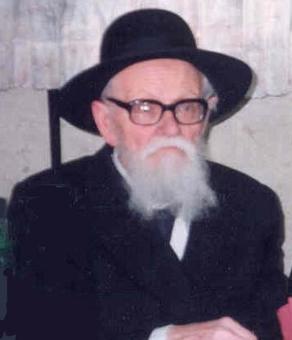
Eliezer Yehuda Waldenberg, December 10, 1915 – November 21, 2006) was a rabbi, posek, and dayan in Jerusalem. He is known as a leading authority on medicine and Jewish law and referred to as the Tzitz Eliezer after his 21-volume halachic treatise covering a wide breadth of halacha, including Jewish medical ethics, and daily ritual issues from Shabbat to kashrut.
Tzitz Eliezer 10:25:26 - written in 1970's
It is necessary to seriously examine the question of identity in a case where a major organic change has been made in the body itself – for example a change from being a male to being a female or the reverse. According to what I have heard - and this has also been publicized by various newspaper columnists - these types of operations are offered today in special rare circumstances. In these cases in which the body is drastically changed, surgery truly creates many halachic questions regarding the establishment of identity and true status....
Regarding a respected talmid chachom from Jerusalem who wrote about a number of cases where a woman became a man. He also explained that there is really no great difference between male and female genitals except that one is external and the other is internal (meaning that a woman has internally a foreskin and testes even though they are not like the testes of a man)...
Given that reality, the author discussed his uncertainty whether the woman who has changed into a man is obligated in mila or whether she is exempt. He concludes that she is exempt since the verse for the mitzva of mila says to circumcise the “male foreskin”. This implies that circumcision is only required if a person is born a male but not someone who was born a female and became a male....
Similarly I saw in the sefer Yosef es Achiv (3:5) by Rabbi Yosef Pilaggi that he asks, “Whether a woman who led a normal married life for a number of years and then became a man - requires a divorce because she was his wife? Or perhaps no Get is required because she is no longer a woman but a man? He answers that it seems that she doesn’t need a Get because she is no longer a woman and the Get states that the husband is giving the Get to a woman who is his wife. The Get also states that it allows her to marry another man... and it obviously is not allowed for a man to marry another man... It would seem in my humble opinion that there is no need for a Get if his wife has fully become a man...It would also seem that in a case of a man who was originally a woman that he should not say the beracha ‘who has not made me a woman’ because he was in fact born a woman...instead he should say ‘who has changed me into a man.’...” ...
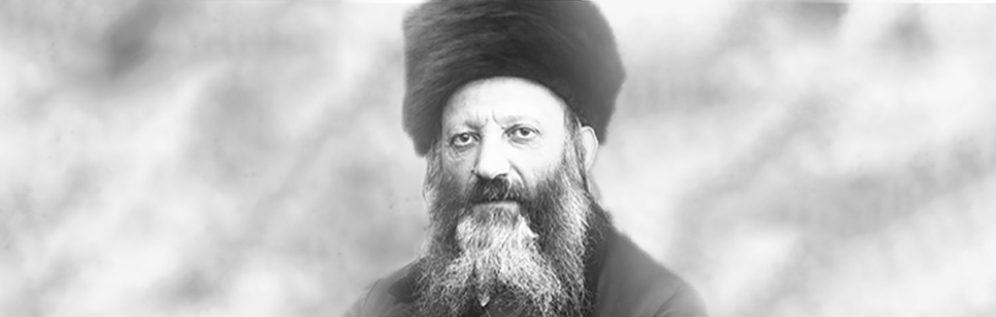
Rabbi Abraham Isaac Kook ( 7 September 1865 – 1 September 1935) was the first Ashkenazi Chief Rabbi of British Mandatory Palestine in the Land of Israel. He is considered to be one of the fathers of religious Zionism, and is known for founding the Mercaz HaRav Yeshiva.
A Vision of Vegetarianism and Peace
Chapter 2:
There can be no doubt in the mind of any intelligent, thinking person that when the Torah instructs humankind to dominate – “And have dominion over the fish of the sea, and over the birds of the sky, and over every living thing that moves upon the Earth” (Genesis 1:28) – it does not mean the domination of a harsh ruler, who afflicts his people and servants merely to fulfill his personal whim and desire, according to the crookedness of his heart. It is unthinkable that the Torah would impose such a decree of servitude, sealed for all eternity, upon the world of God, Who is “good to all, and His mercy is upon all His works” (Psalms 145:9), and Who declared, “The world shall be built upon kindness” (ibid. 89:3). Moreover, the Torah attests that all humanity once possessed this lofty moral level. Citing scriptural proofs, our Sages explain (Sanhedrin 57a) that Adam was not permitted to eat meat: “Behold, I have given you every tree… yielding seed for food” (Genesis 1:29). Eating meat was permitted to the children of Noah only after the Flood: “Like the green herb, I have given you everything” (Genesis 9:3). Is it conceivable that this moral excellence, which once existed as an inherent human characteristic, should be lost forever? Concerning these and similar matters, it states, “I shall bring knowledge from afar, and unto my Maker I shall ascribe righteousness” (Job 36:3). In the future, God shall cause us to make great spiritual strides, and thus extricate us from this complex question.
There can be no doubt in the mind of any intelligent, thinking person that when the Torah instructs humankind to dominate – “And have dominion over the fish of the sea, and over the birds of the sky, and over every living thing that moves upon the Earth” (Genesis 1:28) – it does not mean the domination of a harsh ruler, who afflicts his people and servants merely to fulfill his personal whim and desire, according to the crookedness of his heart. It is unthinkable that the Torah would impose such a decree of servitude, sealed for all eternity, upon the world of God, Who is “good to all, and His mercy is upon all His works” (Psalms 145:9), and Who declared, “The world shall be built upon kindness” (ibid. 89:3). Moreover, the Torah attests that all humanity once possessed this lofty moral level. Citing scriptural proofs, our Sages explain (Sanhedrin 57a) that Adam was not permitted to eat meat: “Behold, I have given you every tree… yielding seed for food” (Genesis 1:29). Eating meat was permitted to the children of Noah only after the Flood: “Like the green herb, I have given you everything” (Genesis 9:3). Is it conceivable that this moral excellence, which once existed as an inherent human characteristic, should be lost forever? Concerning these and similar matters, it states, “I shall bring knowledge from afar, and unto my Maker I shall ascribe righteousness” (Job 36:3). In the future, God shall cause us to make great spiritual strides, and thus extricate us from this complex question.
Chapter 6:
When humanity reaches its goal of complete happiness and spiritual liberation, when it attains that lofty peak of perfection that is the pure knowledge of God and the full manifestation of the essential holiness of life, then the age of “motivation by virtue of enlightenment” will have arrived. This is like a structure built on the foundation of “motivation by virtue of the law,” which of necessity must precede [that of "motivation by virtue of enlightenment"] for all humanity. Then human beings will recognize their companions in Creation: all the animals. And they will understand how it is fitting from the standpoint of the purest ethical standard not to resort to moral concessions, to compromise the Divine attribute of justice with that of mercy [by permitting mankind's exploitation of animals]; for they will no longer need extenuating concessions, as in those matters of which the Talmud states: “The Torah speaks only of the evil inclination” (Kiddushin 31b). Rather they will walk the path of absolute good - as the prophet declares: “I will make a covenant for them with the animals of the field, the birds of the air, and the creeping things of the ground; I also will banish the bow and sword, and war from the land [and I will cause them to rest in safety. I will betroth you to Me forever; and I will betroth you to Me with righteousness, with justice, with kindness, and with compassion; and I will betroth you to Me with faith, and you will know God]” (Hosea 2:20).
When humanity reaches its goal of complete happiness and spiritual liberation, when it attains that lofty peak of perfection that is the pure knowledge of God and the full manifestation of the essential holiness of life, then the age of “motivation by virtue of enlightenment” will have arrived. This is like a structure built on the foundation of “motivation by virtue of the law,” which of necessity must precede [that of "motivation by virtue of enlightenment"] for all humanity. Then human beings will recognize their companions in Creation: all the animals. And they will understand how it is fitting from the standpoint of the purest ethical standard not to resort to moral concessions, to compromise the Divine attribute of justice with that of mercy [by permitting mankind's exploitation of animals]; for they will no longer need extenuating concessions, as in those matters of which the Talmud states: “The Torah speaks only of the evil inclination” (Kiddushin 31b). Rather they will walk the path of absolute good - as the prophet declares: “I will make a covenant for them with the animals of the field, the birds of the air, and the creeping things of the ground; I also will banish the bow and sword, and war from the land [and I will cause them to rest in safety. I will betroth you to Me forever; and I will betroth you to Me with righteousness, with justice, with kindness, and with compassion; and I will betroth you to Me with faith, and you will know God]” (Hosea 2:20).